Can CNC and Lathe Machine Technology Truly Fit on Your Desktop
You Can Now Get a CNC Lathe for Your Desktop
Desktop-scale CNC and lathe machines have moved from novelty to necessity in modern workshops. Once confined to industrial floors, these systems now fit on a benchtop while maintaining impressive precision and reliability. This transformation is driven by advances in micro-mechanics, control electronics, and software integration. The result is that engineers, educators, and small manufacturers can now perform high-quality machining tasks without the footprint or cost of full-size equipment.
The Miniaturization of CNC and Lathe Machine Technology
The shift from large industrial tools to compact desktop systems reflects decades of mechanical refinement and digital control improvements. Miniaturization has not only reduced size but also redefined accessibility for precision manufacturing.
The Evolution from Industrial to Desktop Manufacturing
CNC (Computer Numerical Control) technology first emerged in the 1950s as an automation method for metalworking. Early machines were massive, requiring specialized operators and dedicated facilities. Over time, servo drives replaced manual levers, and digital controllers replaced analog feedback systems. By the early 2000s, smaller linear motion components and compact stepper motors allowed engineers to design affordable desktop models capable of sub-millimeter accuracy. This evolution mirrored the broader trend of digital miniaturization seen in computing and robotics.
Transition from Large-Scale Industrial Systems to Compact Desktop Models
As material science improved, manufacturers began producing rigid aluminum frames with minimal vibration characteristics suitable for smaller footprints. The introduction of modular motion platforms made it possible to replicate industrial-grade performance at a fraction of the size. Educational institutions quickly adopted these compact units for training purposes, while startups used them for rapid prototyping.
Technological Breakthroughs Enabling Miniaturization Without Performance Loss
Key enablers include high-torque micro-servos, precision ball screws with low backlash, and firmware capable of real-time motion interpolation. These innovations preserved accuracy even under reduced machine mass. Advanced spindle bearings and composite damping structures further mitigated vibration issues that once limited small machines’ capability.
Key Engineering Challenges in Downsizing CNC Systems
Reducing machine size introduces fundamental engineering trade-offs that must be addressed through both design and control strategies.
Maintaining Structural Rigidity in Smaller Frames
Small machines face stiffness challenges because frame deflection scales inversely with size. Designers use reinforced aluminum alloys or polymer composites to maintain rigidity without excessive weight. Finite element analysis (FEA) helps identify weak points before production, ensuring consistent cutting performance across operations.
Precision Limitations Due to Reduced Machine Mass and Vibration Control
Lower mass increases susceptibility to vibration during cutting operations. To counter this, modern desktop CNC systems employ tuned damping mounts or granite bases where feasible. Electronic compensation through closed-loop feedback also reduces positional error caused by resonance.
Thermal Management and Power Constraints in Compact Enclosures
Compact housings limit airflow around motors and drives. Engineers integrate miniature fans or liquid cooling loops for thermal stability. Power supplies are optimized for efficiency since excess heat can distort mechanical alignment or degrade electronics over time.
Core Components of Desktop CNC and Lathe Machines
Miniature CNC systems retain all essential subsystems found in industrial setups but require careful scaling of each component to maintain balance between speed, torque, and precision.
Mechanical Architecture and Motion Control Systems
Linear guides with preloaded bearings minimize play along travel axes, while ball screws convert motor rotation into precise linear movement. Micro-stepper technology enables fine resolution—often down to microns per step—making it suitable for intricate tasks like engraving or small-part turning. However, users must balance feed rate against torque limits when machining harder materials.
Spindle Design and Tooling Adaptations
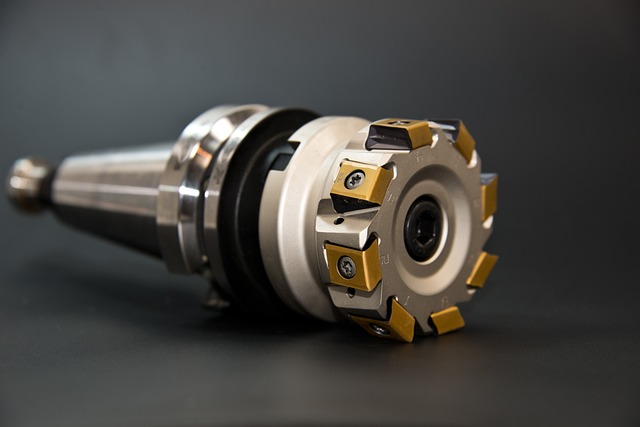
Compact spindles use brushless DC motors capable of reaching 20,000 RPM or more while maintaining stability through precision-balanced rotors. Tool holding systems such as ER collets or quick-change tapers allow fast tool swaps without compromising alignment. High-speed operation demands careful balancing between RPM capacity and bearing durability.
Software Integration and Control Precision
Software defines how effectively hardware performs in practice. Modern desktop CNC machines rely heavily on seamless coordination between CAD/CAM platforms and embedded controllers.
CAD/CAM Software Compatibility for Desktop Systems
Professional-grade CAM programs now include post-processors tailored for small-format controllers like GRBL or Mach-based systems. Cloud-based simulation allows users to preview toolpaths before committing material, reducing waste while improving workflow efficiency between design stages.
Role of Firmware and Embedded Controllers in Precision Control
Firmware dictates how accurately motion commands translate into physical movement. Open-source options such as GRBL have democratized access to advanced motion planning algorithms once reserved for industrial controllers. Feed rate optimization routines enhance surface finish quality by dynamically adjusting acceleration curves during tool engagement.
Material Capabilities and Application Scope
Despite their compactness, desktop CNC lathes handle a surprising range of materials suited for prototyping or light production work.
Suitable Materials for Desktop CNC Lathes
Commonly machined materials include aluminum 6061, brass alloys, acrylics, ABS plastics, wood composites, and carbon-fiber laminates. While capable of cutting mild steel with proper tooling, hardened steels or titanium remain challenging due to limited spindle power.
Real-world Applications Across Industries
Small-format CNC systems are now standard tools in research labs for fabricating test fixtures or sensor housings. Jewelers use them to mill wax patterns or engrave precious metals with extreme detail. In education settings, they serve as accessible teaching aids bridging theory with hands-on machining experience.
Performance Metrics and Quality Considerations
Precision metrics determine whether a desktop unit can meet professional standards expected from larger equipment classes.
Accuracy, Repeatability, and Surface Finish Evaluation
Typical repeatability ranges between ±0.01 mm to ±0.03 mm depending on configuration. Backlash compensation routines within controller firmware help sustain consistency across multiple passes. Surface finishes approach Ra 1–2 µm when using fine cutters under stable conditions—comparable to mid-tier industrial results.
Maintenance Requirements and Durability Factors
Lubrication schedules must be adjusted since miniature ball screws wear faster under continuous load cycles. Many compact designs incorporate sealed lubrication cartridges suited for tight spaces. Preventive maintenance every few hundred hours extends service life significantly by minimizing contamination buildup on linear rails.
Economic Feasibility and Market Trends
Desktop-scale machining has shifted cost dynamics within manufacturing ecosystems by lowering entry barriers while maintaining respectable throughput levels.
Cost-Benefit Analysis of Desktop vs Industrial Machines
Entry-level desktop CNC units start below one-tenth the price of full-scale mills yet deliver sufficient accuracy for prototype production runs. Operational flexibility makes them ideal for iterative design processes where frequent setup changes are required without extensive downtime.
Emerging Trends Shaping the Future of Desktop CNC Technology
The next phase involves IoT integration enabling predictive maintenance through sensor data analytics transmitted over wireless networks compliant with IEEE standards on smart manufacturing connectivity (IEEE P2413). Hybrid additive-subtractive machines are gaining popularity among makerspaces seeking multifunctional fabrication tools combining milling with 3D printing capabilities.
FAQ
Q1: What materials can a desktop CNC lathe cut?
A: It can machine aluminum alloys, brass, plastics like ABS or acrylics, wood composites, and occasionally mild steel if equipped with carbide tooling.
Q2: How accurate are modern desktop CNC machines?
A: Most achieve repeatability within ±0.02 mm under controlled conditions using closed-loop feedback systems.
Q3: Are desktop models suitable for continuous production?
A: They are best suited for short-run batches or prototyping rather than heavy-duty continuous operation due to limited spindle power.
Q4: Can professional CAD/CAM software run on these small machines?
A: Yes, most major CAD/CAM suites offer compatible post-processors designed specifically for GRBL- or Mach-compatible controllers used in desktop units.
Q5: What’s driving current innovation in this field?
A: Integration with IoT platforms, hybrid additive-subtractive capabilities, and open-source hardware ecosystems continue pushing boundaries in affordability and functionality within compact manufacturing solutions.