CNC lathe machine guide for precision turning and shop automation
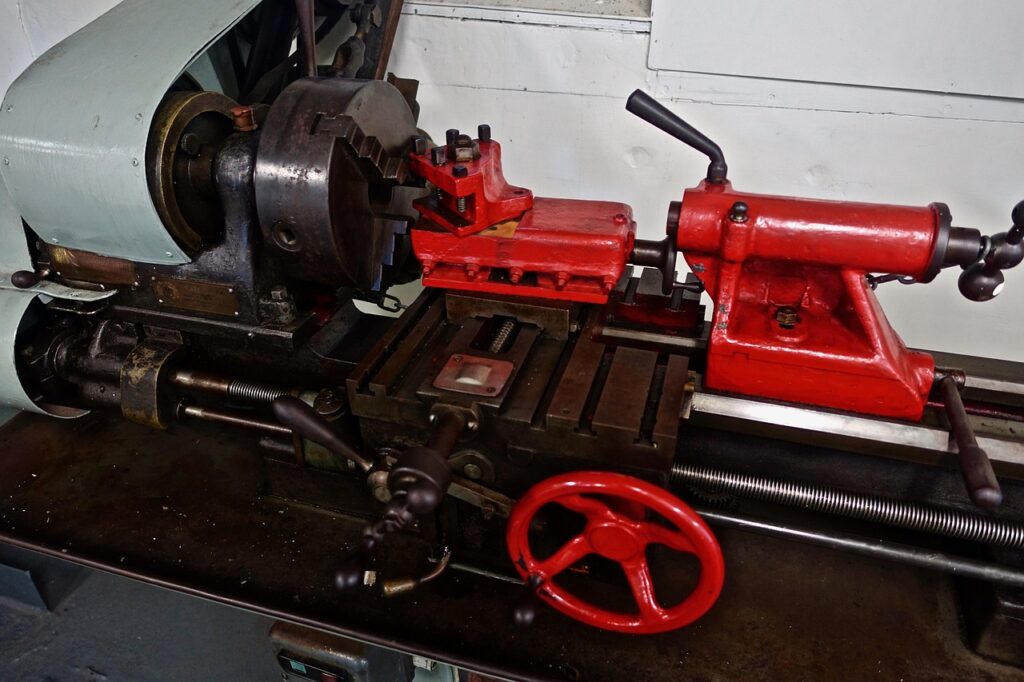
Why CNC turning remains a core machine-shop capability
A CNC lathe machine is a numerically controlled turning machine that rotates a workpiece while cutting tools form the outside diameter, inside diameter, faces, grooves, tapers and threads. For manufacturers, the practical question is not whether the lathe can remove metal. It is whether the machine configuration fits the part family, tolerance window, cycle time, labor model and automation plan. ISO terminology describes a turning machine as a machine tool in which the main movement is rotation of the workpiece against the cutting tool, while CNC refers to automatic control using numeric data. (iso.org)
The investment context has also changed. AMT reported on October 12, 2026, that August 2026 U.S. manufacturing technology orders reached $732.9 million, the third-highest monthly total recorded, with year-to-date orders up 36.9% over the first eight months of 2025. The same report noted that order values have been growing much faster than unit counts, suggesting that buyers are specifying more automation, options and sophisticated equipment rather than only adding more machines. (amtonline.org)

How a CNC lathe machine works
In turning, the workpiece is held in a chuck, collet or fixture and rotated by the spindle. Cutting tools move along programmed axes to remove stock from the rotating material. A typical two-axis CNC lathe uses X-axis motion for diameter control and Z-axis motion along the part length. More advanced turning centers may add live tooling, a C-axis for spindle orientation, a Y-axis for off-center features, a sub-spindle for back-working, or automated loading systems for longer unattended runs.
The basic workflow is similar across most turning jobs. A CAD model or engineering drawing defines the geometry. CAM software or conversational programming converts that geometry into toolpaths. The CNC control then coordinates spindle speed, feed rate, tool changes, coolant and axis motion. The U.S. Bureau of Labor Statistics describes CNC machinists as programming instructions into machines to determine cutting path, cutting speed and feed rate; it also notes that machinists often work with both manual and CNC machinery. (bls.gov)
Main components to understand
- Spindle and workholding: The spindle provides torque and rotational speed. Chucks, collets and fixtures must suit the part size, material, balance and clamping-force requirements.
- Turret or tool post: This holds turning tools, drills, boring bars and grooving tools. The number of stations affects how many operations can run without manual intervention.
- Guideways and structure: Machine rigidity affects chatter resistance, surface finish and repeatability, especially in hard materials or interrupted cuts.
- CNC control: The control manages toolpaths, offsets, alarms, cycles, probing and data connection. Operator familiarity can be as important as the control brand.
- Coolant and chip management: Effective coolant delivery and chip evacuation protect tooling, improve finish and reduce stoppages in production runs.
Common CNC lathe configurations and where they fit
No single CNC lathe machine is right for every shop. The best fit depends on part shape, production volume, material, secondary operations and available operators. The table below summarizes common configurations and the work they are typically designed to support.
| Configuration | Typical fit | Selection note |
|---|---|---|
| Two-axis horizontal CNC lathe | Shafts, bushings, pins, spacers and general round parts | Good starting point when most features are concentric and secondary milling is limited. |
| Turning center with live tooling | Parts needing flats, cross-holes, slots or light milling | Can reduce handling by combining turning and selected milling operations in one setup. |
| Sub-spindle or twin-spindle lathe | Parts requiring complete front and back machining | Useful when second-operation handling creates labor cost, variation or queue time. |
| Swiss-type CNC lathe | Long, small-diameter, high-precision parts | Often used for medical, electronic and precision connector components where support near the cutting zone is valuable. |
| Vertical CNC lathe | Heavy, large-diameter workpieces | The vertical orientation helps support heavy parts by gravity and can simplify loading of rings, hubs and discs. |
| Automated turning cell | Repeated part families, long shifts or labor-constrained production | Requires planning beyond the machine itself, including grippers, part presentation, inspection and recovery from faults. |
Specification factors that affect part quality and cost
Machine specifications should be tied to a real part portfolio, not selected from a brochure checklist. Overspecifying can leave capital tied up in unused options. Underspecifying can limit the jobs a shop can quote or force unnecessary secondary operations. A useful starting point is a list of current and likely future parts with diameter, length, material, annual quantity, tolerance, finish, feature types and inspection requirements.
Part envelope and workholding
Maximum swing, turning diameter and distance between centers define whether the part physically fits. Usable capacity, however, is often smaller than catalog maximums once chuck size, tool clearance, tailstock, steady rest and chip flow are considered. For bar work, bar capacity and feeder compatibility may matter more than maximum swing. For castings and forgings, jaw design, clamping repeatability and interrupted-cut rigidity can be more important than top spindle speed.
Spindle performance and rigidity
High spindle speed helps with small diameters, aluminum and finishing cuts. Torque at lower speed matters for larger diameters, stainless steel, alloy steel and heavy roughing. A rigid machine base, quality bearings and stable thermal behavior help control taper, chatter and drift during long runs. Buyers should compare torque curves and duty ratings, not only headline horsepower.
Tooling, offsets and setup time
Turret capacity, driven-tool options, quick-change tooling, presetting and probing all affect setup time. A machine with more tool stations may run a complex part family without stopping for tool changes. A machine with fewer stations may still be efficient if the shop uses disciplined setup sheets, standardized holders and reliable offline presetting. The right choice depends on how often jobs change and how predictable the part mix is.
Uptime, service and training
Capital price is only one part of the cost. Downtime, spare parts, control familiarity, local service, operator training and maintenance discipline can determine whether a lathe produces value. For shops with limited CNC experience, training and application support may be more valuable than an extra option that is rarely used. For experienced shops, compatibility with existing tooling, programs and inspection routines can shorten the path to stable production.
Automation and digital integration are changing the value case
Automation around CNC turning is no longer limited to large automotive plants. Bar feeders, gantry loaders, collaborative or industrial robot tending, in-process gauging, tool monitoring and palletized part presentation can extend productive hours and reduce repetitive handling. The strongest cases appear when parts are repeatable, workholding is stable, chips are controlled and inspection feedback is built into the process.
Robotics data supports the broader direction. In a 2026 release, the International Federation of Robotics said five million industrial robots were operating in factories worldwide, more than double the level seven years earlier. It also reported that U.S. robot installations grew 12% in 2025 to almost 38,500 units, making the United States the second-largest industrial robot market after China for that year. (ifr.org)
Digital integration matters for the same reason. NIST describes a Smart Manufacturing Systems Test Bed that includes CNC milling, CNC turning and inspection equipment, with data collected using the MTConnect standard and connected across design, fabrication and inspection to support a digital thread. For a machine shop, the practical point is that machine data becomes more useful when it is connected to job, tooling, quality and maintenance records rather than viewed as isolated spindle-time numbers. (nist.gov)
Connectivity also introduces risk. When CNC machines, robots, inspection systems and remote service tools are connected, cybersecurity becomes part of operational reliability. NIST released Cybersecurity Framework 2.0 in February 2024 for organizations of all sectors and sizes and added a Govern function to emphasize how cybersecurity decisions are managed as enterprise risk. For networked machine tools, that points to basic controls such as access management, backups, segmented networks, update procedures and supplier remote-access rules. (nist.gov) See also: Materials.
Safety and operating discipline cannot be treated as optional
A CNC lathe machine concentrates rotating mass, sharp tools, high-pressure coolant, chips, stored energy and automated motion in one enclosure. Safety must be built into the machine and reinforced by procedures. ISO 23125 covers safety requirements and protective measures for turning machines and turning centers, including groups of numerically controlled turning machines and turning centers. (iso.org)
In the United States, OSHA machine-guarding guidance states that machine construction should prevent operators from placing any part of the body in the danger zone during the operating cycle when specific standards are not available. OSHA also notes that fixed machinery must be securely anchored, that eye and face protection is required when workers are exposed to flying particles, and that lockout/tagout procedures are required to isolate equipment before servicing or maintenance. (osha.gov)
For daily turning work, operators should not bypass door interlocks, reach into a moving work zone, run unknown programs at production speed, or use compressed air in ways that scatter chips and coolant. Strong setup discipline is straightforward: confirm workholding, check tool offsets, prove the program, control spindle speed for the clamping condition, and document changes after first-article inspection.
A practical selection framework for modern shops
Before buying or upgrading a CNC lathe machine, a shop can reduce risk by working through a structured selection process.
- Define the part family. Group parts by diameter, length, material, tolerance, volume and feature type. A clear family often shows whether the shop needs a standard lathe, a live-tool turning center, a Swiss-type machine or a vertical lathe.
- Map the full process. Include sawing, deburring, heat treatment, inspection, washing, marking and packaging. A faster lathe may not improve delivery if bottlenecks remain outside the machine.
- Compare complete cycle economics. Estimate setup time, cutting time, tool life, scrap risk, inspection time, operator coverage and expected uptime. The lowest purchase price may not deliver the lowest cost per good part.
- Plan automation realistically. Automation works best when parts are consistent, chips are manageable and fixtures are reliable. If the process is unstable manually, automation may only repeat that instability faster.
- Check safety, maintenance and skills. Confirm guarding, lockout/tagout procedures, preventive maintenance tasks, operator training and service support before production pressure begins.
For readers comparing machine types across the broader manufacturing equipment landscape, the Machines section provides related coverage of industrial equipment and process choices.
Frequently asked questions
What is the difference between a CNC lathe machine and a turning center?
A CNC lathe machine performs numerically controlled turning operations. A turning center is generally a more capable CNC turning machine, often equipped with powered tools and spindle orientation. ISO terminology describes a turning center as a numerically controlled turning machine equipped with power-driven tools and the capability to orient the work-holding spindle around its axis. (iso.org)
Can a CNC lathe machine perform milling?
A basic two-axis CNC lathe is designed for turning, boring, grooving, facing and threading. Milling requires live tooling, spindle orientation and sometimes a Y-axis. If many parts need flats, off-center holes or slots, a live-tool turning center may reduce secondary operations.
Which parts are best suited to CNC turning?
CNC turning is strongest when the part is mostly round or concentric. Examples include shafts, bushings, sleeves, fittings, pins, rollers, threaded connectors and many hydraulic, aerospace, automotive and medical components. Parts with extensive prismatic milling features may be better suited to a machining center or a mill-turn platform.
How can shops improve accuracy on a CNC lathe machine?
Accuracy depends on machine condition, thermal stability, workholding, tooling, offsets, program strategy and inspection feedback. Practical steps include using rigid setups, controlling tool wear, warming up the machine consistently, checking first articles, maintaining coolant concentration and documenting offset changes.
Does automation remove the need for skilled machinists?
No. Automation can reduce repetitive loading and extend unattended time, but skilled people are still needed to choose tooling, design workholding, prove programs, solve chatter, interpret inspection results and maintain safe operation. As CNC systems become more connected and automated, the skill mix shifts toward setup, programming, process control and troubleshooting.