Biomass pellet machine price guide for comparing mills and complete lines
What price range should buyers expect?
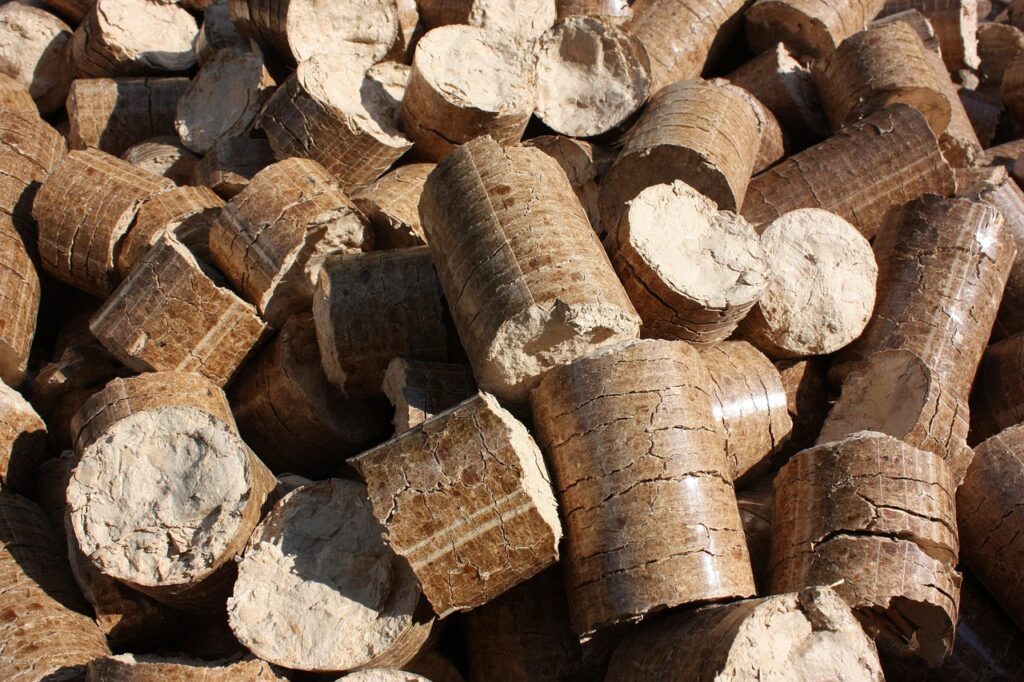
The biomass pellet machine price shown in online listings can run from a few thousand dollars for a small flat die mill to several hundred thousand dollars for a complete industrial line. That spread is normal. Suppliers often use the same phrase for three different scopes: a standalone pellet mill, a semi-automatic production section, or a full line with crushing, drying, cooling, conveying, dust control, and packing. For sourcing teams, the first question should not be only how much the pellet machine costs. It should be what throughput, feedstock preparation, automation, and quality control are included in the quoted scope.
Based on publicly available supplier price sheets and engineering references reviewed in 2026, the following ranges are reasonable planning numbers, not final quotations:
| Configuration | Typical capacity | Indicative equipment budget | What is usually included |
|---|---|---|---|
| Small flat die mill | 100–500 kg/h | About USD 1,000–6,000 | Pellet mill only, simple manual feeding, limited automation |
| Small commercial mill | 300–800 kg/h | About USD 6,000–20,000 | Flat die or small ring die machine, sometimes with feeder or conveyor |
| Industrial ring die mill | 1–2 t/h | About USD 16,000–55,000 | Pellet mill body, motor, gearbox, die and roller set, basic controls |
| Larger ring die mill | 2–5 t/h | About USD 40,000–120,000+ | Heavy-duty pellet mill with higher motor power and stronger structure |
| Entry complete line | 0.5–1.5 t/h | About USD 65,000–250,000+ | Crushing or grinding, pelletizing, cooling, simple conveying and controls; drying may change the budget sharply |
| Wet-feed industrial line | 1–5 t/h | About USD 180,000–800,000+ | Chipping or crushing, drying, hammer milling, pelletizing, cooling, packing, dust collection and PLC controls |
Use these figures as early budget filters. Freight, import duties, installation, foundations, electrical upgrades, dust protection, spare dies, commissioning, and local compliance costs are often outside the advertised machine price.
Why the same capacity can carry very different quotes
Two machines may both be described as 1 t/h, but their installed cost and lifetime cost can be far apart. The main variables are feedstock condition, machine duty level, and the supporting equipment required before and after pelletizing.
Feedstock moisture and particle size
Biomass does not arrive at a pellet mill in one standard condition. Dry sawdust from a woodworking plant is very different from fresh wood chips, straw, palm residue, rice husk, or mixed agricultural residue. The U.S. Department of Energy describes feedstock logistics as a chain of collection, storage, handling, transportation, and preprocessing steps needed to make biomass suitable for conversion. In pellet production, that usually means moisture management, size reduction, and consistency control are part of the core process, not optional extras.
Moisture is often the largest cost driver. Dry sawdust may only need screening and light conditioning. Fresh wood chips or fibrous residues can require a chipper, hammer mill, drum dryer, hot air system, cyclone, dust collector, conveyors, and additional safety controls. A buyer comparing only pellet mill nameplate capacity may underestimate the project budget if the dryer and grinding stages are missing or undersized.
Flat die versus ring die design
Flat die mills are usually cheaper and simpler. They can be suitable for small farms, test production, or local use where output is modest and continuous industrial duty is not required. Ring die mills cost more, but they are the common choice for commercial fuel pellet production because they support higher throughput, better continuous operation, and more consistent pellet formation when correctly specified.
The die and roller system is a wear component, not a one-time purchase. Extension guidance from Penn State notes that pellet dies may need replacement after roughly 1,000 to 1,500 operating hours, depending on material and operating conditions. Abrasive feedstocks such as rice husk or contaminated agricultural residue can shorten wear life. A low purchase price can therefore become expensive if dies, rollers, bearings, and gearboxes wear quickly or are difficult to source.
Automation, controls, and safety systems
A manual line can reduce the first invoice, but it may increase labor cost, downtime, and quality variation. Automatic lubrication, variable-frequency drives, PLC control, temperature monitoring, metal removal, dust extraction, and interlocked guarding all add cost. For an industrial buyer, these items should be evaluated as production and risk-control requirements. They protect uptime, reduce fire and dust risk, and make output easier to control.
Standalone mill versus complete production line
A standalone pellet mill is only one section of the production process. Penn State’s fuel pellet manufacturing guidance describes the overall process as grinding, moisture control, extrusion, cooling, and packaging. It also notes that about half of the equipment purchase cost can be the pellet machine itself, while the other half is made up of supporting devices. In wet-feed projects, the dryer package can shift an even larger share of the budget away from the pellet mill.
A complete line may include:
- Raw material receiving, storage, and dosing equipment
- Chipper or crusher for large wood pieces and agricultural residues
- Hammer mill or fine grinding section for particle-size control
- Dryer, burner, hot air system, cyclone, and moisture control equipment
- Conditioner, feeder, ring die pellet mill, cooler, screener, and recycle loop
- Conveyors, bucket elevators, dust collection, electrical cabinet, and PLC controls
- Packing machine, bulk storage bin, weighing system, and spare parts package
This is why a quote for a USD 25,000 ring die mill does not mean a commercial pellet plant can be built for USD 25,000. In many projects, the equipment around the mill determines whether the machine can reach its rated output at all.
How to compare supplier quotations
When sourcing pellet equipment, ask suppliers to quote the same boundary. A useful quotation should state whether the price is ex-works, FOB, CIF, or delivered to site. It should also separate the pellet mill price from line equipment, electrical components, installation, commissioning, and spare parts. For more industrial procurement topics, buyers can follow related sourcing guides before shortlisting suppliers.
A serious quotation should answer these questions:
- What feedstock was used to calculate capacity, and at what moisture content?
- Is the stated output based on sawdust, wood chips, straw, rice husk, or another material?
- What is the main motor power, and what voltage and frequency are supplied?
- What steel grade and heat treatment are used for the die and rollers?
- Are dies, rollers, bearings, lubrication parts, and screens included as spares?
- What is the expected lead time for replacement dies?
- Does the line include drying, cooling, dust collection, and packing, or only pelletizing?
- Who handles installation, operator training, and trial production?
- What tests are performed before shipment, and can the buyer inspect the machine under load?
For overseas procurement, a pre-shipment inspection is often worth the extra cost, especially for orders above USD 20,000. Inspection should verify motor nameplates, gearbox model, electrical cabinet components, welding quality, die specifications, paint condition, packing, and spare parts. See also: Machines.
Operating costs that change the real price per ton
The lowest machine price is not always the lowest production cost. A pellet plant also consumes power, heat, labor, wear parts, lubricants, packaging, and maintenance time. Penn State’s guidance gives a useful rule of thumb: a pelletizer can require 50 to 100 kW of electrical demand for every ton per hour of capacity, before counting chipping, grinding, drying, cooling, and bagging equipment. Drying damp feedstock can be one of the most energy-intensive steps.
Buyers should calculate at least four cost layers:
- Capital cost including equipment, freight, duty, installation, civil works, electrical upgrades, and spares.
- Feedstock cost including collection, storage loss, transport, contamination control, and seasonal supply risk.
- Energy and labor cost including electricity, heat for drying, operators, mechanics, and quality control staff.
- Maintenance cost including dies, rollers, bearings, belts, screens, lubricants, sensors, and planned downtime.
If the business case depends on premium fuel pellets, quality testing also matters. ISO 17225-2:2021 defines fuel quality classes and specifications for graded wood pellets for non-industrial and industrial use. ENplus guidance adds practical quality expectations for wood pellets, including moisture, ash, durability, fines, and traceability. Higher quality targets can require better feedstock control, cleaner handling, more stable drying, and more accurate screening, all of which influence equipment selection.
Market context for 2026 budgets
The pellet market is large enough to support industrial machinery investment, but it is still exposed to price cycles. Bioenergy Europe’s 2025 pellets report stated that global wood pellet production was about 48.3 million tonnes in 2024, while global consumption exceeded 45 million tonnes for the first time. In the United States, the Energy Information Administration’s report released on October 8, 2026 said that, as of July 2026, 74 operating manufacturers of densified biomass fuel had 13.2 million tons per year of production capacity. The same EIA release reported July 2026 production of 0.96 million tons and sales of 1.0 million tons, with average domestic sales revenue of USD 243.39 per ton and export sales revenue of USD 210.91 per ton.
These figures do not guarantee a profitable project in every location. They show that pellets are an established fuel and export commodity, while local economics still depend on feedstock contracts, energy prices, logistics, product specification, buyer demand, and plant utilization. A machine that runs only a few months each year must recover its capital cost over fewer tons than a plant with stable year-round demand.
A practical sourcing checklist
Before requesting final quotations, define the project in numbers. A supplier cannot quote accurately if the buyer provides only a target output and a general phrase such as biomass residue. Prepare a short technical sheet with the following details:
- Target finished pellet output in kg/h or t/h
- Raw material type, initial size, bulk density, ash tendency, and contamination risk
- Incoming moisture range and target final pellet moisture
- Required pellet diameter, packaging method, and intended market
- Available power supply, workshop area, ceiling height, and dust control requirements
- Daily and annual operating hours
- Required level of automation and available labor
- Local rules for emissions, noise, dust, fire safety, and electrical compliance
Then request at least three comparable quotations. Ask each supplier to identify exclusions clearly. A low quote that excludes the dryer, electrical cabinet, dust collector, freight, or commissioning may not be cheaper than a higher quote with a complete and realistic scope.
Frequently asked questions
What is the cheapest biomass pellet machine?
The cheapest machines are usually small flat die pellet mills for farm or test use, often advertised from about USD 1,000 to 6,000. They are not equivalent to an industrial line and should not be judged by the same capacity expectations.
How much does a 1 t/h biomass pellet machine cost?
A standalone 1 t/h ring die mill is often quoted in the tens of thousands of dollars, while a complete 1 t/h line can range from roughly USD 65,000 to well above USD 180,000 depending on drying, automation, packing, and feedstock preparation. Wet raw material usually moves the budget upward.
Why is a complete pellet line more expensive than the pellet mill?
The pellet mill only presses prepared material through a die. Commercial production also needs size reduction, moisture control, cooling, screening, conveying, dust control, and often packing. If these sections are missing, the mill may not reach rated output or produce consistent pellets.
Should buyers choose the lowest quotation?
Not without checking scope and build quality. A low price may exclude key equipment, use lighter components, provide limited spare parts, or leave installation to the buyer. The better comparison is total installed cost per reliable ton of finished pellets, not the machine invoice alone.