Is The New Voron Cascade Desktop CNC Mill Redefining Precision Engineering
Voron Just Released Their Cascade DIY CNC Mill Design
The new Voron Cascade has quickly drawn attention across the desktop CNC mill community. It represents a major step forward for open-source precision machining, combining professional-grade performance with a compact footprint. The Cascade’s modular architecture, rigid frame, and advanced control systems show how far desktop manufacturing has evolved. For engineers and builders seeking industrial accuracy without large-scale equipment, this release signals a shift in what small-format machines can achieve.
The Emergence of the Voron Cascade in the Desktop CNC Landscape
The launch of the Cascade arrives at a time when demand for high-accuracy, small-footprint machines is growing among professional makers and design engineers. It positions itself as both a technical achievement and a statement on how open-source collaboration continues to reshape mechanical design.
Understanding the Design Philosophy Behind the Voron Cascade
The Cascade follows Voron’s long-standing open engineering ethos focused on modularity and precision. Its mechanical layout builds upon proven Cartesian frameworks but introduces thicker aluminum extrusions and cross-bracing that boost rigidity under load. This blend of refinement and accessibility makes it appealing to expert builders who want control over every component while maintaining near-industrial tolerances. In practice, it’s not just another hobbyist kit—it’s a system designed to deliver professional repeatability in a desktop CNC mill format.
Positioning the Cascade Within the Desktop CNC Market
Within the broader CNC market, the Cascade sits between entry-level hobby machines and commercial-grade mills. It targets advanced users who need consistent accuracy but lack space or budget for full-scale equipment. Unlike many compact mills that compromise stiffness or motion precision, this model bridges that gap effectively. Its mechanical integrity and firmware flexibility make it suitable for both prototyping labs and small production environments.
Mechanical Architecture and Structural Advancements
The machine’s physical structure defines its performance envelope. Every design choice—from extrusion thickness to motion components—affects vibration behavior, toolpath accuracy, and long-term stability.
Frame Composition and Rigidity Enhancements
High-tensile aluminum extrusions form the backbone of the Cascade’s frame, providing excellent dimensional stability even under heavy spindle loads. The gantry reinforcement reduces deflection during multi-axis operations, improving contour accuracy on complex parts. Combined with vibration damping elements in key joints, these features contribute to smoother finishes and longer tool life—traits usually reserved for much larger machines.
Motion Control and Drive Systems
Linear rails guide each axis with consistent motion accuracy across its travel range. Users can select between leadscrew or ballscrew drives depending on whether they prioritize torque or speed. Stepper motor compatibility keeps costs manageable, while servo options allow tuning for demanding machining tasks like aluminum pocketing or fine engraving work.
Precision Engineering Through Advanced Control Systems
CNC precision depends as much on electronics as on mechanics. The Cascade integrates modern controllers capable of real-time feedback adjustments that refine positional accuracy throughout complex toolpaths.
Integration of Modern Motion Controllers
Its controller platform supports open-source firmware configurations widely used in advanced maker environments. Real-time feedback loops adjust position dynamically during operation, reducing cumulative error over long runs. Adaptive feed rate algorithms further refine cutting efficiency by responding to material resistance changes on the fly—a feature typically found in higher-end industrial systems.
Calibration and Compensation Mechanisms
Automation plays a key role in reducing setup complexity. Automatic bed leveling routines streamline calibration before each job, while thermal compensation maintains consistent geometry during extended machining sessions. Backlash correction software enhances repeatability for intricate detailing where even minor deviations can affect fit or finish.
Tooling, Workholding, and Machining Capabilities
Tooling flexibility defines how versatile any desktop CNC mill can be. The Cascade’s spindle system and modular workholding solutions reflect an effort to make it adaptable across materials and applications.
Tool Compatibility and Spindle Performance
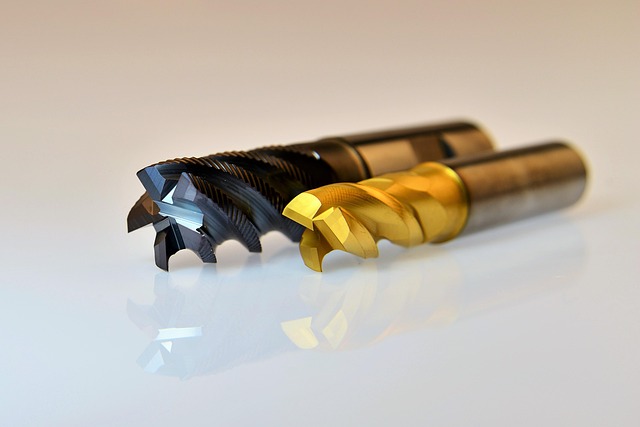
High-speed spindles available for the Cascade allow cutting from plastics up through non-ferrous metals with ease. ER collet systems support precise tool alignment while enabling quick swaps between operations. Dynamic balancing minimizes vibration at high RPMs—important when using micro end mills or fine engraving bits where chatter can ruin surface quality.
Workholding Solutions for Versatile Operations
A modular T-slot bed forms the basis of its workholding approach, allowing clamping flexibility for irregular geometries or multi-part setups. Optional vacuum plates or magnetic tables expand compatibility with thin sheet materials or delicate components that benefit from uniform holding pressure rather than mechanical clamps.
Software Ecosystem and Workflow Integration
Software integration determines how efficiently users move from CAD design to finished part production. The Cascade aims to simplify that workflow without restricting customization options.
CAM Workflow Optimization for Expert Users
Compatibility with major CAM suites allows seamless generation of complex toolpaths directly tailored to its motion controller profile. Post-processing scripts translate code accurately across different firmware setups, minimizing manual edits before execution. Simulation tools integrated into these workflows help detect potential collisions or excessive cut depths before material is wasted.
Connectivity, Monitoring, and Automation Features
Network connectivity enables remote monitoring—a useful feature when running long jobs overnight in shared workshops or labs. Integrated sensors collect usage data that can inform predictive maintenance scheduling based on spindle hours or axis travel distance. For facilities adopting Industry 4.0 principles, this data layer provides interoperability within automated shop-floor networks.
Evaluating Performance Metrics in Real-world Applications
Performance evaluation goes beyond specs; it depends on measurable results such as dimensional accuracy, surface quality, and reliability under continuous use.
Dimensional Accuracy and Surface Finish Quality Assessment
Tolerance testing indicates sub-micron repeatability under controlled conditions—a notable achievement for a desktop-class chassis. Surface roughness readings show improved finish consistency compared with earlier compact CNC models from other manufacturers. Multi-pass milling trials reveal reduced cycle times due to more efficient acceleration curves within its motion control logic.
Long-term Reliability and Maintenance Considerations
Modular construction simplifies component replacement without major teardown procedures—a practical advantage during maintenance cycles. Regular lubrication aided by built-in channels reduces wear on linear bearings even under frequent operation schedules typical in prototyping labs or educational facilities focused on continuous learning environments.
Implications for the Future of Desktop Precision Engineering
The release of the Voron Cascade suggests broader implications beyond one product line—it hints at where open-source hardware development may lead next within precision manufacturing circles.
Influence on DIY Manufacturing Trends Among Professionals
By merging open-source accessibility with near-industrial performance standards, the Cascade challenges traditional assumptions about what “DIY” equipment can achieve professionally. It encourages engineers to adopt open hardware not just as an experiment but as a dependable production tool bridging creative freedom with technical reliability.
Potential Pathways for Further Development in Open-source CNC Design
Future iterations could see community-driven firmware optimizations specific to exotic materials like carbon composites or titanium alloys processed at low feed rates. Hardware modularity also invites experimentation with alternative spindle technologies such as air-bearing units or hybrid drive systems combining linear motors with precision screws—each pushing desktop CNC closer to industrial benchmarks once thought out of reach.
FAQ
Q1: What makes the Voron Cascade different from other desktop CNC mills?
A: Its combination of rigid mechanical structure, adaptive control electronics, and open-source configurability allows industrial-level precision within a compact form factor rarely achieved at this scale.
Q2: Can it handle metal machining effectively?
A: Yes, especially non-ferrous metals like aluminum or brass when paired with appropriate spindle speeds and tooling setups optimized through its adaptive feed algorithms.
Q3: Is it suitable for educational use?
A: Absolutely; its modular architecture helps students explore mechanical concepts while maintaining enough robustness for real production training scenarios.
Q4: How does maintenance compare to commercial closed systems?
A: Easier overall—modular parts are user-serviceable without proprietary tools or locked firmware restrictions common in closed platforms.
Q5: Does it support remote operation?
A: Yes; network-enabled monitoring lets users manage jobs remotely while collecting performance data useful for maintenance planning or workflow optimization across multiple machines.