How a PVC welder joins PVC sheets, liners, and parts
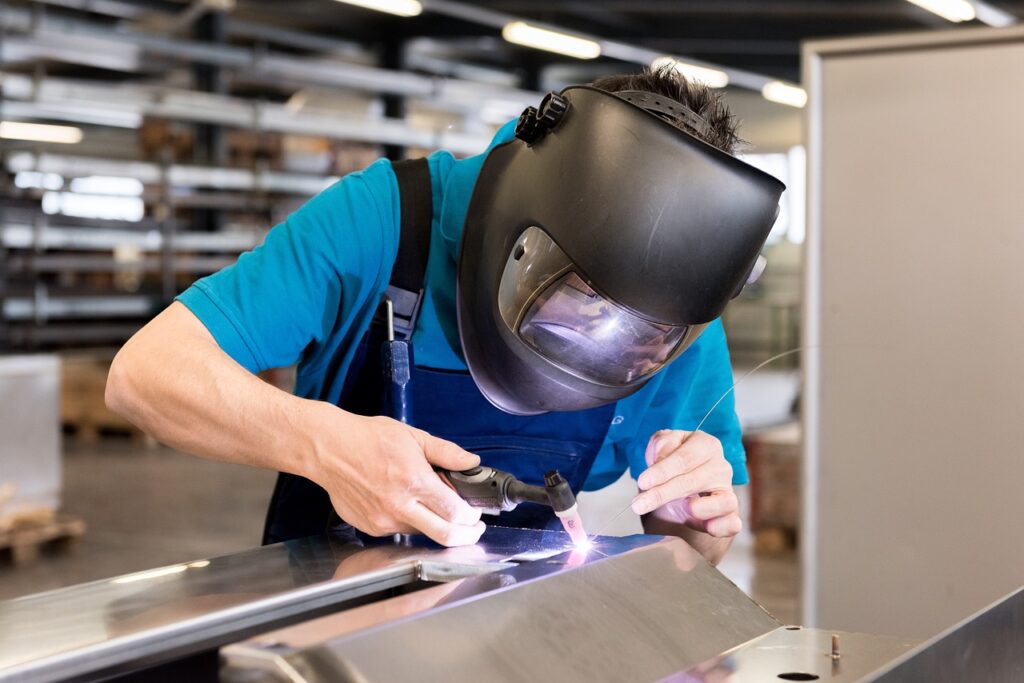
What a PVC welder does
A PVC welder joins polyvinyl chloride (PVC) by applying controlled heat, pressure, and cooling to fuse compatible thermoplastic surfaces. In industrial use, the term PVC welder may refer to the tool, the machine, or the qualified operator. The right method depends on the form of PVC being joined: rigid sheet, flexible membrane, coated fabric, pipe, duct, tank lining, or molded part. Hot-air welding is common for sheet work and repairs, extrusion welding suits thicker fabrications, hot-wedge welding is widely used for liners and membranes, and radio-frequency welding is often used for flexible PVC films. The practical question is not simply whether PVC can be welded. It is whether the process window, material match, surface preparation, fume control, and inspection method are suitable for the job.
For readers comparing plastic materials and joining options, this article belongs with other materials and joining methods used in manufacturing and fabrication.
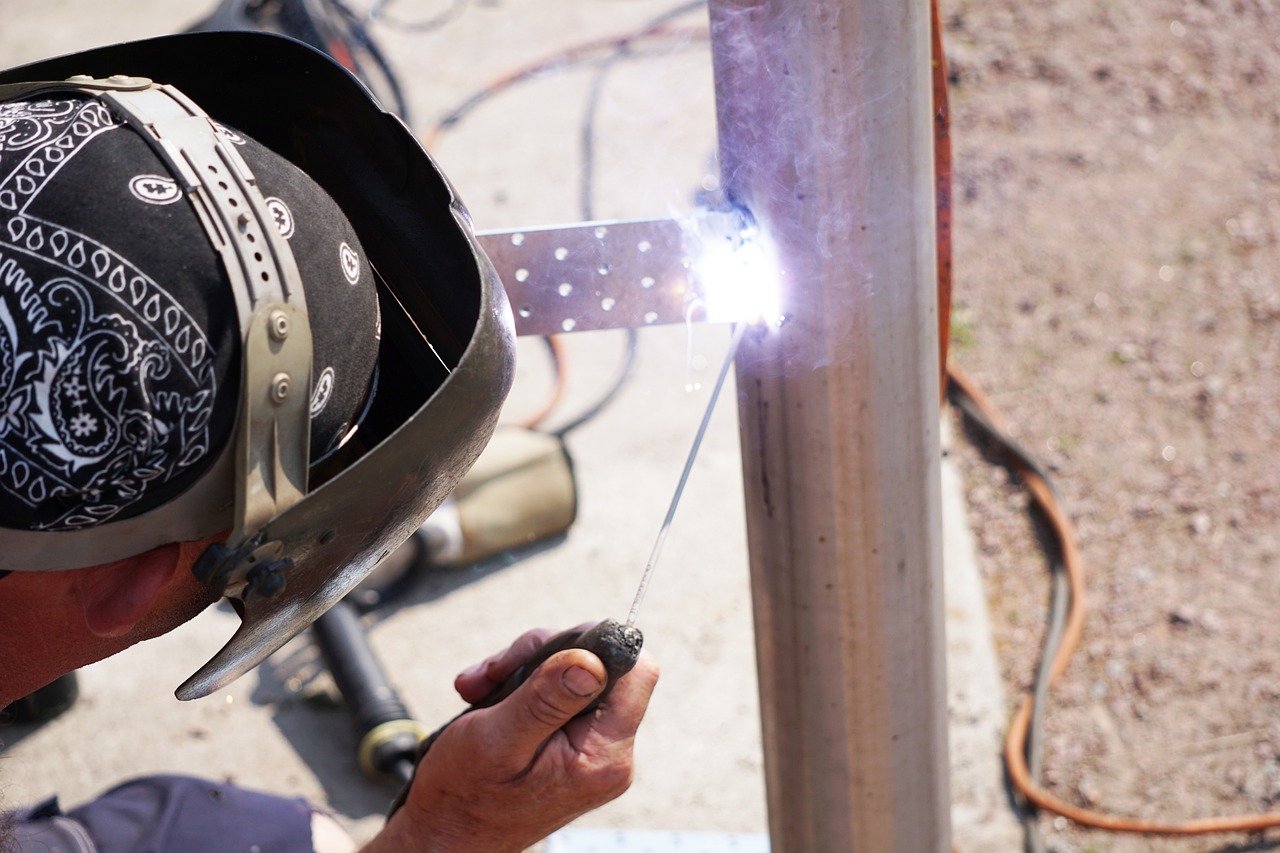
PVC is weldable, but the formulation matters
PVC is a thermoplastic, so it can soften under heat and, within a controlled range, fuse with another compatible PVC surface. That is why hot gas, extrusion, wedge, heated-tool, and high-frequency processes can all be used in different PVC applications. However, PVC is not one uniform material. Rigid PVC, plasticized flexible PVC, chlorinated PVC, reinforced PVC membrane, and PVC-coated technical textile can respond differently to heat and pressure.
The key material rule is compatibility. Guidance from organizations such as TWI and DVS consistently treats matching material type as central to hot gas and extrusion welding. A rigid PVC sheet should normally be welded with a compatible PVC rod; a flexible PVC membrane should be welded under parameters qualified for that membrane construction; and PVC-coated fabric should be assessed as a coated textile system rather than as a simple sheet. Additives, stabilizers, plasticizers, pigments, fillers, and reinforcement layers can all affect heat absorption, softening behavior, weld strength, and fume generation.
For that reason, a PVC welding procedure should not be copied blindly from another project. The operator should check the material data sheet, the welding rod or membrane specification, the equipment manual, and any project standard before setting temperature, speed, and pressure. When those documents are unavailable, trial welds and destructive testing become especially important.
Main types of PVC welder
There is no single PVC welding machine for every joint. The term PVC welder covers several processes, each with specific strengths and limits.
| Welder type | Typical PVC use | Main advantage | Main limitation |
|---|---|---|---|
| Hot-air or hot-gas hand welder | Rigid sheets, ducting, tanks, signs, repairs, small fabrications | Portable, versatile, suitable for complex shapes | Highly dependent on operator skill and hand control |
| Extrusion welder | Thicker sheet, tanks, containers, large structural plastic fabrication | Deposits more filler material than manual hot-air rod welding | Requires correct edge preparation, preheat, shoe design, and material match |
| Hot-wedge welder | PVC geomembranes, liners, containment sheets, roofing-style membrane seams | Continuous seam, repeatable pressure and travel speed | Mostly suitable for sheet-to-sheet seams with accessible overlap geometry |
| Radio-frequency or high-frequency welder | Flexible PVC film, inflatable products, tarpaulins, bags, medical-style pouches, coated textiles | Fast internal heating for polar thermoplastics such as PVC | Best suited to thin flexible materials and tooling-defined seams |
| Heated-tool or hot-plate equipment | Selected PVC parts, fittings, and production joints | Controlled contact heating in fixtures | Less flexible for field work and irregular geometries |
Hot-air welding
Hot-air welding uses a heated air stream to soften the base PVC and a compatible filler rod. The operator controls the gun angle, travel speed, rod pressure, nozzle position, and bead placement. It is useful when the joint shape is not suitable for automated equipment, but repeatability depends heavily on training and practice. Poor technique can create cold laps, voids, undercutting, surface scorching, or a bead that looks acceptable while having limited fusion at the root.
Extrusion welding
Extrusion welding combines hot-gas preheating with a small extruder that delivers molten thermoplastic filler into a prepared joint. It is used when a larger weld bead is required, especially in thicker PVC or large fabricated parts. Compared with hand rod welding, it can improve deposition rate, but it still depends on clean surfaces, a correct groove, compatible filler, and qualified parameters.
Hot-wedge welding
Hot-wedge welding is common for thermoplastic membranes. A heated wedge passes between overlapping sheets while rollers apply pressure behind it. In dual-track seams, two parallel welds can leave an air channel for pressure testing. ASTM standards for polymeric geomembranes and PVC dual-track seams describe how wedge-welded seams may be assembled and evaluated, while the project specification determines the required test regime.
RF welding
Radio-frequency welding, also called high-frequency or dielectric welding, differs from hot-air welding because heat is generated inside the polar thermoplastic under an alternating electric field. PVC is one of the common materials for this method. RF welding is especially relevant for flexible PVC film and coated fabrics where a shaped electrode can create a repeatable seam. It is usually not the first choice for thick rigid sheet fabrication or field repairs.
Process controls that decide weld quality
Most PVC weld failures trace back to a small group of controllable variables. The first is surface condition. Oil, dust, moisture, release agents, degraded surface layers, or incompatible cleaners can prevent fusion. Scraping or mechanical preparation may be needed, especially where the surface has aged or been exposed to contamination.
The second variable is heat input. Too little heat produces a cold weld with poor molecular intermixing. Too much heat can discolor or degrade PVC, damage reinforcement, produce fumes, and weaken the seam. Because PVC formulations differ, a useful welding procedure should specify how heat is measured: tool setting, measured air temperature near the nozzle, wedge temperature, or qualified machine setting. These values are not always the same.
The third variable is pressure. In hot-air hand welding, pressure comes from the operator through the rod or nozzle. In wedge and RF welding, pressure is applied by rollers or a press. Pressure must be high enough to consolidate the softened surfaces, but not so high that molten material is squeezed out or the sheet is thinned excessively.
The fourth variable is time, usually expressed as travel speed or dwell time. The same temperature can produce different results if the welder moves too fast or too slowly. A qualified procedure should therefore control temperature, speed, pressure, and cooling as a set rather than treating temperature as the only setting that matters.
Standards and qualification references to know
Several standards and guidelines help fabricators avoid treating PVC welding as guesswork. AWS B2.4:2023 covers welding procedure and performance qualification for thermoplastics and includes processes such as hot gas, extrusion, butt contact fusion, infrared, socket fusion, electrofusion, flow fusion, and solvent cement welding. DVS guidelines are widely referenced in plastic fabrication, including DVS 2207 documents for hot-gas and extrusion welding of thermoplastics and DVS guidance on welder examination and quality evaluation.
For personnel qualification in Europe and in projects that reference European practice, EN 13067:2020 specifies testing of thermoplastic welders’ knowledge and skill. It includes hot gas, extrusion, heated-tool, and other thermoplastic welding process groups, with PVC included in the relevant material groupings.
For liner and geomembrane work, ASTM D8580-24 provides guidance for hot-wedge welding of polymeric geomembranes, including the influence of temperature, speed, pressure, cleaning, and preparation. ASTM D7177 is commonly associated with air-channel evaluation of PVC dual-track seamed geomembranes. For PVC piping, ASTM D2564 addresses solvent cements for PVC plastic piping systems, which is important because many pipe joints called “welded” in everyday language are actually solvent-cemented rather than hot-air welded.
These standards do not replace project engineering. They provide a framework. The responsible party still has to define acceptance criteria, test frequency, operator qualification, equipment calibration, and documentation requirements for the actual job. See also: Machines.
Safety issues specific to PVC welding
PVC welding is a heat process, so fume control is not optional. The U.S. OSHA Technical Manual identifies hydrogen chloride as a thermal decomposition product associated with heating PVC. UK HSE plastics-processing guidance also lists hydrogen chloride among fumes associated with PVC. That does not mean every correct PVC weld releases the same level of hazardous gas, but it does mean overheating, burning, poor ventilation, and uncontrolled hot work should be treated as serious risks.
Good practice starts with the material safety data sheet and a task-specific risk assessment. Controls may include local exhaust ventilation, suitable general ventilation, keeping the operator’s breathing zone away from fumes, avoiding overheated tools, using correct nozzles, maintaining clean equipment, and selecting respiratory protective equipment when engineering controls alone are not sufficient. The strongest control is often procedural: qualify parameters that weld the material without scorching, then monitor operators and equipment so production does not drift outside that window.
Fire safety also matters. Remove combustible clutter, control hot nozzles, let tools cool safely, and pay close attention to confined or poorly ventilated spaces. In repair work, identify coatings, adhesives, fillers, or contamination before applying heat. Unknown layers can change both weldability and fume composition.
How to choose the right PVC welder
Choosing a PVC welder should begin with the joint, not with the catalog page. A small rigid sheet repair may need a compact hot-air welder, speed nozzle, compatible rod, scraper, and practice coupons. A thick tank wall may justify extrusion welding. A long liner seam is better suited to wedge welding with documented trial seams and seam testing. A flexible PVC pouch or inflatable seam may require RF equipment and a shaped electrode.
A simple selection checklist helps narrow the choice:
- Material form: rigid sheet, flexible sheet, coated textile, membrane, pipe, molded part, or composite construction.
- Thickness: thin films and membranes need different equipment from thick plate and fabricated tanks.
- Joint geometry: overlap, butt joint, corner joint, T-joint, fillet weld, patch, or production seam.
- Production volume: hand tools suit low-volume and repair work; mechanized systems suit long, repeated seams.
- Inspection method: visual inspection alone may be insufficient for pressure parts, liners, or safety-critical seams.
- Operator qualification: manual processes require stronger evidence of welder skill than highly fixtured automatic processes.
- Safety controls: ventilation, fume extraction, hot-work control, and PPE must match the task.
Cost should be evaluated after these technical requirements are clear. A cheaper tool can become expensive if it produces inconsistent seams, damages material, slows production, or leads to repeated rework. Conversely, a large automated system may be unnecessary when the work is occasional, irregular, and best handled by a trained hand welder.
Inspection and testing of PVC welds
Visual inspection is the first step, but it is not the whole quality plan. A PVC weld should be examined for uniform bead shape, correct width, continuous fusion, absence of burn marks, no obvious voids, no excessive squeeze-out, and no contamination trapped in the seam. For hot-air and extrusion welds, root and sidewall fusion are especially important because surface appearance can be misleading.
Depending on the application, testing may include peel tests, tensile tests, bend tests, spark testing, vacuum box testing, air-channel testing, pressure testing, or leak testing. Trial welds are useful before production because they show whether the chosen settings work on the actual material batch and site conditions. For wedge-welded PVC geomembranes, project specifications often require trial seams and field seam evaluation before the work is accepted.
Documentation should capture the material identification, welding method, equipment, operator, parameter settings, environmental conditions where relevant, inspection results, test results, and any repairs. This record is not paperwork for its own sake. It is how a fabricator proves that a PVC welder produced a controlled joint rather than a visually acceptable but unverified seam.
Frequently asked questions
Can all PVC be welded?
No. Many PVC products are weldable, but weldability depends on the formulation, reinforcement, plasticizer system, surface condition, and joint design. Always confirm the material grade and use trial welds when the material is unfamiliar.
Is a PVC welder the same as a heat gun?
Not exactly. A professional PVC hot-air welder is designed to deliver controlled air temperature, flow, and nozzle geometry for welding. A general heat gun may soften plastic, but it usually lacks the control and accessories needed for reliable structural or leak-tight welds.
Is PVC pipe usually joined with a PVC welder?
Many PVC piping systems are joined with solvent cement that conforms to standards such as ASTM D2564, not by hot-air welding. Some specialized thermoplastic pipe and fitting applications use thermal welding methods, but common PVC plumbing and process-piping joints are often solvent-cemented according to the applicable code and manufacturer instructions.
Why does PVC turn brown during welding?
Brown or dark discoloration usually suggests overheating, excessive dwell time, contamination, or material degradation. The weld should be stopped and the procedure checked before production continues.
What is the most important setting on a PVC welder?
Temperature is important, but it cannot be separated from speed, pressure, nozzle position, surface preparation, and cooling. Reliable PVC welding controls these variables together and verifies the result by inspection and testing.