How to evaluate an aluminum foil container making machine for food packaging production
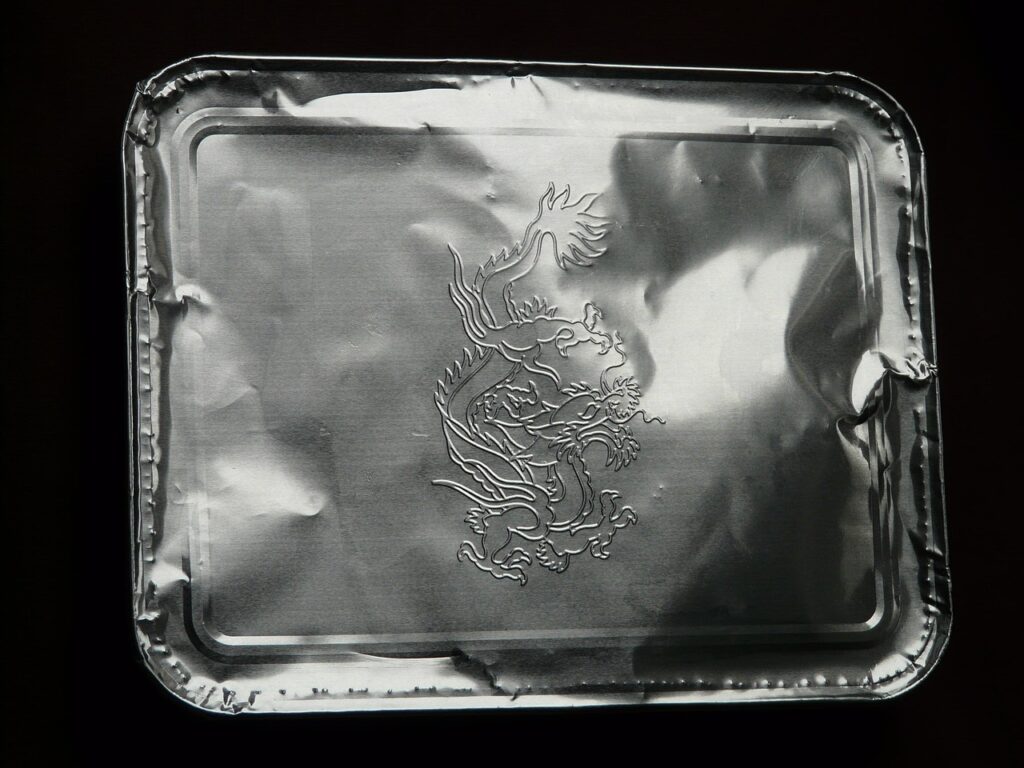
What an aluminum foil container making machine actually does
An aluminum foil container making machine converts container foil from a coil into pressed trays, pans, lids, or foodservice containers. For buyers and production planners, the machine should be assessed as a complete production line rather than as a standalone press. Actual performance depends on foil feeding, lubrication, die design, forming accuracy, stacking, scrap handling, safety systems, and the required finished-container specification. Public records from the U.S. International Trade Commission describe aluminum containers as products made from thin-gauge aluminum alloy foil, usually formed by specialized machinery that unwinds, feeds, lubricates, presses, cuts, and collects the finished container and remaining scrap. (usitc.gov)
This distinction matters in production. Two machines with similar press tonnage can perform very differently once the foil, die, container depth, and stacking requirements are fixed. A line that runs reliably with shallow round cups may not be suitable for deeper airline trays, multi-compartment meal boxes, bakery pans, or heavier catering containers. The better purchasing question is not only “How fast is it?” but “Can this line make the required container, from the approved foil, at an acceptable scrap rate and with safe, repeatable operation?”
The main sections of a container production line
A typical line starts with a foil roll and ends with nested stacks of finished containers. Layouts vary by manufacturer, but the basic process flow is broadly consistent across industrial descriptions of foil container production.
Decoiling and web control
The decoiler holds the aluminum foil coil and releases it into the machine. Stable unwinding is essential because thin foil can wrinkle, wander, or stretch when tension is not controlled. A practical machine review should confirm the maximum roll width, roll weight, core size, tension control, edge guidance, and whether the line can accept the planned foil supplier’s coil format.
Feeding, straightening, and lubrication
After unwinding, the foil is guided and fed into the press area. Public USITC manufacturing descriptions note that container foil is straightened and passed through an oil feeder for lubrication before entering the pneumatic press. Lubrication helps reduce friction between the foil and the tooling and can reduce visible defects in the finished piece. (usitc.gov)
The feeding system is one of the critical parts of the line. Servo feeding can improve length control, but the specification still needs to be checked against the actual mold pitch and foil thickness. Overfeeding wastes material; underfeeding can cause incomplete forming, tearing, rim defects, or unstable cutting.
Press and forming dies
The press supplies the force and motion needed to form flat foil into a three-dimensional container. The dies define the container shape, rim style, compartment layout, wall pattern, and cutting edge. One machine may be able to run different dies, but every die has operating limits. A multi-cavity die can increase output per stroke, yet it also requires accurate feeding, even lubrication, sufficient press capacity, and reliable scrap removal.
Ejection, stacking, and scrap collection
After forming and cutting, containers must be removed cleanly, counted, and stacked without deformation. Leftover foil is normally collected for recycling or remelting, but scrap recovery value depends on keeping the scrap stream reasonably clean and separated from contamination. Production planning should also allow for scrap conveying, baling or compaction options, operator access, and floor space around the line.
Material fit is as important as machine capacity
Container foil is not a single universal material. The U.S. International Trade Commission has described common food container foil alloys as 3003, 3004, 8006, and 8011, with gauges often discussed in the range of about 0.03 mm to 0.20 mm in investigation records. A later USITC record also notes that aluminum container raw material is usually 3XXX or 8XXX-series alloy foil, often called container foil or container stock. (usitc.gov) (usitc.gov)
Those figures are useful industry references, not a universal design rule. A container producer still needs a written material specification for each product. That specification should define alloy, temper, thickness tolerance, width tolerance, surface condition, lubrication compatibility, coating or lacquer if used, and food-contact documentation. The mold supplier and foil supplier should both review the specification because forming performance depends on the interaction between material and tooling.
| Material factor | Why it affects machine choice | What to verify before production |
|---|---|---|
| Alloy and temper | Influence strength, ductility, springback, and rim stability | Trial forming with the exact container geometry |
| Foil thickness | Affects rigidity, draw behavior, cut quality, and material cost | Approved tolerance range and minimum finished-piece weight |
| Coating or lacquer | Can affect food-contact use, lubrication, and die wear | Compatibility with food type, heat route, and forming process |
| Coil width and roll format | Determines feeder setup, lane count, and scrap percentage | Line acceptance for roll width, core size, roll weight, and tension |
| Surface cleanliness | Impacts appearance, stacking, and downstream packing | Incoming inspection standard and storage controls |
For more background on industrial material selection, packaging metals, and related manufacturing topics, see the Materials section.
How to compare machine specifications without being misled
Machine quotations often emphasize press tonnage, nominal speed, or automation level. These values are useful, but they do not prove that a line can make saleable containers under continuous production conditions. The following checks are more meaningful during supplier comparison.
Start with the finished container
Define the product before comparing machines. A proper request should include top length and width, bottom length and width, depth, rim style, wall pattern, compartments, lid fit, finished weight, stacking count, and acceptable visual defects. If the product must fit a sealing lid or carton, include those dimensions as well. The mold cannot be designed accurately from a casual photo or nominal capacity alone.
Ask for line-level output, not press-only speed
A press stroke rate is not the same as stable finished-container output. Real output is limited by feeding accuracy, lubrication, air ejection, stacker response, container nesting, scrap removal, operator intervention, and quality checks. Buyers should ask for the expected good-piece rate for the specified container and foil, together with the assumptions behind that number.
Review changeover requirements
Container producers often serve several foodservice formats. If frequent product changes are expected, the die-change method, setup time, tooling weight, storage system, alignment procedure, and operator skill requirement become major cost factors. A lower-cost machine can become expensive if every changeover requires long downtime or repeated trial-and-error adjustment.
Check maintainability and spare parts
Forming dies, cutting edges, feeders, sensors, cylinders, valves, lubrication components, and stacker parts are wear items. Maintenance planning should include spare die inserts, cutting components, guide parts, lubrication nozzles, safety switches, and PLC or HMI support. The supplier should provide electrical diagrams, pneumatic diagrams, lubrication instructions, fault-code descriptions, and a recommended spare-parts list.
Food-contact and packaging rules affect machine decisions
The machine does not by itself make a package compliant. Compliance depends on the finished container, raw material, coatings, lubricants, cleaning controls, intended food, and market of sale. In the United States, the FDA describes food contact substances as substances that contact food but are not intended to have a technical effect in the food; examples include packaging and its components, processing equipment, preparation surfaces, and cookware. FDA consumer information also explains that food contact substances that are food additives must be authorized for their intended use before marketing. (fda.gov)
For European markets, food-contact materials must comply with the general safety and inertness principles of Regulation (EC) No 1935/2004. The European Commission states that food contact materials should not release constituents into food at harmful levels or change food composition, taste, or odor in an unacceptable way. (food.ec.europa.eu) See also: Machines.
Packaging recyclability is also becoming a stronger design constraint. The European Commission says the Packaging and Packaging Waste Regulation began applying from mid-2026 and that all packaging must be recyclable by 2030. For foil container producers, this does not mean every design is automatically accepted by every collection system. It means tooling, coatings, labels, lids, and composite parts should be reviewed early, especially when containers are sold into regulated or export markets. (environment.ec.europa.eu)
For machine selection, the practical takeaway is clear: do not choose a line before confirming the intended food-contact route. If containers will be used for acidic, salty, hot-fill, frozen, ovenable, or airline catering applications, the buyer should confirm material suitability and obtain documentation from the foil, coating, and lubricant suppliers. The machine should also be easy to clean and maintain so that oil mist, dust, and scrap do not undermine hygiene expectations.
Safety and risk reduction should be reviewed before acceptance
An aluminum foil container line includes moving rolls, feeders, a powered press, dies, scrap systems, air ejection, conveyors, and electrical controls. These create pinch, crush, cut, entanglement, and unexpected-start hazards. OSHA’s general machine-guarding rule for U.S. workplaces requires guarding methods to protect operators and other employees from hazards such as point of operation, ingoing nip points, rotating parts, flying chips, and sparks. (osha.gov)
Internationally, ISO 12100:2010 provides principles and a methodology for machinery risk assessment and risk reduction, including identifying hazards, estimating and evaluating risks through the machine life cycle, and documenting risk reduction. ISO states that the 2010 edition was reviewed and confirmed in 2022, while a revised version is under development. (iso.org)
Safety should be part of the purchase specification, not an afterthought at installation. A buyer should review fixed guards, interlocked access doors, emergency stops, two-hand controls where appropriate, lockout points, safe die-change procedures, guarding around the feeder and stacker, electrical cabinet layout, warning labels, and operator manuals. If the machine will be placed on the EU market, the transition to Regulation (EU) 2023/1230 on machinery is also relevant because official EU information states that the new machinery regulation applies from January 20, 2027. (eur-lex.europa.eu)
A practical acceptance checklist for buyers
Before final payment or shipment, the buyer should witness a factory acceptance test whenever possible. The test should use the same or equivalent foil, the approved die, and the required container design. A short empty demonstration is not enough for a production line that will run daily.
- Container quality: Check rim formation, wall wrinkles, corner cracking, pinholes, bottom flatness, compartment accuracy, and stacking stability.
- Dimensional control: Measure top size, bottom size, depth, rim width, lid fit, and finished weight over multiple samples.
- Feeding accuracy: Confirm stable pitch, edge alignment, low wrinkling, and consistent lubrication over a realistic run.
- Scrap handling: Verify that the skeleton scrap is removed without jams and that scrap does not interfere with finished containers.
- Stacking and counting: Test the actual stack count, nesting quality, manual removal points, and downstream packing workflow.
- Changeover: If multiple molds are included, observe at least one die change and record the tools, time, and alignment steps needed.
- Safety functions: Test emergency stops, interlocks, guards, reset behavior, and lockout points according to the agreed protocol.
- Documentation: Collect manuals, drawings, software backup terms, pneumatic and electrical diagrams, spare-parts lists, and maintenance schedules.
The strongest acceptance test defines what counts as a good container and what counts as a reject. Without that agreement, speed claims and sample photos are easy to misunderstand. A good contract should also state who supplies trial foil, how many test hours are required, what defect level is acceptable, and what happens if the line fails to meet the agreed test standard.
Frequently asked questions
Is press tonnage the most important specification?
Press tonnage is important, but it is not the whole decision. The container shape, draw depth, foil thickness, alloy, cavity count, die design, feeder accuracy, and ejection system all influence whether the machine can produce stable containers. Buyers should evaluate tonnage together with real sample trials.
Can one machine make many different foil containers?
One machine can often run multiple dies if the press size, stroke, feeder width, shut height, stacker layout, and control system allow it. However, very different container depths, widths, or cavity layouts may require a different press size or line configuration. The safest approach is to list every planned product before ordering the machine.
What raw material should be specified for production?
The raw material should be specified by alloy, temper, thickness, width, surface condition, and food-contact requirements. Public industry records commonly discuss 3XXX and 8XXX-series container foil, but the final choice must match the actual container design and market requirements.
Why does lubrication matter in foil container forming?
Lubrication reduces friction between the foil and the tooling during feeding and forming. Poor lubrication can contribute to tearing, surface marks, unstable forming, and die wear. It must also be compatible with the intended food-contact and cleaning requirements.
Should buyers focus on the lowest machine price?
Price matters, but the lowest purchase price may not produce the lowest operating cost. Scrap rate, downtime, die life, spare-parts availability, energy use, labor requirement, safety upgrades, and after-sales support can have a larger long-term effect than the initial machine price.
Final buying perspective
An aluminum foil container making machine should be selected from the finished package backward. Start with the container design, food-contact route, target market, material specification, and production volume. Then evaluate the decoiler, feeder, lubrication system, press, die, stacker, scrap system, safety functions, documentation, and service support as one integrated production system.
The most reliable decision is based on tested samples, written acceptance criteria, and documented assumptions. If a supplier can only offer headline speed, general photos, or broad promises, the buyer still carries the production risk. If the supplier can demonstrate the exact container, with the approved foil, under controlled acceptance conditions, the machine decision becomes far more predictable.