How Do You Choose the Best Laser Cutter for Sheet Metal?
Why Should a Laser Cutter for Sheet Metal Matter to Your Shop?
A laser cutter for sheet metal does more than cut steel out of a nest. It affects quoting, batch planning, tolerance control, and the amount of grinding or fitting needed after cutting. If you look at cutting, bending, welding, and finishing as one production chain, the best place to start is the full Processes route, because the cut edge has to work well with the next step.
Cleaner Cutting Routes
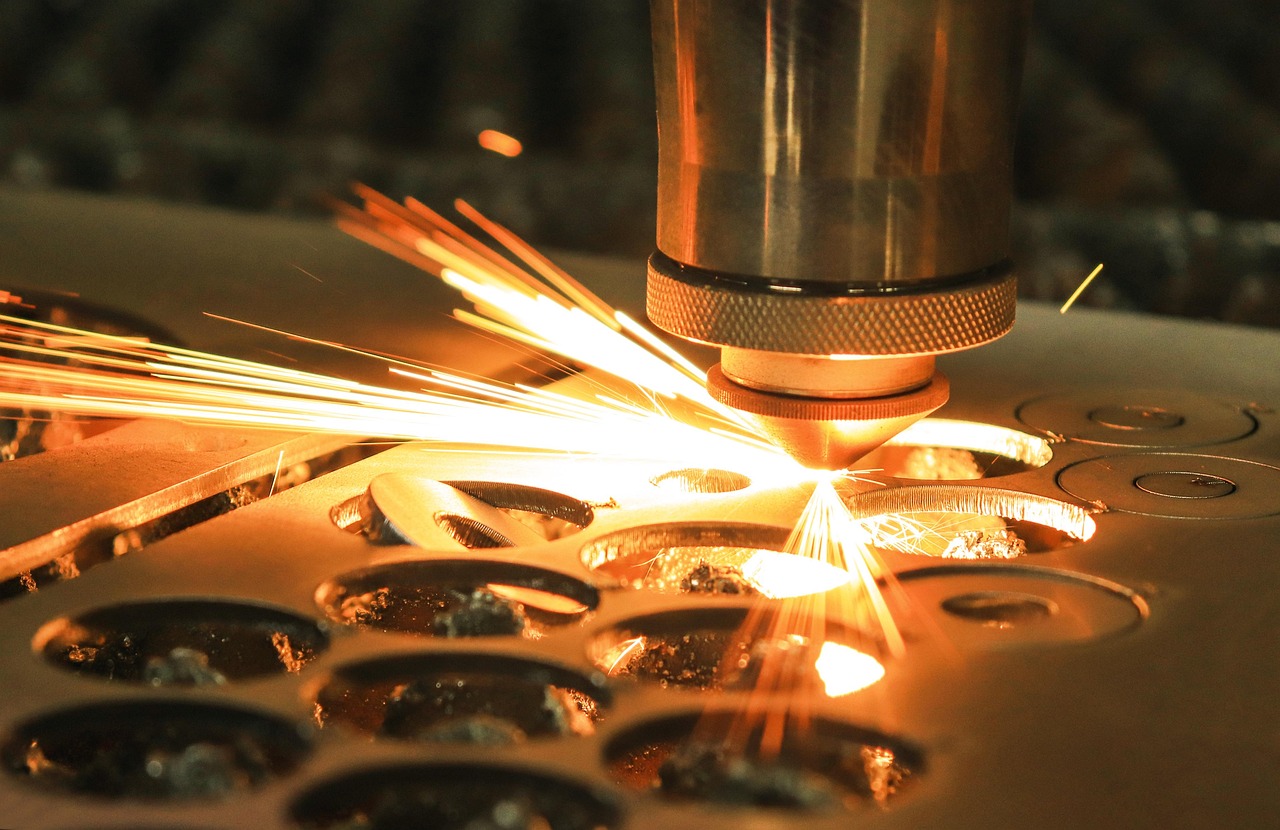
Laser cutting uses a focused beam and assist gas to melt or react with the cut path. In daily shop work, that means a narrow kerf, lower heat input, and more freedom for holes, slots, logos, brackets, tabs, and small profiles. A part that once needed milling after cutting may come off the laser ready for bending or welding. That matters on export orders where the drawing is tight and the buyer does not want extra finishing work.
Faster Sheet-to-Part Flow
Modern fiber laser systems are common because they cut many sheet metals fast and do not need the same mechanical tooling as punching. A 2026 IPG Photonics technical article, excerpted from SME Manufacturing Engineering, reported that sheet metal laser cutting had grown more than 10 percent annually over the previous decade, and that available cutting power had risen from 6 kW in 2016 to 40 kW in 2022. This does not mean every shop should buy the highest-power machine. It does show why many fabricators now treat laser cutting as a normal production process, not a special option.
Better Fit for Export Orders
If your customers send CAD files, STEP files, DXF drawings, or mixed-volume orders, a laser process helps move from file to finished blank with fewer tooling delays. This works well for brackets, control cabinet panels, appliance parts, equipment guards, stainless covers, and welded frames. One point from shop experience is worth saying clearly. A neat laser edge still does not save the job if hole callouts, burr limits, or grain direction are missing from the drawing.
What Power and Table Size Should You Choose?
The right machine is not always the largest one in the brochure. It depends on your usual material mix, maximum thickness, sheet format, part size, and how many hours the machine will run each day. A cutter for thin stainless covers has a different job from a cutter for thick carbon steel base plates.
Power Matched to Real Sheet Thickness
Thin sheet work often needs speed, clean piercing, and fine detail more than headline power. When thickness goes up, higher power helps keep the cut stable, especially on carbon steel and aluminum. Even then, cutting charts can vary by machine brand, beam quality, material grade, nozzle, gas, and lens condition. So it is better to ask for sample cuts on your own material instead of relying only on catalog data.
Bed Size Matched to Sheet Flow
A common flatbed size such as 3015 suits many standard sheets. Larger beds can help with long panels, better nesting yield, or fewer reloads during the shift. Bigger tables also need more floor space, better loading plans, and safer material handling. If sheets arrive by forklift and parts leave in kits, table access and unloading lanes can matter almost as much as cutting speed.
Automation Matched to Shift Pattern
If the laser runs only a few hours per day, manual loading may be enough. If you cut repeat panels, night batches, or high-mix nests, pallet changers and storage towers can reduce waiting time. The practical question is simple: does the operator wait for the machine, or does the machine wait for the operator? That answer often decides whether automation will pay back.
Which Materials and Assist Gases Change Cut Quality?
Material and gas choices affect edge color, burr, weldability, and cost. A laser head may move fast, but the cut zone still follows basic cutting conditions. Gas clears molten metal from the kerf, protects the edge, and sometimes adds heat through oxidation.
Mild Steel and Oxygen Edge Trade-Off
Oxygen cutting is widely used for mild steel because the oxidation reaction adds heat to the process. The edge can have oxide scale, and that may affect welding, coating, or paint adhesion when the specification is strict. For structural brackets and general housings, this may be acceptable. For parts that need clean weld seams or powder coating with less prep, the edge requirement should be stated before quoting.
Stainless Steel and Nitrogen Edge Needs
Nitrogen is often used for stainless steel because it helps reduce edge oxidation and leaves a brighter surface. It normally costs more than oxygen and may need higher pressure. TRUMPF’s public laser cutting application material describes fusion cutting gas pressures from 2 to 20 bar. That is a useful reminder that gas supply is not a small add-on; it is part of the cutting system.
Aluminum and Reflective Metal Control
Aluminum, brass, and copper need more attention because of reflection, heat conduction, and piercing behavior. Fiber lasers can cut many reflective metals, but stable results depend on the source, cutting head protection, parameter control, and a clean material surface. If your work includes brushed aluminum panels or copper busbar parts, ask for test samples before committing. Check the back side as well as the top face, because many cutting problems show up there first.
How Should You Judge Accuracy, Kerf, and Edge Quality?
Accuracy is not just one number on a machine sheet. It includes machine positioning, heat behavior, kerf compensation, sheet flatness, nozzle condition, and the way the drawing defines acceptance. A good supplier should be ready to discuss inspection, not only machine power.
Drawing Tolerances Before Machine Claims
Start with the print. If the drawing says a tab must fit a slot after bending, the cutting tolerance has to support the whole assembly, not only the flat blank. ISO 9013:2017, confirmed current by ISO in 2022, covers geometrical product specifications and quality tolerances for thermal cuts and states applicability for laser cuts from 0.5 mm to 32 mm. This reference is useful when a drawing needs a recognized quality basis.
Kerf Width and Heat-Affected Zone
Laser kerf is usually narrow, so it helps save material and allows small features to sit close together. Still, heat affects the edge, and very thin webs, small holes, and sharp inside corners can move if nesting or lead-in settings are poor. If a part has many small slots, ask for a first article sample before full production. It takes a little more time at the start, but it is cheaper than sorting or reworking a full batch.
Burr, Dross, and Edge Color Checks
Do not judge a laser-cut part only by the top surface. Flip it over and check dross, burr height, corner rounding, taper, slag at pierce points, and discoloration. For visible stainless parts, edge color can be important. For welded frames, fit-up may matter more. For powder-coated panels, even a small burr can turn into a coating defect later, and customers usually notice it after shipment. See also: Machines.
What Costs Matter After the Machine Price?
The purchase price is only the number people see first. The ongoing costs include electricity, gas, lenses, nozzles, filters, chillers, maintenance time, scrap, training, safety controls, and idle hours. A lower machine price can look good at the start, but gas use, downtime, or weak service support can quickly eat the margin.
Power Use and Duty Cycle
Energy matters because laser cutting is part of the wider industrial energy load. The U.S. EPA reported that in 2022, direct and indirect industrial greenhouse gas emissions accounted for 30 percent of total U.S. greenhouse gas emissions, and it lists energy efficiency as a reduction route for industry. For a buyer, the working point is clear. Compare wall-plug efficiency, chiller demand, standby power, and real duty cycle, not only cutting watts.
Assist Gas and Consumables
Nitrogen, oxygen, compressed air, filters, nozzles, protective windows, ceramics, and slats all affect running cost. Nitrogen may give cleaner stainless edges, but the gas bill can be high on long nests. Oxygen can cut carbon steel at lower pressure, but the edge may need more prep. Compressed air can reduce gas cost on some materials, but edge quality still has to meet the customer’s requirement.
Maintenance, Training, and Safety
Laser machines need trained operators and guarded work areas. OSHA’s laser hazards guidance points to general industry standards for personal protective equipment and names ANSI Z136 laser safety standards, including guidance for manufacturing environments, along with ANSI B11.21 for laser processing machine tools. For your shop, this means guarding, interlocks, eyewear rules, fume extraction, fire control, and written procedures are part of the machine choice. These items are not paperwork only; they affect daily production and operator safety.
How Can You Make the Final Buying Decision?
A good buying decision comes from matching the laser to your parts, not forcing your parts to fit a sales pitch. Keep the process practical. Send sample files, ask for cut trials, compare edge samples, and calculate the cost per acceptable part.
Sample Parts Before Purchase
Choose three to five real parts for testing: one thin part, one thick part, one part with holes, one cosmetic part, and one part that has caused trouble before. Ask the supplier to cut them using your target material grade and thickness. The sample report should include programmed time, gas type, gas pressure, edge notes, and any secondary work needed. Without those details, it is hard to compare one machine or supplier against another.
Supplier Support After Installation
Service response, spare parts, software help, and parameter training matter when production is busy. A machine that stops for two days can delay welded assemblies, finishing, packing, and export delivery. Before you buy, ask who handles installation, who trains operators, how fast consumables ship, and whether remote support is available in your time zone. These questions sound basic, but they often decide how smooth the first few months will be.
Process Fit Across the Whole Factory
The best laser cutter should support the next steps in the factory. If parts go to press brake bending, check grain direction, bend relief, and hole distance from bend lines. If parts go to welding, look at edge oxide and fit-up. If parts go to coating, control burrs and oil. A laser is a strong starting point, but the finished product is what wins the order.
FAQ
Q1: What Is the Best Laser Cutter for Sheet Metal? A: The best choice depends on material, thickness, production volume, and edge requirements. For many sheet metal shops, a fiber laser is the common choice because it cuts steel, stainless steel, and aluminum efficiently.
Q2: How Much Laser Power Do You Need for Sheet Metal? A: Match power to your thickest common sheet, not a rare job that appears once in a while. Thin sheet may run well on lower power, while thicker carbon steel or aluminum often pushes buyers toward higher-power systems.
Q3: Is Nitrogen Better Than Oxygen for Laser Cutting? A: Nitrogen is often better when you need a clean, bright, low-oxidation edge, especially on stainless steel. Oxygen can be useful for carbon steel because it adds heat through oxidation, but the edge may need more cleaning.
Q4: Can Laser Cutting Replace Plasma Cutting? A: Laser cutting can replace plasma for many thin and medium sheet jobs that need fine detail and cleaner edges. Plasma may still make sense for very thick plate, rough profiles, or lower-cost cutting where edge quality is not the main issue.
Q5: What Should You Check Before Ordering Laser-Cut Sheet Metal Parts? A: Check material grade, thickness, tolerance, edge finish, burr limits, hole size, bend direction, coating needs, and delivery quantity. Clear drawings reduce rework and make pricing more accurate.