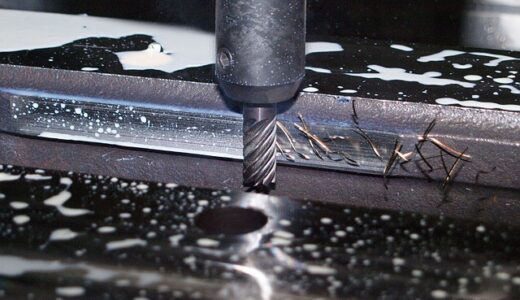
Can Drill Machine Rate Accurately Reflect Deep Well Penetration Efficiency
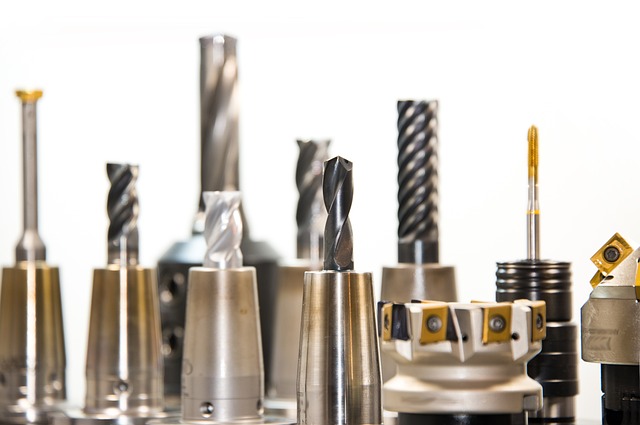
Research on Deep Well Drilling Rate of Penetration Prediction Method Based on TCN-Transformer Model
The efficiency of deep well drilling depends largely on how accurately the drill machine rate reflects real penetration performance. Traditional models often fail to capture complex downhole dynamics, leading to inconsistent predictions. The TCN-Transformer hybrid model addresses this by combining local temporal feature extraction with global sequence attention, improving prediction stability and adaptability in variable geological conditions. This approach not only refines real-time decision-making but also supports cost control through predictive optimization of drilling parameters.
Defining Drill Machine Rate and Its Measurement Principles
The drill machine rate, or rate of penetration (ROP), is a fundamental metric used to evaluate drilling performance. In deep wells, it serves as a direct indicator of how efficiently the bit advances through rock formations.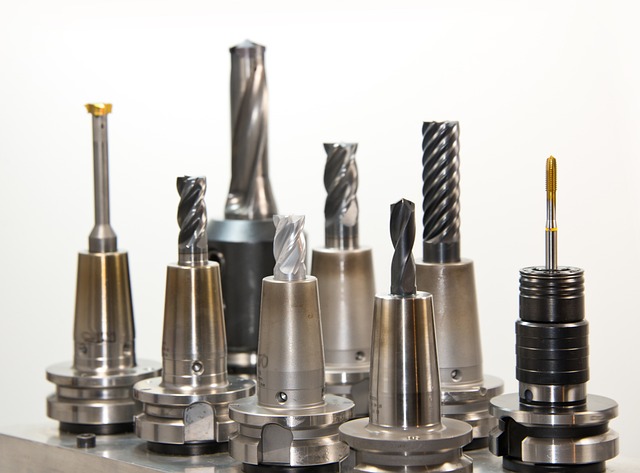
Explanation of Rate of Penetration (ROP) as a Key Drilling Performance Indicator
ROP measures the distance drilled per unit time, typically expressed in meters per hour or feet per hour. It reflects both mechanical and operational efficiency, providing immediate feedback on drilling progress.
Measurement Parameters Influencing ROP, Including Weight on Bit, Rotary Speed, and Mud Flow Rate
Key variables affecting ROP include weight on bit (WOB), rotary speed (RPM), and mud flow rate. Increased WOB enhances bit-rock contact force, while optimal RPM ensures effective cutting action. Mud flow assists in cooling and cuttings removal, maintaining consistent drilling pressure.
Limitations of Traditional ROP Measurements in Deep Well Environments
At great depths, conventional ROP measurements suffer from time delays and signal distortion due to high-pressure conditions and limited sensor resolution. These limitations reduce the reliability of surface-based ROP readings for real-time optimization.
Relationship Between Drill Machine Rate and Penetration Efficiency
While ROP provides a snapshot of drilling speed, true penetration efficiency depends on how effectively energy is converted into rock removal under varying geological conditions.
How Drill Machine Rate Correlates with Formation Hardness, Bit Wear, and Drilling Fluid Properties
Harder formations naturally yield lower ROP values due to increased resistance. As bits wear down or lose sharpness, penetration efficiency declines even if surface parameters remain constant. Drilling fluids influence chip removal and bit cooling, indirectly affecting ROP stability.
Factors That Cause Deviations Between Measured ROP and Actual Penetration Efficiency
Deviations often arise from poor cuttings transport or uneven bottom-hole cleaning. Mechanical friction between the drill string and borehole wall can also create misleadingly low readings despite steady torque input.
The Influence of Dynamic Drilling Conditions on Real-Time Rate Interpretation
Fluctuating downhole pressures or vibration-induced stick-slip effects distort instantaneous measurements. Advanced signal processing is required to distinguish between transient noise and genuine changes in penetration behavior.
Challenges in Using Drill Machine Rate as an Indicator for Deep Well Efficiency
In deep wells exceeding several thousand meters, both geological variability and mechanical instability complicate the interpretation of drill machine rate data.
Geological and Mechanical Factors Affecting Accuracy
Lithological changes alter rock compressive strength, leading to unpredictable shifts in ROP response. Stick-slip oscillations cause intermittent bit contact that skews average rates. Bit-balling—accumulation of cuttings near the bit—further reduces accuracy by obstructing fluid circulation.
Data Acquisition and Signal Noise Issues
Sensor precision declines with depth due to temperature gradients and electromagnetic interference. Transmission delays between downhole sensors and surface systems introduce latency that hampers real-time analysis. Filtering algorithms are thus essential for isolating meaningful patterns from noisy datasets.
Modeling Approaches for Predicting Deep Well Penetration Efficiency
Predictive modeling has evolved from empirical equations to adaptive learning frameworks capable of handling nonlinear dependencies among drilling variables.
Traditional Empirical and Statistical Methods
Regression-based models link input parameters such as WOB or RPM to expected ROP outcomes using historical data fits. However, these deterministic approaches struggle under dynamic downhole environments where parameter interactions change rapidly.
Introduction to the TCN-Transformer Hybrid Model
Temporal Convolutional Networks (TCN) effectively capture short-term dependencies across time-series signals like torque or pressure fluctuations. Transformer architectures extend this capability by modeling long-range correlations using self-attention mechanisms. Integrating both enables fine-grained feature extraction while preserving contextual continuity across extended drilling sequences.
Application of the TCN-Transformer Model in Drilling Rate Prediction
Deploying this hybrid model requires structured data pipelines that align physical measurements with time-synchronized sensor streams for accurate training.
Model Architecture and Input Feature Engineering
Data Preprocessing Techniques
Data normalization minimizes scale disparities among mechanical parameters such as WOB or RPM. Selected features typically include mud density, standpipe pressure, vibration amplitude, and torque—all critical indicators of downhole performance stability.
Model Training Process
Time-series segmentation divides continuous drilling logs into labeled intervals representing distinct formation zones. Optimization algorithms like Adam or RMSProp stabilize convergence during iterative training cycles by adjusting learning rates dynamically based on gradient magnitude.
Performance Evaluation Metrics
Quantitative Assessment Criteria
Model accuracy is evaluated using Mean Absolute Error (MAE) and Root Mean Square Error (RMSE). These metrics quantify deviation between predicted and actual penetration rates across test datasets. Comparative benchmarks often reveal superior consistency over LSTM or CNN-only configurations.
Validation Under Field Conditions
Cross-validation with multi-well datasets verifies robustness against lithological diversity. Sensitivity tests further assess how variations in WOB or mud viscosity affect model reliability under field constraints.
Practical Insights from Model Implementation in Deep Wells
Integrating predictive outputs into automated control systems transforms how operators manage deep well operations day-to-day.
Enhancing Real-Time Decision-Making Capabilities
By feeding predicted penetration efficiency into control loops, operators can adjust WOB or RPM proactively before inefficiencies escalate. This closed-loop feedback reduces downtime associated with reactive parameter tuning.
Improving Operational Efficiency and Cost Control
Predictive insights minimize nonproductive time by identifying early signs of bit dullness or fluid imbalance. Optimized bit selection strategies based on predicted efficiency trends help extend tool life while reducing total cost per meter drilled.
Future Research Directions for Accurate Penetration Efficiency Prediction
Emerging research continues refining hybrid modeling frameworks through enhanced data integration techniques and physics-informed constraints.
Advancements in Data Fusion Techniques
Combining surface-derived signals with downhole MWD telemetry creates richer input sets that better represent true operating conditions across depth intervals.
Incorporation of Physics-Informed Neural Networks (PINNs)
Embedding rock mechanics equations within neural architectures constrains learning to physically plausible solutions, improving generalization when encountering unseen formations.
Adaptive Learning Systems for Continuous Model Updating
Online learning allows models to recalibrate continuously during active drilling campaigns, maintaining accuracy despite evolving geological profiles or equipment wear patterns.
FAQ
Q1: What does drill machine rate indicate in deep well operations?
A: It represents how fast the drill bit penetrates rock layers per unit time, serving as a measure of overall drilling performance efficiency.
Q2: Why is traditional ROP measurement unreliable at extreme depths?
A: High temperature, pressure variations, and delayed signal transmission distort readings from standard surface sensors.
Q3: How does the TCN-Transformer model improve prediction accuracy?
A: It merges local temporal pattern recognition from TCNs with global context awareness from Transformers for more stable output across complex data sequences.
Q4: What are key factors influencing deviations between measured ROP and true efficiency?
A: Bit wear, formation hardness variability, poor cuttings transport, and stick-slip vibrations all contribute to measurement inaccuracies.
Q5: How can predictive models help reduce drilling costs?
A: By forecasting efficiency drops early, they enable timely adjustments that prevent tool damage and minimize nonproductive rig time.