What Does CNC Laser Cutting Machine Price Reveal About True Performance

Testing the Best Laser Cutters and Engravers Is One of the Best Parts of My Job
Exploring the market for CNC laser cutting machines reveals how engineering precision, component quality, and control systems shape real-world performance. Price alone rarely defines capability. The most advanced systems balance cost with accuracy, reliability, and long-term efficiency. Experts evaluating any cnc laser cutting machine price must look beyond wattage or brand reputation to assess structural design, software intelligence, and operational economics that determine total value.
Understanding CNC Laser Cutting Machine Pricing Dynamics
Evaluating cnc laser cutting machine price requires a technical view of how design choices influence cost. Each element—from frame materials to control firmware—affects both upfront investment and lifetime performance.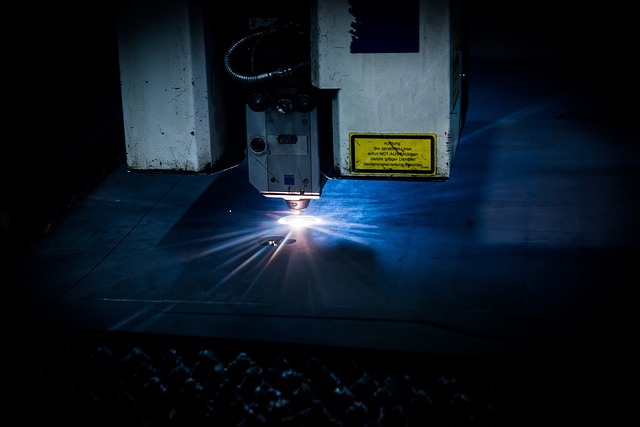
Key Factors That Shape CNC Laser Cutting Machine Price
Material quality is a major cost driver. Machines built with cast iron or heavy-duty welded steel frames resist vibration better than aluminum structures, improving cut consistency. The laser source brand also matters; for example, IPG or Raycus fiber modules often command a premium due to proven stability and longer service life. Higher power output expands material compatibility but raises both capital and cooling costs. Precision levels and motion system design define achievable tolerances—high-end servo drives and ball screw assemblies improve repeatability. Software integration adds further value by enabling automation features like nesting optimization or adaptive power modulation.
The Relationship Between Cost and Manufacturing Origin
Manufacturing origin shapes pricing through labor rates, supply chain logistics, and local component sourcing. European-built machines tend to cost more than those from East Asia due to stricter quality control and higher wages. However, regional support networks can offset this difference over time. Local warranty coverage, technician availability, and spare part logistics reduce downtime risk. Import duties also modify end-user pricing; for instance, tariffs on optical components or motion parts can shift total landed cost significantly depending on trade agreements.
Evaluating Performance Beyond the Price Tag
Price is only one dimension of machine evaluation. Experienced engineers assess how mechanical design translates into consistent cutting performance across diverse materials.
Power Rating Versus Real Cutting Capability
Nominal wattage does not always equal effective cutting depth or speed. A 6 kW fiber source with poor beam quality may underperform compared to a 4 kW system with superior optics. Beam stability, focus diameter, and optical path alignment determine energy concentration at the work surface. Energy conversion efficiency also matters: better electro-optical efficiency reduces heat distortion and operating expenses while maintaining fine edge finish on reflective metals like brass or copper.
Mechanical Stability and Build Integrity
Structural rigidity directly influences precision during high-speed contouring. Machines using monolithic frames minimize micro-vibrations that cause kerf deviation. Linear guide rails with preloaded bearings maintain smooth travel under dynamic loads, while closed-loop servo systems ensure positional accuracy within microns. Thermal management—through water-cooled optics or temperature-compensated gantries—preserves calibration during long production cycles.
The Role of Software and Control Systems in Performance Value
Modern CNC laser cutters rely as much on digital intelligence as on physical hardware. Control algorithms now dictate productivity gains once achieved through mechanical upgrades alone.
Integration of Intelligent Control Software
Advanced software platforms perform real-time toolpath optimization to reduce idle travel time between cuts. Dynamic feedback loops adjust pulse frequency or feed rate based on material reflectivity detected by onboard sensors. Compatibility with CAD/CAM suites streamlines workflow from design to production without manual code editing—a critical advantage in high-mix manufacturing environments.
Automation and Connectivity Features
Automation transforms throughput potential by reducing operator intervention. Features like auto-focus heads detect sheet thickness changes instantly, while material sensors prevent collision errors during loading cycles. IoT connectivity allows remote diagnostics; predictive maintenance alerts operators before component failure occurs. Data logging functions track uptime ratios, enabling managers to benchmark performance across multiple machines or shifts.
Long-Term Operational Costs Hidden Behind Purchase Price
A low sticker price may conceal higher running costs if maintenance intervals are short or energy consumption is inefficient.
Maintenance Requirements and Component Lifespan
The lifespan of the laser source—whether CO₂ tube or fiber module—defines replacement frequency and budget planning. Fiber sources typically exceed 80 000 operating hours before degradation becomes noticeable, while CO₂ tubes may require replacement after 10 000 hours depending on duty cycle. Regular calibration maintains accuracy; neglecting it can double scrap rates in precision industries like aerospace tooling. Consumables such as protective lenses or gas nozzles should be factored into yearly maintenance budgets since contamination affects cut quality immediately.
Energy Consumption and Efficiency Considerations
Energy efficiency directly influences profitability in continuous operations. A well-designed cooling loop minimizes thermal waste while stabilizing optics temperature within ±1 °C tolerance range. Comparing kilowatt-hour consumption between models gives a realistic measure of ongoing cost differences—especially in facilities running multiple shifts daily where even small savings accumulate rapidly over months.
Comparing CNC Laser Cutting Machine Prices Across Market Segments
Market segmentation clarifies why two machines with similar specifications might differ drastically in price despite sharing identical wattage ratings.
Entry-Level Versus Industrial Grade Systems
Entry-level units target workshops handling prototypes or decorative engraving tasks where throughput is secondary to flexibility. They often use open-frame designs with moderate accuracy suitable for plastics or thin sheet metals below 3 mm thickness. Industrial-grade systems employ enclosed cabins for safety compliance, automated pallet changers for continuous feeding, and reinforced gantries rated for 24/7 operation—making them ideal for automotive chassis fabrication lines where downtime costs thousands per hour.
Brand Reputation and After-Sales Ecosystem Influence on Pricing
Established brands command premium pricing due to accumulated reliability data verified across global installations. Technical support infrastructure also adds perceived value: having trained engineers within regional proximity reduces troubleshooting delays dramatically. Continuous firmware updates extend functionality over time—for example adding new piercing algorithms that shorten cycle times without hardware changes—and training programs keep operators aligned with evolving process standards.
Interpreting Price as an Indicator of True Performance Potential
Selecting the right cnc laser cutting machine price point involves balancing financial prudence against measurable production outcomes rather than chasing headline specifications alone.
Balancing Cost Efficiency With Production Objectives
The best procurement strategy matches machine capacity to actual workload requirements instead of theoretical maximums rarely used in practice. Overpaying for excess power leads to longer ROI periods without tangible benefits if most jobs involve thin-gauge stainless steel rather than thick carbon plate cutting.
Assessing Value Through Measurable Output Quality Metrics
Performance validation depends on quantifiable metrics: edge smoothness under microscopic inspection, dimensional tolerance consistency across repeated cycles, and surface oxidation levels post-cutting all reveal true capability differences between machines priced similarly on paper but engineered differently inside their frames.
FAQ
Q1: What determines the biggest difference in cnc laser cutting machine price?
A: Material quality of the frame structure and brand of the laser source usually create the largest cost gap among comparable models.
Q2: How does wattage affect real-world performance?
A: Higher wattage expands material thickness range but doesn’t guarantee faster processing unless paired with stable beam delivery optics.
Q3: Are imported machines always cheaper?
A: Not necessarily; logistics fees, customs taxes, and limited local service can raise total ownership costs above domestic alternatives.
Q4: What’s the typical lifespan of a fiber laser source?
A: Most industrial-grade fiber modules last about 80 000 hours before output degradation becomes noticeable under standard duty cycles.
Q5: How important is software integration when comparing prices?
A: It’s crucial since advanced control platforms reduce setup time, automate adjustments, and maintain consistent output quality across diverse materials.