How Does a 5 Axis CNC Mill Enhance Modeling of Variable Pitch Ball-End Cutters
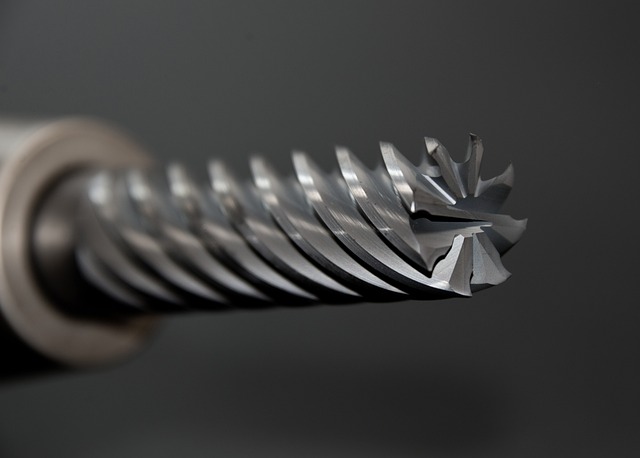
Modeling and Experimental Study of Cutting Forces of a Variable Pitch Ball-End Cutter in Five-Axis Milling
The 5 axis CNC mill has transformed precision manufacturing by allowing simultaneous control of complex tool orientations. This study concludes that modeling the cutting forces of variable pitch ball-end cutters under five-axis conditions enhances prediction accuracy, reduces vibration, and improves surface finish. Through analytical modeling combined with experimental validation, it becomes evident that cutter geometry and tool orientation play decisive roles in force modulation and process stability.
Understanding the Fundamentals of 5 Axis CNC Milling
Five-axis machining is not merely an extension of three-axis systems; it represents a geometric leap in flexibility. The additional rotational movements enable the tool to engage the workpiece from virtually any direction, significantly improving surface quality and reducing setup time.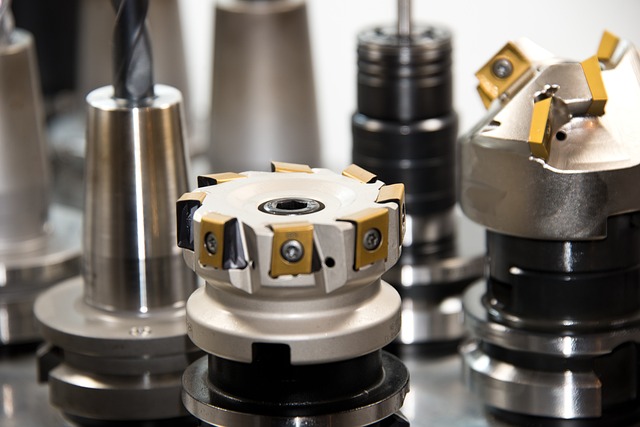
The Principles of Multi-Axis Machining
In a 5 axis CNC mill, all five axes—three linear (X, Y, Z) and two rotary (A, B)—move simultaneously. This synchronized motion allows the cutting tool to maintain optimal contact with curved surfaces. The geometric implication is that each point on the surface can be machined with a consistent tool orientation, leading to higher surface accuracy. Compared with three-axis systems that require multiple setups, five-axis machining minimizes repositioning errors and achieves tighter tolerances.
Machine Kinematics and Control Strategies
Machine configurations vary: table-table designs rotate the workpiece; head-table combines rotary motion from both tool and table; head-head rotates only the spindle head. Inverse kinematics converts part coordinates into machine joint movements to generate accurate toolpaths. Dynamic compensation systems continuously correct deviations due to thermal drift or mechanical backlash, ensuring micron-level precision during high-speed operations.
Characteristics of Variable Pitch Ball-End Cutters
Variable pitch ball-end cutters are engineered to suppress vibration through irregular flute spacing. Their design directly influences force distribution and dynamic stability during milling.
Geometric Design Features
A variable pitch cutter uses unequal angular spacing between flutes. This breaks the uniform excitation pattern typical in constant-pitch tools, reducing chatter amplitude. Differences in helix angles and rake geometries distribute chip load unevenly but beneficially across flutes. As a result, cutting forces fluctuate less dramatically, improving both tool life and surface finish.
Material Behavior and Tool Dynamics
Cutter materials such as tungsten carbide or coated high-speed steel affect stiffness and wear resistance. Coatings like TiAlN enhance thermal stability when cutting hard alloys at high speeds. The interaction between geometry and material defines dynamic stiffness: too rigid a cutter may amplify chatter; too flexible may deflect under load. Balancing these properties is crucial for stable high-speed milling.
Integration of 5 Axis CNC Milling in Modeling Variable Pitch Ball-End Cutters
Integrating five-axis control into cutter modeling enables accurate simulation of real machining conditions where orientation continuously changes along complex paths.
Tool Path Optimization for Complex Geometries
Five-axis interpolation allows the cutter to follow sculpted surfaces with minimal deviation. Adjusting approach angles reduces bending moments on long tools, lowering deflection risk. For aerospace components or turbine blades, this approach eliminates multiple setups while maintaining consistent engagement across curved geometries.
Simulation-Based Modeling Approaches
Modern CAD/CAM platforms create parametric models of variable pitch cutters using detailed flute geometry data. Digital twins replicate machine kinematics within virtual environments to simulate actual cutting behavior before production begins. Predictive algorithms estimate chip thickness evolution, contact zones, and resultant forces—critical for selecting feed rates that prevent overloads or premature wear.
Enhancing Cutting Force Prediction through Five-Axis Machining Models
Accurate force prediction underpins process planning in advanced milling operations. Analytical models must capture instantaneous variations caused by changing orientations along five axes.
Analytical Modeling Techniques
Mechanistic models compute local forces based on uncut chip thickness at each point along the tool path. When integrated with real-time orientation data from five-axis interpolation, they yield more precise predictions than static models. Correlating these predictions with measured results validates their reliability for industrial use.
Experimental Validation Methods
Force measurement typically employs piezoelectric dynamometers capable of capturing multi-directional loads at high frequencies. Calibration compensates for spindle runout effects that distort readings during rapid rotations. Data acquisition systems record transient forces as the tool tilts or swivels—information vital for refining simulation parameters.
Influence of Tool Orientation on Cutting Mechanics in 5 Axis Milling
Tool orientation strongly influences chip formation mechanics and final surface quality in multi-axis operations.
Effects on Chip Formation and Surface Integrity
Tilting or leading the cutter alters its effective rake angle relative to the workpiece surface. A positive tilt enhances chip flow but may reduce edge strength; negative tilt increases compressive stress yet improves dimensional accuracy. Proper evacuation angles prevent chip accumulation that could mar fine surfaces or cause micro-welding at elevated temperatures.
Optimization Strategies for Process Stability
Real-time feedback from embedded sensors enables adaptive control where tilt or lead angles adjust dynamically to suppress chatter zones identified through frequency analysis. Mapping stable regions for specific materials helps operators choose safe combinations without extensive trial runs—a practical gain for production efficiency.
Advancements in Modeling Accuracy Using 5 Axis CNC Systems
Recent progress integrates structural dynamics into predictive frameworks to mirror real machine behavior more closely.
Incorporation of Dynamic Effects into Simulation Models
Advanced simulations now include spindle vibrations, thermal expansion, and elastic deformation within both tool and holder assemblies. Coupled models represent interactions between mechanical response and cutting mechanics over time domains rather than steady states, improving transient force predictions during acceleration or deceleration phases.
Digital Integration with Machine Learning Techniques
Machine learning refines analytical predictions by identifying nonlinear relationships among process variables such as feed rate, spindle speed, tilt angle, and measured forces. Neural networks trained on experimental datasets update model coefficients automatically as new data arrive—creating adaptive systems capable of self-correction during live machining cycles.
Practical Implications for Industrial Applications
The industrial payoff from refined modeling lies in reduced cycle times, improved consistency, and better predictability across diverse materials.
Improving Productivity in Complex Surface Machining
Five-axis capability eliminates manual re-clamping for multi-sided parts like impellers or molds. Continuous engagement reduces idle travel time while maintaining uniform surface finish even over steep curvature transitions—a key advantage when producing optical-grade components or medical implants requiring sub-micron smoothness.
Future Trends in Five-Axis Cutter Modeling Research
Research is shifting toward hybrid manufacturing where additive deposition precedes subtractive finishing using five-axis mills within one setup. Embedded micro-sensors inside cutters will soon provide real-time temperature and vibration data directly into digital twin systems guiding autonomous adjustments—a step toward self-optimizing machining cells driven entirely by predictive intelligence rather than static programming rules.
FAQ
Q1: What makes a 5 axis CNC mill different from traditional machines?
A: It moves simultaneously along three linear axes plus two rotary ones, allowing complex geometries to be machined without repositioning the part.
Q2: Why use variable pitch ball-end cutters?
A: Their irregular flute spacing breaks harmonic vibrations that cause chatter, improving stability and extending tool life.
Q3: How are cutting forces measured experimentally?
A: Using multi-component dynamometers that capture real-time force signals across three directions during milling tests.
Q4: What role does simulation play in modeling?
A: Simulations replicate actual machining conditions digitally to predict chip formation patterns and optimize parameters before production starts.
Q5: How does machine learning contribute to modern milling models?
A: It processes large experimental datasets to refine analytical predictions automatically, enabling adaptive control during live operations.


