What Makes the Haas Mini Mill a Game Changer in Precision Machining
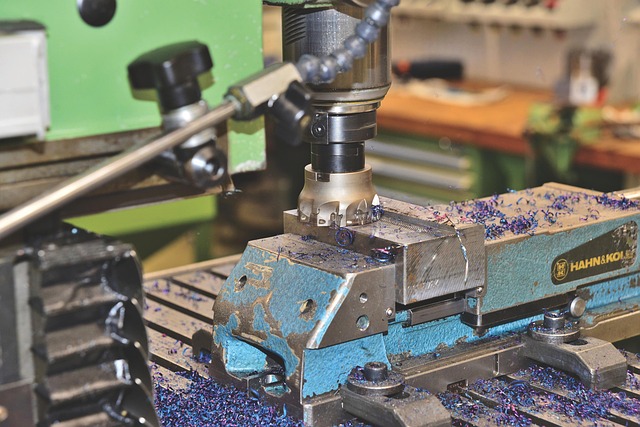
Modern iterations of the Mini Mill offer high-speed spindle options capable of handling materials ranging from aluminum to hardened steel. Direct-drive coupling reduces backlash and thermal drift, improving dimensional stability across long production runs. Reinforced spindle bearings further enhance durability at high RPMs, supporting continuous operation without compromising surface integrity.
Motion Control and Axis Performance
Each axis operates on precision linear guideways that minimize friction losses while improving responsiveness during contouring moves. Servo-driven motors provide accurate positioning across multi-axis paths, crucial for intricate geometries typical in aerospace or medical components. Integrated encoders feed real-time position data back to the control unit, enhancing repeatability across repeated cycles.
Integration with Haas Control Technology
Beyond mechanical excellence, much of the Mini Mill’s value lies in its seamless integration with Haas’ proprietary control ecosystem designed around operator efficiency and digital connectivity.
User Interface and Programming Efficiency
The Haas control interface simplifies G-code navigation through intuitive menus and real-time 3D simulation tools that preview toolpaths before execution. Built-in conversational programming allows machinists to set up short runs quickly without extensive coding knowledge. Ethernet connectivity links directly with CAD/CAM systems for faster data transfer between design stations and shop-floor equipment.
Automation Compatibility and Remote Monitoring
Automation readiness is another hallmark of the new Mini Mill series. It supports robotic loading systems suitable for unattended or “lights-out” operations common in lean manufacturing cells. Remote monitoring features enable predictive maintenance by analyzing live machine data streams to detect anomalies early. With HaasConnect integration, operators receive mobile alerts on status changes or downtime events instantly.
Productivity Advantages in Modern Manufacturing Environments
Compact machining centers like the Haas Mini Mill are reshaping productivity strategies across industries by merging flexibility with cost-conscious operation.
Adaptability Across Production Scales
Whether producing prototypes or small-batch parts, the Mini Mill adapts easily through rapid setup changes that support just-in-time workflows. Its footprint allows multiple units to operate side by side within confined workshops, enabling parallel processing without major infrastructure changes—a key advantage for scaling output incrementally.
Energy Efficiency and Operational Cost Benefits
Energy-efficient spindle motors cut power consumption during idle periods while maintaining torque consistency under load. Simplified maintenance architecture reduces service time since most components are easily accessible from front panels. Smart coolant management improves chip evacuation efficiency while conserving fluid resources—an often-overlooked aspect of sustainable machining practices.
Applications That Highlight the Mini Mill’s Capabilities
Real-world applications demonstrate how this compact platform delivers professional-grade results across demanding sectors such as aerospace, medical device production, education, and research development.
Precision Component Manufacturing in Aerospace and Medical Sectors
In aerospace manufacturing, tight-tolerance requirements make vibration damping critical when producing lightweight brackets or actuator housings. Similarly, medical implant fabrication benefits from consistent surface finishes achievable through stable spindle dynamics. The Mini Mill’s repeatability ensures compliance with stringent regulatory standards governing these industries.
Toolmaking, Education, and R&D Applications
Educational institutions frequently adopt the Haas Mini Mill as a teaching platform because it combines industrial-level capability with user-friendly controls suited for student training environments. In R&D settings, its quick-change tooling system accelerates iterative design cycles where prototype revisions occur daily—ideal for innovation-driven workflows needing fast turnaround times.
Future Directions for the Haas Mini Mill Platform
As digital manufacturing ecosystems mature under Industry 4.0 frameworks, future versions of the Haas Mini Mill are expected to integrate even deeper intelligence into their operation cycles.
Anticipated Technological Enhancements
Upcoming developments may include AI-based toolpath optimization capable of learning from previous jobs to shorten cycle times automatically. Expanded spindle speed ranges will likely accommodate advanced materials such as titanium alloys or carbon composites increasingly used in lightweight engineering projects.
Role in Smart Factory Ecosystems
Enhanced network connectivity will align future models with smart factory protocols defined by IEC 62443 cybersecurity standards for industrial automation systems (IEC). Real-time analytics will allow adaptive process control based on live sensor feedback loops—transforming each Mini Mill into an active node within broader digital production networks rather than a standalone workstation.
FAQ
Q1: What distinguishes the new Haas Mini Mill series from previous models?
A: The latest series introduces improved spindle speeds, enhanced drive systems, better thermal stability, and expanded automation compatibility compared to earlier generations.
Q2: Is the Haas Mini Mill suitable for high-precision aerospace parts?
A: Yes. Its rigid frame construction and advanced motion control deliver tolerance levels required by aerospace component standards such as AS9100-certified environments.
Q3: Can it be integrated into existing smart factory setups?
A: The machine supports Ethernet connectivity and remote monitoring tools compatible with Industry 4.0 infrastructures using standard communication protocols like OPC-UA.
Q4: How does energy efficiency compare with larger CNC machines?
A: Due to smaller motors and optimized standby modes, energy usage can be up to 30% lower than full-size vertical machining centers under similar workloads (IEA Industrial Energy Data).
Q5: What maintenance advantages does it offer?
A: Simplified access panels reduce service time while predictive monitoring via HaasConnect helps schedule maintenance proactively before mechanical failures occur.