How CNC Turning Enhances Precision Machining in Desktop CNC Systems
Desktop CNC, Precision Machining, Modular Design, Motion Control, Metal Cutting
Desktop CNC turning has evolved into a cornerstone of compact precision manufacturing. The fusion of advanced motion control, modular hardware, and smart software now allows small-scale machines to achieve tolerances once reserved for industrial systems. These platforms bring high-speed metal cutting and hybrid machining capabilities into labs and workshops without losing the mechanical integrity required for true precision.
The Role of CNC Turning in Modern Desktop CNC Systems
CNC turning remains vital in modern desktop systems because it defines how rotational machining achieves accuracy at micro scale. By combining rotational dynamics with adaptive control, these machines produce symmetrical components efficiently.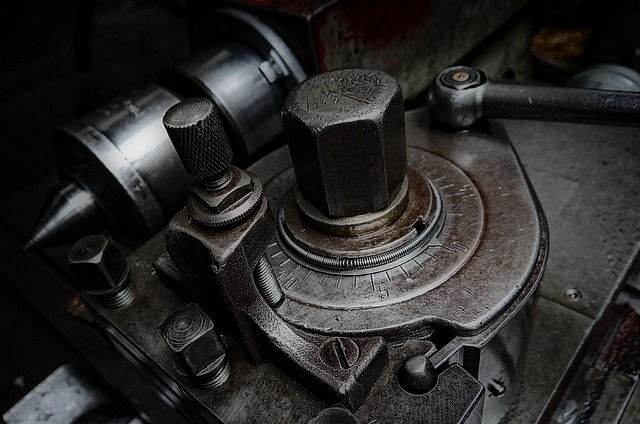
CNC Turning in the Context of Precision Machining
CNC turning uses the rotational motion of a workpiece while a stationary tool removes material. This process is ideal for creating cylindrical or conical parts with tight tolerances. In desktop setups, the challenge lies in maintaining spindle stability despite smaller mass and limited damping. Compact CNC lathes achieve this through rigid linear rails and balanced spindles that minimize runout during continuous operation.
Integration of Turning Capabilities into Desktop CNC Platforms
Modern desktop CNCs integrate turning modules via modular spindle designs that switch between milling and turning modes seamlessly. Compact drive systems maintain high torque at low speeds while keeping vibration minimal. Toolpath optimization software further refines motion paths to counteract inertia effects typical in lightweight frames.
Enhancing Precision Through Advanced Motion Control
Precision depends not only on mechanical rigidity but also on how motors translate commands into physical movement. Servo and stepper technologies have become central to achieving sub-micron accuracy even on small machines.
The Impact of Servo and Stepper Motor Technology on Accuracy
Closed-loop servo systems sustain torque consistency across variable speeds, preventing tool deflection under load. High-resolution encoders provide feedback at micro-level increments, allowing precise axis synchronization. Properly tuned stepper motors reduce resonance during rapid acceleration phases common in miniature turning operations.
Synchronization Between Spindle and Tool Movement
Coordinated axis control ensures surface uniformity across the entire part geometry. Real-time feedback loops adjust feed rates when cutting resistance changes due to material hardness or thermal expansion. Advanced controllers with reduced latency enhance responsiveness between command input and actual tool displacement.
Material Removal Dynamics in Desktop CNC Turning
In small-scale machines, the physics of chip formation and heat dissipation differ significantly from industrial lathes. Managing these factors determines both surface quality and tool longevity.
Chip Formation and Heat Management at Micro Scale
Efficient chip evacuation prevents re-cutting debris that could damage fine edges. Because smaller spindles generate localized heat faster, coolant delivery must be finely targeted through micro-nozzles or mist lubrication systems. Thermal drift compensation routines help maintain dimensional stability over long runs.
Cutting Tool Geometry and Material Considerations
Carbide inserts with micro-grain structures extend life when machining metals like brass or aluminum on compact machines. Coatings such as TiAlN resist oxidation under high temperatures generated by continuous cuts. Selecting an appropriate nose radius directly affects surface smoothness and tolerance repeatability.
Modular Design Principles Supporting Precision Turning Operations
The structural design of desktop CNCs dictates how accurately they can perform turning tasks under varying loads. Modularity adds flexibility without sacrificing stiffness or damping capacity.
Structural Rigidity and Vibration Damping in Compact Frames
Frames made from cast aluminum or epoxy granite offer strong vibration absorption while keeping weight manageable. Finite element analysis (FEA) helps engineers predict deflection patterns before production, ensuring even stress distribution during operation. Integrated damping layers within the frame further suppress harmonic resonance during spindle ramp-up.
Quick-Swap Modules for Multi-Axis Machining Flexibility
Quick-swap headstocks enable operators to alternate between milling heads and lathe spindles within minutes. Magnetic coupling simplifies alignment without complex calibration tools. Built-in calibration macros verify tool center positions automatically after each module change, preserving consistent zero points.
Software Optimization for Precision Machining Workflows
Software defines how effectively hardware potential translates into real-world performance. In desktop CNCs, optimized CAM programming and real-time monitoring elevate machining quality beyond raw mechanics.
CAM Programming Strategies for Desktop CNC Turning
Adaptive toolpaths distribute cutting forces evenly around the part to reduce chatter on lightweight frames. Simulation modules visualize predicted deviations before machining starts, saving both time and materials. Custom post-processors manage communication constraints typical of small embedded controllers used in hybrid platforms.
Real-Time Monitoring and Error Compensation Algorithms
Sensor arrays track spindle temperature, vibration levels, and positional drift continuously. Machine learning models analyze prior cut data to refine feed rates dynamically for subsequent passes. Predictive maintenance functions identify wear trends early by correlating motor current variations with mechanical resistance changes.
Future Directions in Desktop CNC Turning Technology
Emerging technologies continue to redefine what compact precision systems can achieve—especially as AI-driven controls merge with improved hardware miniaturization.
Integration of AI-Assisted Control Systems
AI-assisted controllers analyze cutting conditions live to adjust speed, depth, or coolant flow automatically for optimal results across varying materials. Predictive analytics anticipate chatter zones before they occur, maintaining consistent output quality even across long production cycles.
Advances in Miniaturized Hardware Components
High-torque micro spindles now allow harder alloys like stainless steel to be machined efficiently at desktop scale. Linear guides with micron-level preload improve rigidity while reducing footprint size—a key factor for benchtop installations where space is limited.
Hybrid Manufacturing Approaches Combining Additive and Subtractive Processes
Hybrid platforms merge additive preforming with subtractive finishing in one setup, eliminating multiple fixturing steps. A printed metal blank can be turned immediately after deposition to achieve final tolerances within ±5 microns—a workflow increasingly adopted in prototyping labs.
FAQ
Q1: What makes CNC turning suitable for desktop machines?
A: Its rotational symmetry allows efficient use of compact spindles while maintaining high precision on small parts like shafts or bushings.
Q2: How do servo motors improve accuracy compared to steppers?
A: Servo systems provide closed-loop feedback that corrects positional errors instantly, whereas steppers rely on open-loop pulses that may skip under heavy load.
Q3: Why is chip evacuation critical in miniature setups?
A: Accumulated chips trap heat around the cutting zone, dulling tools faster and distorting dimensions due to thermal buildup.
Q4: What role does software play in maintaining tolerance?
A: CAM algorithms simulate forces ahead of time while real-time sensors feed correction data back into motion controls during machining.
Q5: Can desktop CNCs handle hard metals effectively?
A: With upgraded spindles exceeding 20,000 RPM and carbide tooling, many modern units can machine stainless steel or titanium efficiently at reduced depths of cut.