Is Desktop CNC Technology Redefining Precision with Lemontart’s Entry
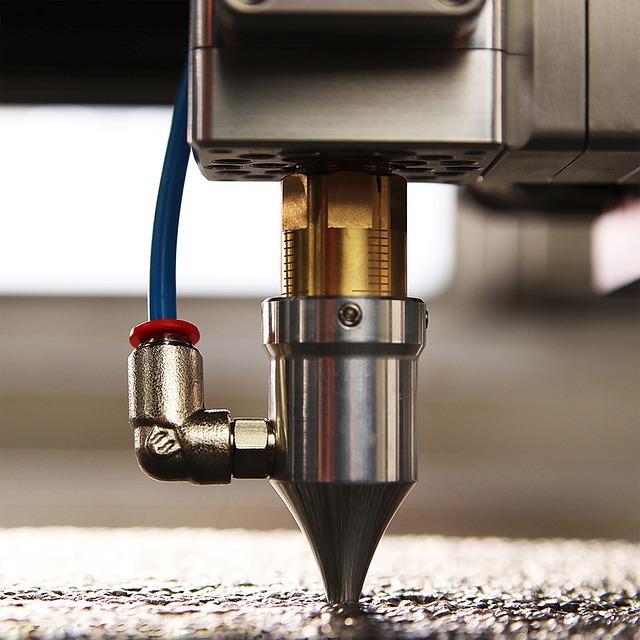
Lemontart Is a New Challenger in the Metal-Cutting Desktop CNC Mill Market
Lemontart’s entry into the desktop CNC segment signals a new phase for precision machining. The brand challenges traditional expectations by combining industrial-grade accuracy with compact form factors. Its machines target professionals who need high repeatability without the footprint or cost of full-scale systems. This move reflects a broader market trend where accessibility, modularity, and digital integration are redefining how engineers and workshops approach metal-cutting tasks.
The Emergence of Lemontart in the Desktop CNC Market
The desktop CNC market has shifted rapidly from niche hobbyist circles to serious engineering applications. Compact machines now deliver tolerances once reserved for heavy industrial units, thanks to better control software and mechanical precision.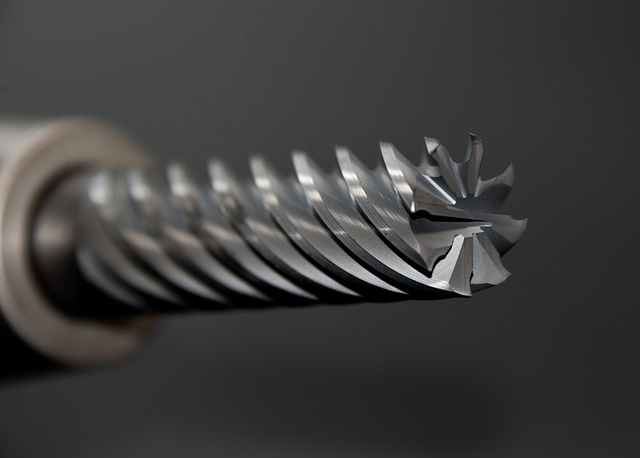
The Evolution of CNC Technology From Industrial-Scale Machines to Desktop-Sized Units
CNC technology has evolved from massive, floor-mounted mills to benchtop systems capable of micrometer-level precision. Early industrial machines were designed for automotive and aerospace production lines, but miniaturization of components and smarter firmware have enabled similar performance on smaller scales. As electronics improved, so did spindle control, allowing even small-format mills to handle complex geometries.
How the Demand for Precision Prototyping and Small-Batch Production Drives This Trend
Modern product development cycles demand rapid prototyping with materials identical to final production runs. Desktop CNCs fill this gap by offering real cutting capability rather than simulated results. Engineers can iterate designs overnight, producing aluminum housings or steel fixtures directly from CAD data without outsourcing.
The Role of Accessibility and Affordability in Expanding CNC Adoption
Lower entry costs have made precision machining available beyond large factories. Affordable desktop CNC units allow startups and research labs to bring machining in-house. This democratization parallels what 3D printing achieved a decade ago—bridging concept design with tangible output in hours instead of weeks.
Lemontart’s Position as a New Entrant
As a new player, Lemontart enters a field dominated by brands that have refined their machines over years of iteration. Yet its focus on mechanical integrity and user-centric design sets it apart.
Overview of Lemontart’s Introduction Into the Desktop CNC Segment
Lemontart introduces its desktop CNC line targeting professional users who prioritize accuracy over decorative machining. Each unit is built around a rigid metal frame and high-speed spindle assembly optimized for metals like aluminum, brass, and mild steel. The company positions itself between consumer-grade kits and industrial-class mills.
Differentiation From Established Players in Terms of Design Philosophy and Target Users
Unlike many competitors emphasizing plug-and-play simplicity, Lemontart leans toward modularity and technical transparency. Engineers can replace or upgrade components without proprietary restrictions. This appeals to advanced users seeking fine control over machine parameters rather than pre-set automation.
Strategic Goals Behind Entering a Competitive Precision Machining Market
Lemontart aims to capture professionals frustrated by the compromise between price and precision. By focusing on metal-cutting capability rather than soft-material milling, it addresses an underserved segment where rigidity and spindle stability matter most.
Technological Innovations Defining Lemontart’s Desktop CNC Machines
Lemontart’s technical foundation lies in its mechanical structure and motion control system. Both are engineered to reduce vibration while maintaining micron-level accuracy during extended runs.
Mechanical Design and Build Quality
Frame rigidity determines surface finish quality in any desktop CNC mill. Lemontart uses cast aluminum alloy reinforced with internal ribs to minimize deflection under load. The spindle assembly employs dual angular contact bearings for consistent runout control below 0.005 mm. Such attention to detail allows smoother tool engagement even at high feedrates.
Material Choices Impacting Precision, Durability, and Thermal Stability
Thermal expansion often causes drift during long operations. To counter this, Lemontart integrates thermally stable alloys with low expansion coefficients across its gantry structure. Combined with passive heat dissipation channels near the spindle mount, this maintains dimensional stability across temperature shifts typical in workshop environments.
Integration of Modular Components for User Customization and Maintenance Ease
Each subsystem—spindle motor, drive electronics, linear rails—is modularly mounted for straightforward replacement or upgrade. This reduces downtime during maintenance while letting advanced users tune performance through component swaps such as higher-torque stepper assemblies or upgraded coolant delivery systems.
Control Systems and Software Architecture
Beyond mechanics, Lemontart invests heavily in motion algorithms that translate digital toolpaths into precise physical movement.
Examination of Motion Control Algorithms Used for Micro-Level Accuracy
The control firmware employs spline-based interpolation rather than linear segmentation for smoother trajectory transitions between toolpath nodes. This reduces acceleration spikes that cause chatter on fine cuts, improving both surface quality and tool life.
Compatibility With Open-Source or Proprietary CAM/CAD Platforms
Lemontart supports open-source ecosystems like GRBL-derived controllers while maintaining compatibility with professional CAD/CAM suites through standard G-code interfaces. This flexibility allows engineers to integrate existing workflows without conversion errors or licensing barriers.
Real-Time Feedback Systems Enhancing Toolpath Optimization and Error Correction
Encoders feed continuous position data back into the controller loop at millisecond intervals. Real-time corrections compensate for backlash or thermal drift automatically, maintaining sub-micron repeatability even during multi-hour machining cycles.
Precision Engineering: How Desktop CNCs Are Closing the Gap With Industrial Units
Advancements in sensors, feedback loops, and calibration routines are erasing much of the historical divide between compact mills and factory-grade equipment.
Advances in Motion Control and Feedback Loops
High-resolution encoders now deliver positional feedback finer than one micron per pulse count. Combined with adaptive feedrate logic that adjusts cutting speed based on torque readings, these systems maintain consistent chip load across variable material hardness without manual tuning.
Tooling Accuracy and Calibration Techniques
Automated probing routines measure tool offsets before each job starts, removing setup guesswork that previously caused dimensional errors. Integrated sensors detect wear patterns through vibration analysis so operators can replace tools before failure affects part quality.
Influence of Spindle Runout Reduction on Surface Finish Quality
Reducing spindle runout directly improves finish smoothness on machined surfaces. Lemontart’s balanced spindle design limits eccentricity at cutting edges even under heavy side loads—a crucial factor when milling fine cavities or engraving text into hardened metals.
Market Dynamics Influencing Lemontart’s Competitive Edge
Performance alone does not define success; supply chain reliability, pricing strategy, and community support shape long-term adoption among professionals.
Comparison With Established Brands in Desktop CNC Manufacturing
Benchmark tests show Lemontart achieving comparable tolerances to leading names while maintaining higher stiffness-to-weight ratios due to its cast frame design. Its firmware receives regular updates addressing motion tuning—a contrast to slower update cycles seen among legacy competitors.
Evaluation of Customer Support Ecosystems, Firmware Updates, and Community Engagement
A responsive technical support network combined with active user forums encourages peer-driven troubleshooting—a key differentiator for complex tools requiring calibration expertise beyond standard manuals.
Pricing Strategy Relative to Performance-Per-Dollar Ratio in Professional Environments
By pricing below premium-tier models yet delivering near-industrial specifications, Lemontart positions itself as a cost-effective solution for engineering firms seeking return on investment within months rather than years.
The Role of Supply Chain and Component Sourcing in Performance Stability
Component sourcing affects every aspect from spindle longevity to electronic noise resilience. Lemontart partners with certified suppliers following ISO 9001 standards for consistency across production batches. Localized assembly ensures traceability while reducing logistical delays common with offshore manufacturing chains.
Applications Driving Adoption Among Professionals and Workshops
Desktop CNCs like those from Lemontart are reshaping how small workshops approach prototyping tasks traditionally outsourced due to cost or lead time constraints.
Precision Prototyping and Microfabrication Use Cases
These machines excel at producing aluminum enclosures for electronics prototypes or custom tooling inserts used in injection molding trials—applications demanding both accuracy and repeatability within tight deadlines typical of R&D environments.
Integration Into Hybrid Manufacturing Workflows
Combining desktop milling with additive manufacturing creates hybrid workflows where 3D-printed parts receive post-machining refinement for tolerance-critical interfaces such as bearing seats or threaded holes—all within shared CAD/CAM workspaces that streamline iteration cycles.
Future Outlook: Redefining Precision Standards Through Innovation
Miniaturization continues pushing boundaries as artificial intelligence begins influencing machining decisions once left solely to human operators.
Anticipated Developments in Desktop CNC Technology
AI-driven parameter adjustment will soon allow automatic adaptation of cutting conditions based on sensor feedback during operation. Multi-axis capabilities are expected to expand within compact footprints as kinematic optimization improves space efficiency without sacrificing rigidity.
Lemontart’s Potential Role in Shaping Next-Generation Precision Manufacturing
Lemontart could extend its architecture into modular industrial systems using scalable motion modules derived from its current desktop platform—bridging personal fabrication tools with small-scale automated cells suited for distributed manufacturing networks worldwide.
FAQ
Q1: What materials can Lemontart’s desktop CNC machines cut?
A: They are optimized for metals such as aluminum, brass, copper alloys, mild steel, along with plastics used in engineering prototypes.
Q2: How does Lemontart differ from hobby-grade CNC kits?
A: It offers higher rigidity frames, industrial spindles, closed-loop control electronics, and precision tolerances suitable for professional use rather than casual fabrication.
Q3: Does Lemontart support third-party software?
A: Yes, it supports both open-source controllers like GRBL variants and commercial CAM platforms via standard G-code communication protocols.
Q4: What maintenance requirements do these machines have?
A: Routine lubrication of linear rails, periodic spindle bearing checks, firmware updates through USB interface—tasks manageable within typical workshop schedules.
Q5: Is there potential scalability beyond desktop use?
A: The modular hardware architecture suggests future expansion toward larger multi-axis configurations sharing similar motion principles used in current models.