Can A Portable CNC Machine Redefine Precision In Field Milling Operations
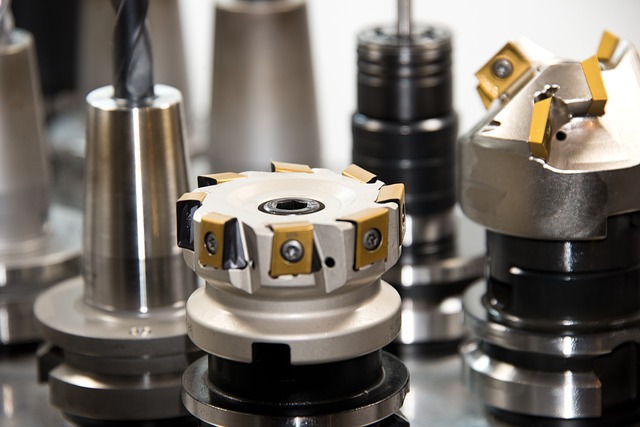
Engineers Report Breakthroughs in Compact CNC Milling Precision for Field Operations
Portable CNC machine technology has reached a turning point. Engineers have achieved precision levels once limited to large factory systems, now available in compact mobile units. This evolution is reshaping how industries handle on-site machining, maintenance, and prototyping. The convergence of advanced servo systems, embedded computing, and adaptive control algorithms has made portable CNC machines practical for field operations where accuracy and flexibility are critical.
The Evolution of CNC Technology Toward Portability
The shift from stationary to mobile systems reflects broader industrial demands for agility and reduced downtime. Traditional CNC setups were precise but immobile, limiting their use in remote or dynamic environments.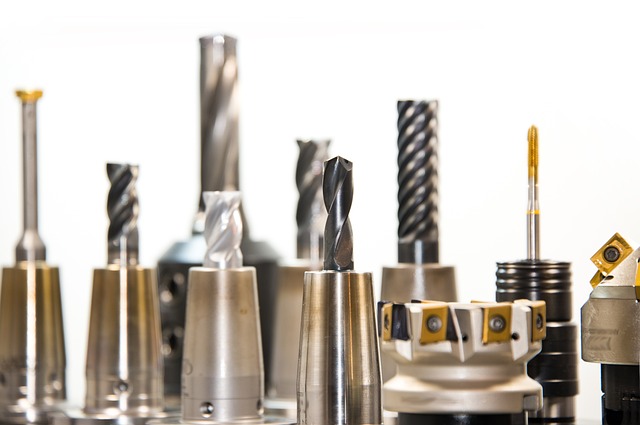
Shifting from Stationary to Mobile CNC Systems
Conventional stationary CNC mills were designed for controlled workshop conditions. They offered high rigidity but required stable foundations and environmental control. Such constraints made them unsuitable for field repairs or large-scale installations. As industries like aerospace and energy began demanding on-site machining, engineers turned toward miniaturization. Portable CNC machine designs emerged using lightweight alloys, composite frames, and modular tool heads that could be assembled directly at the work site. These developments allowed technicians to bring precision manufacturing to locations where disassembly or transport of large components was impractical.
Development Trends Driving the Miniaturization and Mobility of CNC Equipment
Miniaturization has been driven by advances in microelectronics and compact drive systems. Brushless DC motors replaced bulky induction drives, enabling smaller footprints without sacrificing torque or speed control. Modular power supplies and foldable gantry structures further enhanced mobility. Field-ready units now weigh less than 50 kilograms yet deliver micron-level accuracy—a figure unimaginable two decades ago.
Integration of Lightweight Materials and Modular Components Enabling On-Site Machining
The use of carbon-fiber composites and aerospace-grade aluminum has been pivotal in balancing stiffness with portability. Modular design philosophy allows operators to reconfigure machines based on task requirements—switching from milling to drilling or surface finishing within minutes. This adaptability has made portable CNC systems indispensable for sectors requiring rapid response manufacturing.
Engineering Innovations Behind Portable CNC Machines
The engineering leap behind modern portable systems lies in achieving stability and precision under variable conditions. Compactness alone is not enough; maintaining accuracy without heavy frames demands innovation across control, mechanics, and computation.
Advances in Servo Control, Spindle Design, and Motion Accuracy for Compact Systems
Servo technology now incorporates high-resolution encoders paired with digital signal processors capable of sub-millisecond feedback loops. This allows even small spindles to maintain constant velocity during complex toolpaths. Air-cooled spindles with ceramic bearings reduce vibration while sustaining speeds above 30,000 RPM—critical for fine milling tasks on-site.
Adaptive Calibration Techniques Ensuring Precision Despite Environmental Variability
Field environments introduce unpredictable factors such as uneven bases or temperature swings. Adaptive calibration uses onboard sensors to map these variations before machining begins. The system compensates through real-time coordinate adjustments, maintaining dimensional integrity comparable to shop-floor conditions.
Role of Embedded Computing and Real-Time Feedback in Maintaining Machining Tolerances
Embedded processors integrated into the controller architecture analyze sensor data continuously. They correct deviations instantly rather than post-process errors later. Real-time feedback loops between spindle load sensors and motion controllers prevent chatter or tool deflection that could degrade surface finish quality.
Precision Engineering Challenges in Field Milling Operations
Operating outside controlled facilities introduces challenges unseen in traditional workshops. Engineers must address instability from terrain irregularities, temperature gradients, and vibration sources common in outdoor sites.
Environmental Variables Affecting Machining Accuracy
Temperature fluctuations can alter material expansion rates, causing micron-level drift over long toolpaths. Vibrations from nearby machinery or uneven floors amplify these effects. To counter this, damping mounts and thermally compensated tool paths are employed to sustain accuracy during extended runs.
Strategies for Stabilizing Portable Machines During Outdoor or Remote Operations
Stabilization begins with base isolation—deploying adjustable tripod stands or magnetic anchors depending on substrate type. Some units use active stabilization platforms similar to those found in drone gimbals, automatically correcting tilt angles during operation.
Use of Advanced Sensors to Monitor and Compensate for Environmental Interference
Modern portable CNC machines employ accelerometers, gyroscopes, and temperature probes feeding data into predictive models that adjust feed rates dynamically. This sensor fusion approach reduces cumulative error over time while maintaining consistent chip loads across varying conditions.
Material Handling and Fixture Stability in On-Site Machining
Material handling is often underestimated but crucial when machining outside standard fixtures or jigs available in workshops.
Techniques for Clamping Irregular or Large Workpieces in Non-Laboratory Conditions
Engineers have developed vacuum-based clamping pads capable of conforming to irregular surfaces without damaging them. For metallic components like turbine casings, magnetic fixturing provides secure holding power while allowing quick repositioning between operations.
Modular Fixturing Systems Designed Specifically for Portable CNC Setups
Portable fixturing kits now include interchangeable brackets and rails adaptable to different geometries. Operators can assemble configurations tailored to each job site’s constraints without heavy lifting equipment.
Balancing Mobility with Rigidity to Maintain Consistent Dimensional Accuracy
Achieving rigidity within a mobile frame requires careful distribution of mass around the spindle axis. Reinforced crossbeams combined with low-vibration dampers allow portable units to maintain tolerances within ±5 microns even on non-ideal surfaces.
Control Systems and Software Integration for Portable CNC Machines
Software integration defines the intelligence behind modern portable machining solutions. Connectivity enables synchronization between field devices and central databases while adaptive algorithms refine performance continuously.
Adaptive Control Algorithms Enhancing Field Precision
Closed-loop feedback mechanisms monitor spindle load variations during cutting operations, adjusting feed rate automatically to avoid chatter marks or premature tool wear. AI-driven predictive modeling anticipates deviations based on prior datasets collected from similar materials or geometries.
Integration of AI-Based Predictive Modeling to Anticipate Machining Deviations
Machine learning algorithms trained on thousands of past cycles now predict thermal drift patterns before they occur, allowing proactive correction instead of reactive compensation—a major step toward autonomous precision machining outdoors.
Dynamic Compensation for Tool Wear and Mechanical Drift During Extended Operations
Tool wear detection through acoustic emission sensors informs the controller when cutting edges degrade beyond threshold values. Compensation routines adjust depth-of-cut accordingly until manual replacement is feasible.
Connectivity and Data Synchronization in Remote Environments
Connectivity ensures that even isolated field operations remain part of broader production ecosystems through secure data sharing protocols.
Wireless Communication Protocols Supporting Cloud-Based Monitoring and Updates
Portable machines now feature dual-band Wi-Fi modules enabling real-time telemetry uploads to cloud dashboards where supervisors track progress remotely. Firmware updates can be deployed over-the-air without halting production cycles.
Edge Computing Applications Enabling Offline Operation with Synchronized Data Uploads
Edge computing allows local processing when connectivity is intermittent—vital for offshore platforms or desert installations—then synchronizes logs once stable links resume.
Cybersecurity Measures Ensuring Safe Data Transmission Between Field Units and Central Systems
Given rising cyber risks across industrial IoT networks, encryption standards like AES-256 combined with multi-factor authentication protect both machine firmware integrity and proprietary CAD/CAM files during transfer sessions.
Applications Transforming Industrial Field Operations
Portable CNC machines are transforming field maintenance workflows by merging factory-grade precision with mobility suited for harsh environments.
On-Site Repair and Maintenance Across Sectors
In aerospace repair bays or wind farm nacelles hundreds of meters above ground, technicians now restore damaged components directly rather than shipping them back to central workshops—saving weeks per repair cycle while retaining original tolerances.
Reduction in Downtime Through Localized Milling Rather Than Factory Transport
Localized machining reduces logistical delays dramatically; an offshore rig can resume production hours after a flange re-machining rather than waiting weeks for part replacement logistics chains to complete delivery cycles.
Examples of Complex Geometries Achievable With Portable Multi-Axis Configurations
Five-axis portable setups enable contour milling on curved surfaces such as turbine blades or ship hulls where alignment precision previously required fixed gantries; this capability broadens what “field machining” means today beyond simple planar cuts.
Custom Fabrication and Prototyping in Remote Locations
Beyond maintenance roles, portable systems support creative fabrication directly at construction sites or research expeditions far from industrial infrastructure.
Support for Rapid Prototyping Directly at Construction or Exploration Sites
Architectural teams fabricate custom joints onsite using CAD files transmitted wirelessly from design offices; geologists deploy compact mills inside mobile labs during exploration campaigns needing immediate sample preparation.
Flexibility in Adapting CAD/CAM Workflows to Mobile Environments
Software suites optimized for tablets allow operators to modify G-code paths instantly after scanning component geometry via handheld 3D scanners—a workflow unthinkable before portable computing integration matured.
Benefits of Immediate Design Iteration Without Dependency on Centralized Facilities
Immediate iteration accelerates R&D feedback loops: prototype revisions occur within hours rather than days since no transport delay separates design review from physical testing stages anymore.
Future Directions in Portable CNC Precision Engineering
Emerging technologies promise even greater autonomy through robotics collaboration and sustainable engineering principles shaping next-generation designs.
Integration With Robotics and Autonomous Systems
Collaborative robots equipped with vision guidance already assist human operators by aligning portable mills precisely against complex assemblies; autonomous variants may soon deploy themselves into confined spaces like aircraft fuselages where human access remains limited.
Potential for Automated Deployment in Hazardous or Inaccessible Environments
Mining shafts or nuclear decommissioning zones could benefit from robotic carriers transporting compact mills autonomously under remote supervision—reducing human exposure risks significantly while maintaining production continuity standards defined by ISO 9283 motion accuracy benchmarks (ISO).
Advancements in Tooling, Power Systems, and Sustainability
Battery-powered spindles using high-efficiency brushless motors extend runtime up to eight hours per charge; eco-friendly composite housings reduce lifecycle emissions compared with traditional steel casings; new nano-coatings prolong cutter lifespan under dusty outdoor conditions by 40% according to recent IEEE manufacturing reports (IEEE).
FAQ
Q1: What distinguishes a portable CNC machine from traditional shop-floor models?
A: It combines comparable precision with mobility through lightweight construction, modular design, and embedded control electronics suitable for field use rather than fixed installations.
Q2: How accurate are current portable milling systems?
A: Modern models achieve tolerances within ±5 microns under controlled calibration routines despite environmental variability common outdoors.
Q3: Which industries benefit most from deploying these systems?
A: Aerospace maintenance crews, marine engineers, renewable energy technicians, and defense contractors rely heavily on mobile machining solutions due to their remote operation needs.
Q4: Are these machines compatible with standard CAD/CAM software?
A: Yes, most units support industry-standard formats such as STEP or IGES files through USB or wireless transfer interfaces integrated into their controllers.
Q5: What future improvements are expected?
A: Increased automation via robotic assistance, better battery life through efficient drive electronics, enhanced environmental resilience using smart sensors—all trends indicating continued growth toward fully autonomous precision manufacturing anywhere on demand.