Can A Laser Metal Engraving Machine Compete With The $64 Open Source Engraver
Open Source Laser Engraver Sells for Just $64 Fully Assembled — It Is Small and Low Power but May Be Enough for Your Needs
A $64 open source laser engraver challenges assumptions about what’s possible at the hobbyist level. While professional laser metal engraving machines dominate industrial markets with unmatched precision and durability, this compact device aims at accessibility. Its low power limits deep metal marking, yet its affordability and flexibility make it valuable for learning, prototyping, and light-duty applications. For those not seeking industrial throughput but wanting to explore precision fabrication safely, it represents an intriguing entry point.
Comparing Professional Laser Metal Engraving Machines and the $64 Open Source Engraver
The contrast between a professional-grade engraver and a low-cost open-source model is not merely about price; it reflects distinct philosophies of design and purpose.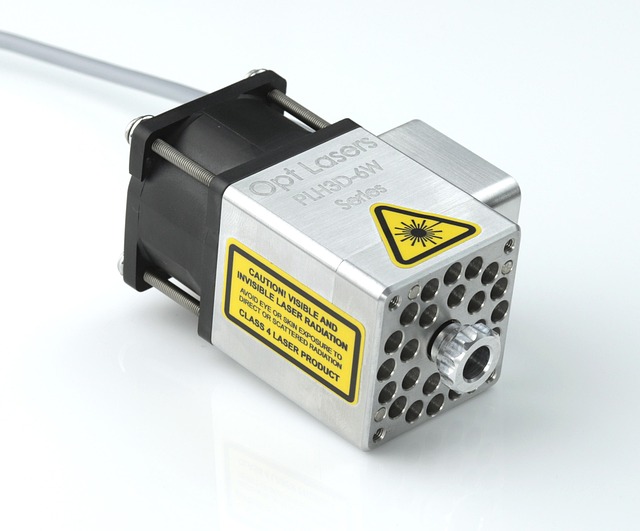
Evaluating Purpose and Design Philosophy
Professional laser metal engraving machines are engineered for endurance, accuracy, and continuous operation in demanding environments. Their design prioritizes mechanical rigidity, advanced optics, and thermal stability. In contrast, the $64 open-source engraver focuses on democratizing access to laser technology. It trades heavy-duty construction for modularity and experimentation potential. These opposing priorities explain why one thrives in production lines while the other excels in classrooms or maker spaces.
Understanding Target Applications
Industrial systems serve sectors like jewelry manufacturing, aerospace component marking, or automotive part identification where traceability standards are strict. The open-source engraver caters to hobbyists testing designs on wood or anodized aluminum plates. Matching machine capability to user intent determines value: a research lab validating prototype geometries benefits from flexibility more than raw power.
Technical Capabilities and Performance Metrics
Performance differences between these two categories stem from laser source type, optical quality, and motion control precision.
Power Output and Beam Quality Comparison
Professional systems often employ fiber or CO₂ lasers ranging from 20W to over 100W for deep metal engraving. Their beam coherence yields micron-scale detail even on reflective metals. The $64 engraver typically uses a 1–2W diode laser suited to etching surface coatings rather than cutting into bare steel. Beam divergence affects focus consistency; hence diode-based units produce wider spot sizes that limit resolution.
Precision, Speed, and Repeatability Analysis
Industrial engravers integrate servo-driven galvo heads or linear stages capable of sub-micron repeatability at high speeds exceeding 5000 mm/s. Low-cost models rely on stepper motors running open-loop control; positional drift accumulates over time. This impacts repeatability when reproducing fine patterns or serial codes across multiple parts—an essential metric in regulated industries.
Supported Materials and Surface Treatments
High-end fiber lasers easily mark stainless steel, titanium, aluminum alloys, or coated substrates due to their shorter wavelengths around 1064 nm that couple efficiently with metals. The $64 engraver performs best on organic materials such as wood or plastics where absorption is higher at blue diode wavelengths (~450 nm). On raw metals its energy density is insufficient for permanent marking unless surfaces are pre-treated with absorptive sprays.
Software Ecosystem and Control Flexibility
Beyond hardware differences lies the question of software control—how users interact with the machine defines workflow efficiency.
Proprietary vs Open Source Control Systems
Commercial engravers run proprietary software optimized for batch production with barcode integration, auto-focus routines, and safety interlocks compliant with IEC laser safety standards. Open-source firmware like GRBL or Marlin offers customization freedom but demands technical skill to tune acceleration curves or PWM modulation safely without damaging components.
File Compatibility and Workflow Efficiency
Professional machines accept diverse file types (DXF, AI, PLT) directly from CAD suites through standardized drivers. Entry-level devices may require manual conversion into G-code via third-party tools before engraving begins. This extra step slows iteration cycles but also encourages users to understand underlying motion commands—a learning advantage in educational contexts.
Build Quality, Maintenance, and Longevity Considerations
Mechanical integrity defines long-term reliability just as much as optical performance does.
Mechanical Construction Standards
Industrial frames use cast aluminum or welded steel structures designed to damp vibration during rapid scanning operations. Budget engravers use lightweight acrylic or thin aluminum extrusions that can flex slightly under acceleration loads. Thermal management also diverges: professional lasers employ active cooling loops while small diode units rely on passive heatsinks or fans.
Maintenance Requirements and Component Lifespan
Fiber sources typically exceed 50,000 operational hours with minimal maintenance apart from lens cleaning per ISO 11553 guidelines on laser equipment safety. Diode lasers degrade faster under continuous duty cycles due to junction temperature stress; replacement may be required after a few thousand hours depending on usage intensity.
Economic Evaluation: Cost vs Value Proposition
Financial analysis reveals how each system fits different scales of production economics.
Initial Investment Versus Operational Capability
A professional fiber system can cost tens of thousands of dollars but delivers throughput that offsets capital expense through productivity gains over time. The $64 engraver’s appeal lies in its negligible entry barrier—it invites experimentation without financial risk but cannot scale effectively for commercial workloads requiring certification-grade marks.
Energy Efficiency and Operating Costs
Industrial lasers consume more power overall yet achieve higher energy-to-marking efficiency ratios when evaluated per unit output thanks to optimized optics and power supplies certified under IEC 60825 standards. Compact diode-based units draw minimal current from USB interfaces or small adapters; their operating cost is nearly zero beyond replacement diodes.
Practical Applications in Real-world Scenarios
Real deployment cases show how both categories coexist rather than compete directly.
Suitability for Prototyping and Research Environments
Open-source engravers thrive in laboratories exploring new materials or optical algorithms because firmware parameters can be modified freely. They allow early-stage validation before scaling processes onto certified equipment where compliance rules apply strictly.
Integration into Manufacturing Workflows
Professional systems connect seamlessly into MES networks using industrial protocols like Ethernet/IP or Modbus TCP enabling automated part tracking across production lines. Entry-level devices lack such integration but remain useful as auxiliary tools—for instance labeling jigs or training technicians on basic G-code concepts before moving to larger platforms.
Future Outlook: Bridging Accessibility with Industrial Standards
The gap between hobbyist affordability and industrial precision is narrowing as technology matures.
Advancements in Open Hardware Laser Technology
Recent developments in high-efficiency diodes promise greater output within compact footprints while maintaining low thermal loads. Modular architectures could permit upgrading optics or motion assemblies incrementally instead of replacing entire machines—bridging educational use toward semi-professional applications over time.
The Role of Community-driven Innovation
Open hardware communities continue refining firmware algorithms for smoother motion interpolation and better grayscale rendering through pulse-width modulation control schemes. Such collective progress democratizes access to fabrication technologies once confined to factories while reinforcing safe operational practices aligned with international safety norms from ISO/IEC committees.
FAQ
Q1: Can the $64 open source engraver mark stainless steel?
A: Only superficially if coated with an absorptive compound; its diode lacks the power density needed for deep engraving on bare metal surfaces.
Q2: How long does a typical diode laser last?
A: Under moderate duty cycles it may last several thousand hours before noticeable degradation occurs due to thermal wear at the emitter junction.
Q3: What industries primarily use fiber laser metal engraving machines?
A: Aerospace, medical device manufacturing, jewelry production, and automotive parts marking rely heavily on fiber systems for permanent high-contrast marks meeting traceability standards.
Q4: Is open-source firmware safe for beginners?
A: Yes if used within recommended parameters; however improper settings can overdrive components so users should follow community-tested configurations carefully.
Q5: Are there upgrade paths from hobbyist models toward industrial-grade systems?
A: Some modular kits allow swapping higher-power diodes or sturdier frames providing gradual progression toward semi-professional performance without full replacement investment.