How Aluminum Laser Cutter Enhances Machine Efficiency in Fiber Laser Cutting
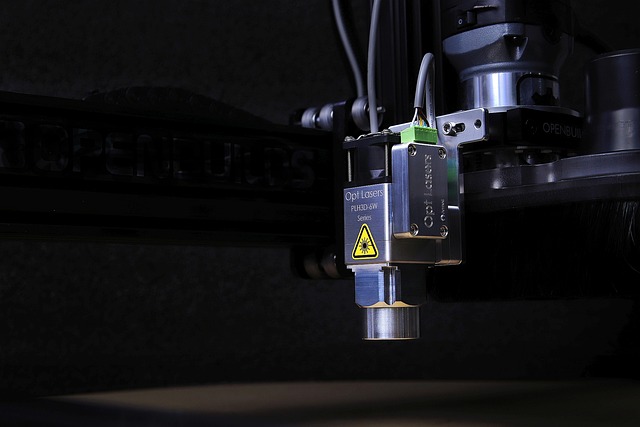
Machine Delivers Fiber Laser Cutting Welding and Cleaning
In today’s manufacturing landscape, the aluminum laser cutter has become a cornerstone for precision metal fabrication. Its integration with fiber laser systems allows manufacturers to perform cutting, welding, and cleaning within one unified platform. This combination reduces downtime, enhances energy efficiency, and maintains accuracy across multiple processes. The result is a system that not only meets modern production demands but also adapts to future industrial automation standards.
The Role of Aluminum Laser Cutters in Modern Fiber Laser Systems
The aluminum laser cutter plays a pivotal role in shaping the evolution of fiber laser technology. Its design aligns with the high-speed and high-precision requirements that define current industrial standards.
Integration of Aluminum Laser Cutters in Fiber Laser Technology
Aluminum laser cutters are specifically engineered to complement fiber laser systems for precision and speed. When integrated, these machines enhance cutting accuracy, especially for reflective materials such as aluminum and copper. Advanced optics and control systems stabilize energy delivery during rapid operations, maintaining consistent performance across varying workloads. In industrial practice, this translates into fewer defects and higher yield rates during production cycles.
Material Compatibility and Reflectivity Management
Reflective materials like aluminum often pose challenges due to back-reflection risks. To manage this, specialized coatings and beam control mechanisms are employed to protect the laser source from potential damage. Adaptive power modulation further enables efficient processing of different aluminum alloys without sacrificing quality. Enhanced reflectivity management produces cleaner cut edges with minimal thermal distortion—a critical factor when working on thin sheets or decorative components.
Enhancing Machine Efficiency Through Precision Engineering
Precision engineering is central to improving both performance and energy use in fiber laser systems equipped with aluminum cutters. Each subsystem contributes to stable operation under demanding conditions.
Optimization of Beam Quality and Focus Control
High beam quality supports finer kerf widths and smoother surface finishes, essential for intricate designs. Dynamic focus adjustment maintains optimal energy density even when material thickness changes mid-process. Intelligent sensors continuously regulate focus position, ensuring accuracy during long production runs where temperature shifts or vibration could otherwise affect results.
Thermal Management and Energy Utilization Efficiency
Efficient heat dissipation minimizes thermal deformation on thin aluminum sheets—a common issue in high-speed cutting environments. Improved absorption efficiency reduces total energy consumption per cut while preserving throughput levels. Controlled cooling systems also extend component lifespan by maintaining operational stability under heavy loads, particularly in continuous manufacturing lines.
Automation and Process Control in Aluminum Laser Cutting Systems
Automation defines the next generation of fiber laser manufacturing platforms. With advanced motion control and digital connectivity, aluminum laser cutters now operate as intelligent nodes within broader factory ecosystems.
Intelligent Motion Control Systems
Multi-axis synchronization allows smooth path transitions at high speeds without mechanical stress on the workpiece. Servo-driven stages enhance repeatability by reducing vibration-induced errors that can accumulate over time. Real-time feedback loops adjust trajectories dynamically, allowing complex geometries to be processed with consistent precision—an essential feature for aerospace or automotive applications where tolerances are strict.
Integration with Digital Manufacturing Platforms
Modern aluminum laser cutters integrate seamlessly with Industry 4.0 frameworks through networked sensors and data analytics modules. Remote monitoring capabilities improve process traceability while minimizing downtime through predictive maintenance alerts. Automated calibration routines further maintain consistent output quality across multiple production shifts, reducing operator intervention.
Advancements in Fiber Laser Cutting Performance with Aluminum Cutters
Recent developments have significantly boosted productivity metrics for fiber lasers paired with aluminum cutters. These improvements extend beyond speed alone to include surface finish quality and system reliability.
Influence on Cutting Speed and Productivity Metrics
High-power fiber lasers combined with optimized beam delivery achieve faster penetration rates through dense materials. Reduced idle time between cuts increases throughput while maintaining dimensional consistency across large batches. Consistent beam stability ensures uniform part geometry even during prolonged operations—critical for mass-production sectors like consumer electronics or construction hardware.
Surface Quality and Edge Integrity Improvements
Refined beam shaping techniques minimize burr formation along cut edges, reducing post-processing needs such as grinding or polishing. Controlled gas assist systems improve oxidation resistance during cutting operations by stabilizing the molten edge zone. Enhanced edge integrity not only saves operational time but also improves bonding strength when parts proceed to welding or assembly stages.
Expanding Capabilities Beyond Cutting: Welding and Cleaning Applications
The newest generation of machines doesn’t stop at cutting—fiber-based platforms now combine multiple functions within one optical framework.
Multi-function Integration within a Single System Architecture
Hybrid systems merge cutting, welding, and cleaning capabilities using shared optical paths that simplify system alignment. Quick-switch modes allow users to shift between processes instantly without hardware replacement or manual recalibration. Unified control software governs all functions from a single interface, maintaining precision while streamlining workflow management across tasks.
Benefits for Industrial Manufacturing Environments
For factories operating under space constraints, consolidated machine footprints significantly reduce floor area requirements. Shared components lower maintenance costs since fewer spare parts are needed across processes. This cross-process optimization improves overall workflow efficiency—particularly valuable in metal fabrication sectors where flexibility determines profitability.
Future Trends in Aluminum Laser Cutter Development for Fiber Systems
The future points toward smarter, more sustainable designs that balance power output with environmental responsibility.
Evolution Toward Higher Power Densities and Adaptive Optics
Research continues into increasing power density while preserving beam coherence at micron-level scales. Adaptive optics technologies enable real-time compensation for surface irregularities during both cutting and welding operations. Advanced sensor arrays gather material feedback data that supports autonomous tuning of process parameters—paving the way toward self-correcting manufacturing cells.
Sustainability and Energy-Efficient Design Innovations
Next-generation systems emphasize lower energy use through refined resonator architectures that minimize internal losses. Manufacturers are adopting recyclable materials for chassis construction and modular components that simplify end-of-life disassembly. Smart energy management algorithms dynamically balance power delivery according to workload demands, reducing waste heat generation while keeping performance steady over extended runs.
FAQ
Q1: What makes an aluminum laser cutter suitable for reflective metals?
A: It uses specialized coatings and beam control mechanisms that prevent back-reflection damage while maintaining stable output power on reflective surfaces like aluminum or copper.
Q2: How does focus control affect cutting precision?
A: Dynamic focus adjustment keeps the focal point consistent across varying thicknesses, which preserves edge quality even at high speeds.
Q3: Can one machine handle both cutting and welding?
A: Yes, hybrid fiber systems integrate both functions using shared optics so operators can switch modes quickly without changing hardware setups.
Q4: Why is thermal management important in aluminum cutting?
A: Proper heat dissipation prevents warping on thin sheets and extends component life by keeping operating temperatures stable during continuous runs.
Q5: What sustainability features are emerging in new models?
A: Modern designs emphasize reduced energy consumption through optimized resonators, recyclable materials, and smart power regulation algorithms that minimize waste generation during production cycles.


