How Does Sinker EDM Achieve Impossibly Close-Fitting Parts in Precision Manufacturing
Learn How Impossibly Close-Fitting Parts Are Actually Made
Precision manufacturing today relies heavily on electrical discharge machining, particularly sinker EDM. This process allows the creation of parts that fit together with almost no measurable clearance. By controlling electrical discharges, thermal effects, and electrode geometry, manufacturers achieve micron-level accuracy unattainable by traditional machining. The secret lies in controlled erosion rather than cutting, where every spark counts toward shaping complex cavities with exacting precision.
Understanding the Role of Sinker EDM in Precision Manufacturing?
Sinker EDM plays a pivotal role in producing components that demand extreme dimensional accuracy and intricate geometry. It uses controlled electrical discharges to erode conductive materials without mechanical force, enabling precise shapes even in hard metals.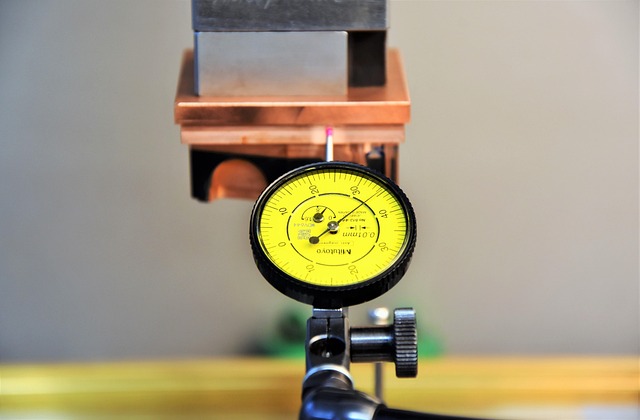
Fundamentals of Sinker EDM Technology
Sinker EDM operates through an electro-thermal mechanism where a shaped electrode and workpiece are submerged in dielectric fluid. Electrical pulses between them generate sparks that vaporize material locally. Unlike wire EDM, which cuts with a continuously fed wire, sinker EDM forms cavities or molds directly from electrode shapes. Conventional machining removes material mechanically, while sinker EDM relies on energy conversion into localized heat. Dielectric fluids like hydrocarbon oils stabilize the spark gap and flush away debris. Electrode materials such as copper or graphite influence wear rate and surface finish.
The Physics Behind Material Removal in Sinker EDM
Each discharge creates a plasma channel where temperatures exceed 8,000°C. The rapid heating and cooling cause micro-explosions that remove material precisely from the workpiece surface. Spark energy and pulse duration determine erosion depth and surface texture; shorter pulses yield smoother finishes. The gap condition between electrode and workpiece controls spark distribution uniformity, affecting dimensional consistency. Thermal gradients must be managed to prevent over-erosion or distortion near fine features.
Achieving Close-Fitting Parts Through Controlled Erosion
Producing tight-fitting parts requires meticulous control over every discharge event and environmental factor affecting spark stability.
Precision Control Parameters in Sinker EDM
Discharge current defines removal rate while voltage influences gap ionization threshold. Balancing these parameters allows micro-level control of material removal per pulse. Pulse intervals give time for dielectric recovery, preventing arcing that could damage surfaces. Servo systems continuously adjust electrode position to maintain optimal spark gaps despite tool wear or debris accumulation. Modern machines use adaptive algorithms to compensate for temperature drift or uneven erosion automatically.
Surface Integrity and Dimensional Tolerances
Surface roughness directly links to energy density during discharge; higher energy increases recast layer thickness and residual stress. Minimizing micro-cracks requires fine-tuned pulse control and efficient flushing to remove molten debris instantly. Post-processing methods such as hand polishing or ultrasonic finishing refine tolerances further, especially for mating surfaces requiring airtight fits.
Electrode Design Strategies for Ultra-Tight Fits
Electrode design governs how faithfully the final cavity replicates its intended geometry under repeated sparking conditions.
Material Selection for Electrodes
Copper electrodes provide excellent conductivity and low wear but can deform at high temperatures. Graphite offers better machinability yet produces rougher finishes due to its porous structure. Tungsten-copper hybrids combine strength with thermal stability for deep cavities requiring consistent erosion profiles. Selecting the right combination depends on part geometry, desired finish, and production volume.
Electrode Geometry and Machining Accuracy
Electrode shape fidelity determines cavity accuracy; any deviation magnifies across multiple discharges. During long runs, electrodes wear unevenly at edges or corners—compensation models adjust tool paths dynamically to maintain dimensional integrity. For deep cavities, multi-stage electrodes may be used sequentially to preserve fine detail without excessive wear.
Process Environment and Its Impact on Fit Accuracy
Environmental stability is critical because even minor fluctuations in dielectric quality or temperature can alter spark behavior dramatically.
Dielectric Fluid Management and Flushing Techniques
Dielectric fluid acts both as an insulator before discharge and coolant afterward. Proper circulation removes eroded particles that could short-circuit subsequent sparks. Advanced flushing methods—such as side injection or suction-assisted flow—maintain uniform erosion across complex geometries like turbine blade molds or injector housings.
Temperature Control and Stability During Machining
Thermal expansion affects both electrode and workpiece dimensions during long cycles. Temperature-controlled fixtures keep components stable within microns by maintaining constant coolant flow around the setup area. This prevents drift that would otherwise compromise part-to-part repeatability.
Integration of Automation and Digital Monitoring in Sinker EDM Processes
Automation transforms sinker EDM from an artisan process into a repeatable industrial operation capable of producing thousands of identical parts.
Role of Real-Time Monitoring Systems
Modern machines integrate sensors measuring gap voltage, discharge frequency, and tool wear rate in real time. Feedback data feeds into control software that adjusts parameters dynamically when anomalies appear—reducing scrap rates significantly while improving consistency across shifts.
Automation for Repeatable Precision Manufacturing
Robotic changers handle electrode replacement automatically between cycles, maintaining identical alignment each time. Integration with CAD/CAM platforms allows automated path generation based on 3D models while verifying tolerance compliance digitally before machining begins.
Applications Requiring Impossibly Close-Fitting Components
Industries demanding extreme precision rely on sinker EDM not only for its capability but also for its predictability under complex geometries.
Aerospace Component Manufacturing
Turbine blades, fuel injector cavities, and hydraulic valve seats require micron-level fits to maintain performance under high pressure or temperature variations typical of flight environments.
Medical Device Fabrication
Surgical molds for orthopedic implants or microfluidic channels demand smooth surfaces free from burrs or contamination—conditions achievable only through controlled EDM erosion followed by minimal finishing.
Tooling and Mold Industries
Injection molds depend on perfect cavity matching so molded parts remain dimensionally stable after cooling cycles; sinker EDM enables this through stable spark repetition even at deep draw sections.
Future Developments Enhancing Sinker EDM Precision
The next generation of sinker EDM technology focuses on smarter power delivery systems and hybrid process integration aimed at sub-micron tolerances.
Advancements in Pulse Power Supply Technology
High-frequency pulse generators now modulate energy distribution more finely than ever before, creating consistent plasma formation even at minimal gaps—leading to smoother finishes without sacrificing removal speed.
Hybrid Machining Techniques
Combining sinker EDM with additive manufacturing enables pre-shaped electrodes printed directly onto carriers for complex contours; pairing it with laser texturing refines surface micro-topography beyond traditional limits.
AI-Based Process Optimization
Artificial intelligence predicts tool wear progression based on discharge history data sets, adjusting parameters proactively instead of reactively—reducing downtime while sustaining ultra-tight dimensional control throughout production runs.
FAQ
Q1: What makes sinker EDM different from wire EDM?
A: Sinker EDM uses a shaped electrode to form cavities within the workpiece, whereas wire EDM cuts entirely through material using a continuously fed wire strand submerged in dielectric fluid.
Q2: Why is dielectric fluid essential in sinker EDM?
A: It insulates until breakdown voltage is reached, then cools plasma zones rapidly while flushing debris away to stabilize subsequent discharges.
Q3: How does temperature affect machining accuracy?
A: Temperature changes cause expansion or contraction of both tool and workpiece; maintaining stable thermal conditions prevents size drift during extended operations.
Q4: Which industries benefit most from sinker EDM?
A: Aerospace, medical devices, precision tooling, and electronics sectors all depend on it for producing intricate metal components requiring tight tolerances.
Q5: Can automation truly replace manual adjustment in high-precision EDM?
A: Yes, modern automated systems equipped with real-time feedback loops can maintain consistent results across large batches without manual intervention while preserving sub-micron accuracy levels.


