What Is the Best Tool Rack for Garage Storage?
Why Does a Tool Rack for Garage Storage Matter?
A tooling area is easier to run when each item has a set place, and a tool rack for garage storage works the same way. In many garages, hand tools sit beside bikes, cartons, ladders, lawn tools, and a car with little room left. A basic rack helps turn that mixed space into a usable work corner instead of a place where you keep looking for things.
Clear Floors Reduce Trip Hazards
Tools left on the floor are not just in the way. They create a trip risk, and they also get damaged when someone kicks them or rolls over them. OSHA standard 1910.176 says storage areas should stay free of material buildup that can cause tripping, fire, explosion, or pest problems. It is written for workplaces, but the point fits a garage too: get long tools, clamps, cords, and garden tools off the walking path.

Faster Tool Picks Save Real Minutes
Looking for a 10 mm socket for five minutes feels small, but it adds up. If the repair itself takes 20 minutes, that search has already made the job drag. A rack with simple labels or clear zones lets you take a tool, use it, wipe it, and put it back without digging through tubs.
Better Storage Protects Tool Edges
Cutters, chisels, drill bits, and measuring tools should not be dumped in one box. Edges chip, handles split, and tape measures bend when heavy tools sit on them. A rack keeps sharp, heavy, and delicate tools apart, so they stay ready for work for longer. It also shows what is missing after a busy weekend job.
Which Type of Tool Rack Fits Your Garage?
The right rack depends on wall space, tool weight, and how often each tool gets used. A small garage may need more vertical storage, while a larger workshop may work better with wall rails, freestanding shelves, pegboard, and drawer cabinets together. Start with the tools you own and the jobs you do, not with a clean showroom picture.
Wall Mounted Rails for Small Garages
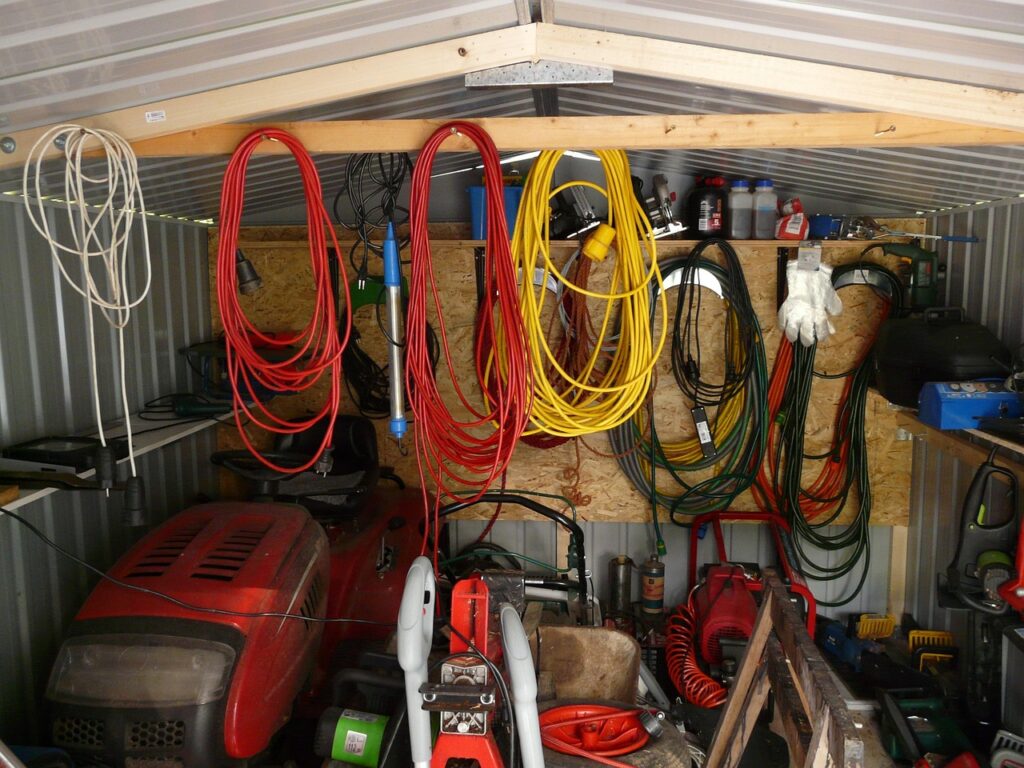
Wall rails work well for brooms, shovels, extension cords, levels, clamps, and light power tools. They keep the floor open and make narrow corners useful. If your tool mix changes often, choose steel rails with adjustable hooks. For drywall, fasten into studs or use a rated backing board, not loose screws into gypsum.
Freestanding Racks for Heavy Tools
Heavy items such as jacks, vises, chain hoists, large cases, and boxed hardware often belong on freestanding steel racks. Put the heaviest load on the lower shelf, because the rack will feel steadier and is less likely to tip. It is also easier on your back when the load starts closer to your legs. This is a small layout choice, but in daily use it matters.
Pegboard and Hybrid Panels for Daily Jobs
Pegboard is fine for hand tools that come out every week. Hybrid metal panels can usually carry more weight and take bins, hooks, and small shelves. They make sense above a bench, where screwdrivers, pliers, hex keys, and tape can stay within arm reach. It is a plain setup, but many garages run well with it.
What Materials and Load Ratings Should You Check?
A tool rack may look simple, but the material, welds, brackets, and mounting hardware decide how solid it feels after months of use. Do not buy only by color or product photos. Check steel thickness, coating, stated load rating, and the way the rack sends weight into the wall or floor.
Powder Coated Steel for Long Service
Garages deal with dust, humidity, winter salt, oil mist, and rough handling. Powder coated steel is common because it holds up better than thin paint in many shop conditions. Galvanized steel can also make sense in damp spaces. Bare wood racks are easy to make, but they need more attention around moisture.
Weld Quality and Bracket Geometry
Clean welds, full contact points, and triangular brackets are good signs on a rack. A long hook without a brace can bend after repeated loading, even if it looked fine when new. In mechanical manufacturing, support geometry matters as much as the material. A shorter load path usually makes the rack feel firmer when tools are taken on and off.
Clear Load Labels and Safe Placement
OSHA guidance for warehousing tells operators to inspect and maintain shelving, place heavier loads on lower or middle shelves, and avoid exceeding rack load capacities. In a garage, the same rule is easy to follow: know the rack rating and stay under it. If the seller cannot give a load rating, treat that as a problem. Guessing is not a good plan when a wall rack is holding steel tools.
How Should You Plan the Layout Before Buying?
It is easy to buy the rack first when the garage is a mess. A short layout check usually saves trouble later. Open the car doors, pull out the mower, stand at the workbench, and watch where you naturally walk. The storage should match that movement instead of blocking it.
Zones by Task, Not by Tool Brand
Group tools by the work they support. Keep drilling bits, drivers, anchors, and small fasteners near the drill area. Put tire tools, torque wrench, jack stands, and gloves together. Garden tools can stay near the door, because that is where they are normally used. Sorting by brand may look tidy, but sorting by task makes jobs quicker.
Reach Heights from Knee to Chest
Keep frequent tools between knee and chest height. Heavy tools should not sit above your head, because one poor reach can turn into a dropped item. The Bureau of Labor Statistics reported 2.5 million nonfatal workplace injuries and illnesses in private industry for 2024, released January 22, 2026. A garage is not a factory, but the lesson is simple: awkward handling has a real cost.
Room for Cars, Carts, and Doors
Leave space for car doors, cabinet doors, trash bins, and rolling carts. A rack that sticks out too far becomes the thing you hit every time you walk by. In a tight one-car garage, shallow wall rails and folding hooks often work better than deep shelves. Measure the swing space before drilling holes.
How Can a Garage Tool Rack Make Work Safer?
Garage safety is mostly basic habits done the same way each time. Keep floors clear, shelves steady, sharp items covered, cords wrapped, and heavy loads low. None of this is complicated, but it helps stop the small accident that can ruin a simple repair day.
OSHA Storage Principles for Home Shops
OSHA material handling guidance says stored materials must not create hazards and should be stacked, blocked, interlocked, or limited in height so they stay stable. In a garage, use the same idea for tool cases, spare parts, and bins. If something can slide, strap it. If it can roll, chock it. These small steps take little time and prevent a lot of mess. See also: Machines.
Heavy Items Low and Sharp Items Covered
Place saws, grinders, jacks, and metal tooling on low shelves where they are easier to control. Store blades in sleeves or closed holders, and keep pointed tools away from children’s reach and shoulder-level walk paths. The U.S. Consumer Product Safety Commission’s NEISS system tracks product-related injuries from a national hospital sample; its 2024 data highlights used reports from 77 hospitals. That is a good reminder that ordinary consumer products can still hurt people when they are stored badly.
Regular Checks After Busy Weekends
After a large project, spend five minutes putting the rack back in order. Tighten loose hooks, wipe oily handles, return bits to bins, and check whether wall fasteners have moved. The National Safety Council summarized 2024 workplace fall data with 844 deaths from falls, slips, and trips. A garage is smaller, but clutter can still cause a hard fall.
What Buying Details Separate Good Racks from Cheap Racks?
A cheap rack may be enough for light items. Trouble starts when light-duty hardware is used like industrial storage. Before buying, look past the front photo and compare the parts that do the work: anchors, hook locks, shelf lips, surface finish, and replacement accessories.
Real Capacity at the Mounted Point
A hook may be rated for 50 lb, but the wall connection may fail before the hook does. Ask what the rating covers: per hook, per rail, per shelf, or per whole unit. For wall racks, stud spacing and anchor type matter. Concrete, brick, wood studs, and metal studs all need different mounting choices.
Hardware That Matches the Wall
Good racks come with clear hardware guidance. Lag screws into studs, sleeve anchors for concrete, and backing boards for weak wall surfaces are common options. Do not use random leftover screws on a loaded rack. That shortcut can later turn into a bent rail or a damaged wall.
Modular Parts for Future Tools
Your tool set will not stay the same forever. An air hose may be added next year, or a second battery platform may arrive after a sale. Modular hooks, bins, and shelves let the rack change without a full rebuild. Leave a little empty space as well; a packed rack looks efficient until it becomes hard to use.
How Do You Keep the Rack Useful Long Term?
The best storage system is the one you still use after the first clean-up day. It should be simple, visible, and easy to reset. If putting a tool back takes effort, it will land on the bench, then the floor, and then nobody knows where it is. A tool rack should reduce steps, not add another chore.
Labels That Survive Dust and Oil
Use simple labels for bins, hooks, and shelves. Printed tape, paint marker, or metal tags all work. Keep the words short: sockets, masonry bits, clamps, electrical, blades. A dusty garage does not need neat handwriting; it needs labels you can read at 8 p.m. under one shop light.
A Monthly Five Minute Reset
Pick one day each month and clear the rack for five minutes. Throw away broken blades, empty packaging, and dried adhesive tubes. Move rarely used items higher or farther away, and bring daily items closer. This small habit keeps the rack from turning into another junk shelf.
Simple Rules for Shared Garages
If several people use the garage, make the return rules easy to see. Put outlines behind common tools or add photo labels for drawers. Keep hazardous tools in a locked cabinet if children enter the space. A shared garage works better with fewer hidden systems and more common sense.
FAQ
Q1: What Is the Best Tool Rack for Garage Storage? A: For most garages, the best answer is a mixed setup: wall rails for long tools, pegboard or metal panels for hand tools, and low freestanding shelves for heavy cases. Match the rack to tool weight, wall type, and how often each tool is used.
Q2: How Much Weight Can a Garage Tool Rack Hold? A: It depends on rack design, steel thickness, anchors, and wall structure. Check whether the rating applies to each hook, each shelf, or the whole rack, and stay below the listed load.
Q3: Should Heavy Tools Go on a Wall Rack? A: Some heavy tools can go on a wall rack if the rack and wall are rated for that load. Jacks, large vises, and heavy toolboxes are often safer on low shelves or floor-level storage.
Q4: Is Pegboard Strong Enough for Garage Tools? A: Standard pegboard is usually fine for light hand tools. For heavier tools, use metal pegboard, slotted panels, or steel rails with locking hooks, and pay close attention to the mounting method.
Q5: How Often Should You Check a Garage Tool Rack? A: Check it after large projects and do a quick reset once a month. Look for loose anchors, bent hooks, overloaded shelves, rust, and tools that keep ending up in the wrong place.