How Can Laser CNC Improve Smarter Nesting Strategies for Precision Cutting
Smarter Nesting Strategies for Better Laser Cutting Performance
Laser CNC systems have reshaped manufacturing by merging precision cutting with intelligent automation. The most efficient operations now rely on smart nesting strategies that balance geometry, material science, and data analytics. The result is measurable—less scrap, faster cycles, and consistent quality. Modern laser CNC machines no longer just follow programmed paths; they interpret data in real time to make micro-adjustments that improve yield and reduce waste. This synergy between software intelligence and machine control defines the next stage of industrial efficiency.
Understanding the Role of Laser CNC in Modern Manufacturing
The role of laser CNC in manufacturing today extends far beyond simple cutting. It represents a convergence of optics, control theory, and digital automation that collectively raise the bar for accuracy and speed.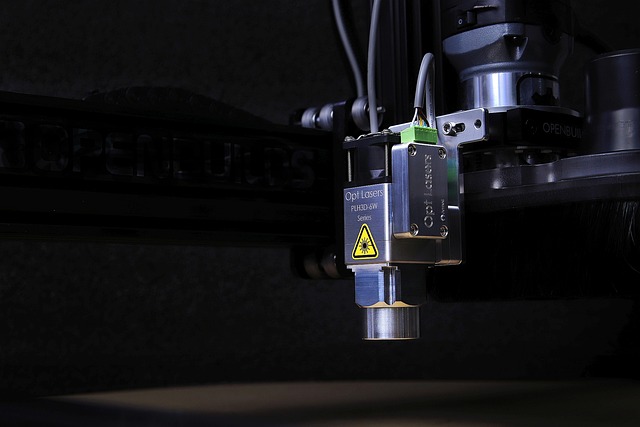
The Evolution of CNC Laser Technology
Laser CNC systems have evolved from manually operated units to fully automated platforms capable of micron-level precision. Early systems required manual nesting and operator supervision for each job. Today’s machines integrate digital control systems that automatically adjust beam parameters based on part geometry and material feedback. Automation modules coordinate with CAD/CAM software to execute complex cuts without manual recalibration. The transition from static programming to adaptive learning has made these systems indispensable in sectors like aerospace, automotive, and electronics.
Key Components Influencing Cutting Precision
Cutting precision depends on several interlinked components: beam quality determines energy density; focal control ensures consistent penetration; motion accuracy defines contour fidelity. Regular calibration routines maintain system alignment, while closed-loop feedback continuously corrects deviations during operation. Material type also plays a decisive role—thicker alloys demand slower feed rates and higher power density, whereas thin sheets benefit from shorter pulse durations to minimize heat distortion.
Fundamentals of Nesting Strategies in Laser Cutting
Nesting lies at the heart of efficient sheet utilization. A well-designed nesting strategy can save up to 20% of material costs while maintaining throughput consistency across production batches.
Defining Nesting and Its Objectives
Nesting refers to the arrangement of parts within a raw sheet to maximize material usage and minimize cutting time. It balances orientation, spacing, and tool path length while respecting thermal constraints between adjacent parts. The objective is straightforward: achieve maximum yield per sheet with minimal repositioning or idle travel. In high-volume production, even small improvements in nesting logic can translate into substantial cost savings.
Traditional vs. Intelligent Nesting Approaches
Manual or rule-based nesting methods depend heavily on operator experience, often leading to suboptimal layouts or excessive scrap. Intelligent nesting solutions use algorithms that simulate thousands of layout combinations before selecting the most efficient one. AI-assisted software considers shape complexity, cut sequence, and thermal load distribution simultaneously. This approach reduces operator intervention while improving repeatability across shifts or facilities.
How Laser CNC Enhances Smarter Nesting Execution
The integration between design software and machine hardware has made it possible for laser CNC systems to adapt dynamically during execution rather than relying solely on pre-programmed instructions.
Integration Between CAD/CAM Software and Laser CNC Systems
Modern CAD/CAM environments communicate directly with laser CNC controllers through standardized data protocols such as ISO 6983 or STEP-NC (ISO 14649). This synchronization allows seamless transfer of geometry data along with process parameters like power level or focus offset. Real-time communication enables adaptive path planning—if a sensor detects deviation due to thermal distortion, the machine compensates instantly by altering feed rate or beam intensity.
Data Utilization for Adaptive Nesting Decisions
Production data collected from previous runs serve as input for refining future nesting layouts. Predictive models analyze cut quality trends against variables like material batch or ambient temperature. When discrepancies occur, feedback loops within the CNC system modify subsequent jobs automatically to maintain consistency. Over time, this creates a self-learning ecosystem where each run improves upon the last.
Advanced Algorithms Driving Smart Nesting Efficiency
Algorithmic intelligence now drives most high-end laser cutting operations. These algorithms transform raw geometric data into optimized cutting sequences that balance performance with sustainability goals.
AI-Based Optimization Techniques in Laser Cutting Operations
Genetic algorithms mimic natural selection by evolving better layouts over successive iterations. Neural networks learn from historical cutting data to predict which configurations yield minimal kerf loss or reduced cycle times. Heuristic models evaluate trade-offs between tool travel distance and cut integrity to maintain both speed and accuracy. Continuous learning ensures that each production cycle becomes more refined than its predecessor.
Multi-Material and Multi-Thick Configuration Handling
Smart nesting must handle multiple materials within one operation—stainless steel sheets alongside aluminum panels or composites with varying thicknesses. Automated parameter switching uses recognition sensors embedded in the feed system to detect material type before adjusting beam focus or pulse frequency accordingly. This adaptability is particularly valuable for hybrid manufacturing cells where batch sizes fluctuate daily.
Improving Material Utilization Through Precision Control
Precision control translates directly into material savings and better finish quality—a dual advantage critical for competitive manufacturing environments.
Reducing Scrap Rates via High-Fidelity Cutting Paths
Fine-tuned laser parameters narrow kerf width while maintaining edge smoothness across nested contours. Stable beam output minimizes micro-burrs that would otherwise require post-processing rework. Contour optimization routines evaluate curvature continuity so every millimeter of sheet contributes productively to final parts rather than scrap bins.
Thermal Management During Dense Nesting Operations
Dense nesting increases heat accumulation risk when parts are closely packed on a single sheet. Adaptive power modulation distributes energy evenly across zones to avoid warping or metallurgical changes near edges. Simulation tools forecast thermal gradients before execution so operators can adjust spacing without trial-and-error losses during production runs.
Automation, Monitoring, and Continuous Improvement in Smart Nesting Systems
Automation doesn’t end at cutting—it extends through monitoring and continuous process improvement loops driven by machine learning analytics.
Machine Learning Integration with Production Monitoring Tools
IoT-enabled sensors embedded throughout the machine record vibration levels, gas pressure stability, lens contamination rate, and dwell times per cut segment. When anomalies appear—such as misalignment errors—the system triggers alerts automatically before downtime occurs. Data aggregation over months allows engineers to identify chronic inefficiencies linked to specific materials or shift patterns.
Closed-Loop Feedback Systems for Process Optimization
Inspection results feed back into the CNC logic through closed-loop correction mechanisms defined under ISO 230-1 standards for test code accuracy verification in machine tools. Continuous calibration routines maintain precision consistency even after thousands of operating hours. Digital twins simulate upcoming jobs virtually so potential issues are resolved before physical execution begins—a practice increasingly common across Industry 4.0 factories worldwide.
Future Trends Linking Laser CNC Innovation with Smarter Nesting Strategies
The next decade will see deeper integration between additive manufacturing workflows, cloud computing infrastructure, and adaptive machining intelligence—all converging toward zero-waste production goals.
Hybrid Manufacturing Ecosystems Combining Additive and Subtractive Processes
Combining additive preforms with subtractive finishing through laser CNC offers unmatched flexibility in custom part fabrication. Intelligent nesting algorithms will soon account not only for planar layouts but also volumetric deposition paths when coordinating between printing heads and cutting optics inside unified hybrid cells found in advanced aerospace facilities.
Expanding the Scope of Smart Nesting Through Cloud-Based Collaboration
Cloud-based platforms enable distributed factories to share nesting templates across sites instantly while central servers analyze aggregated performance metrics globally. Engineers refine designs collaboratively using shared datasets accessible via secure industrial networks compliant with IEC 62443 cybersecurity standards. Over time this collaborative model reduces maintenance costs while promoting sustainable resource management through predictive analytics applied at scale.
FAQ
Q1: What makes smart nesting different from traditional methods?
A: Smart nesting uses algorithmic computation instead of manual placement rules, allowing automatic adjustment based on shape complexity, material type, and real-time process feedback.
Q2: How does laser CNC contribute to sustainability?
A: By minimizing scrap rates through precise beam control and adaptive path planning, laser CNC systems reduce raw material waste significantly compared with conventional cutting methods.
Q3: Can AI improve long-term production consistency?
A: Yes, AI models trained on historical performance data continually refine parameter settings for future runs, resulting in consistent quality even under variable conditions.
Q4: Why is thermal management important during dense nesting?
A: Excessive heat buildup can cause warping or microstructural damage; adaptive power modulation prevents such defects when parts are tightly arranged on a sheet.
Q5: What role does cloud computing play in modern laser manufacturing?
A: Cloud platforms centralize design files, performance logs, and optimization algorithms across multiple facilities enabling faster decision-making and coordinated process improvements worldwide.