How to choose a socket organizer for tool box drawers and mobile kits
Quick answer for tool box socket storage
A socket organizer for tool box drawers should do three things at once: keep every socket visible, hold sockets securely when the drawer or case moves, and make missing sizes easy to spot before work starts. In a fixed rolling cabinet, molded trays or foam inserts usually give the clearest layout. In a mobile service box, clip rails and magnetic holders often work better because the sockets need to travel without spilling. For mixed metric and SAE sets, sort first by drive size, then by socket depth, and then by measurement system. The best choice is not the rack that looks the most complete; it is the one that fits the drawer height, socket count, label visibility, cleaning routine, and how often the kit leaves the bench.
Why socket organization matters in real shops
Loose sockets create a small but constant workflow problem. A mechanic may own the correct size for the job and still lose time searching through a drawer, checking duplicates, or finding out that one socket was left on a machine, lift, cart, or vehicle. In a home garage, that is frustrating. In a repair bay, maintenance department, or production support area, it can interrupt the job sequence and make tool accountability harder.
Socket organization also relates to basic tool safety and housekeeping. U.S. OSHA rule 29 CFR 1910.242(a) states that employers are responsible for the safe condition of tools and equipment used by employees, including employee-furnished tools. The rule does not specify a socket tray design, but it supports the broader principle that tools should be kept in usable condition, easy to inspect, and not left where they can be damaged or create hazards.
There is also a standardization angle. Socket wrenches and detachable sockets are covered by industry standards such as ASME B107 series documents for hand tools. Those standards address tool dimensions, performance, and safety requirements, not how a drawer should be arranged. The organizer is the practical link between standardized tools and daily work discipline.
For more articles on workshop layout, fixture handling, and tool management, visit the Tooling section.
Main types of socket organizers and where they fit
Most socket organizers fall into four practical groups: rails, molded trays, magnetic holders, and foam or modular inserts. Each type can work well, but each solves a different problem. Before buying or specifying one, decide whether the tool box is mainly stationary, mobile, shared by several users, or used for fast field work.
Socket rails
Socket rails use clips or studs mounted along a narrow bar. They are compact and easy to move from a drawer to a bench, cart, or vehicle. Many rails can be customized by adding, removing, or sliding clips, which makes them useful for technicians who carry a limited set to the job instead of moving a full drawer.
The tradeoff is stability. Low-cost rails may tip inside deep drawers, and clips can loosen with repeated use. If rails will be used in a mobile tool box, choose a design that retains sockets firmly when shaken. Rail trays or end stops can also help keep the rail from sliding around.
Molded socket trays
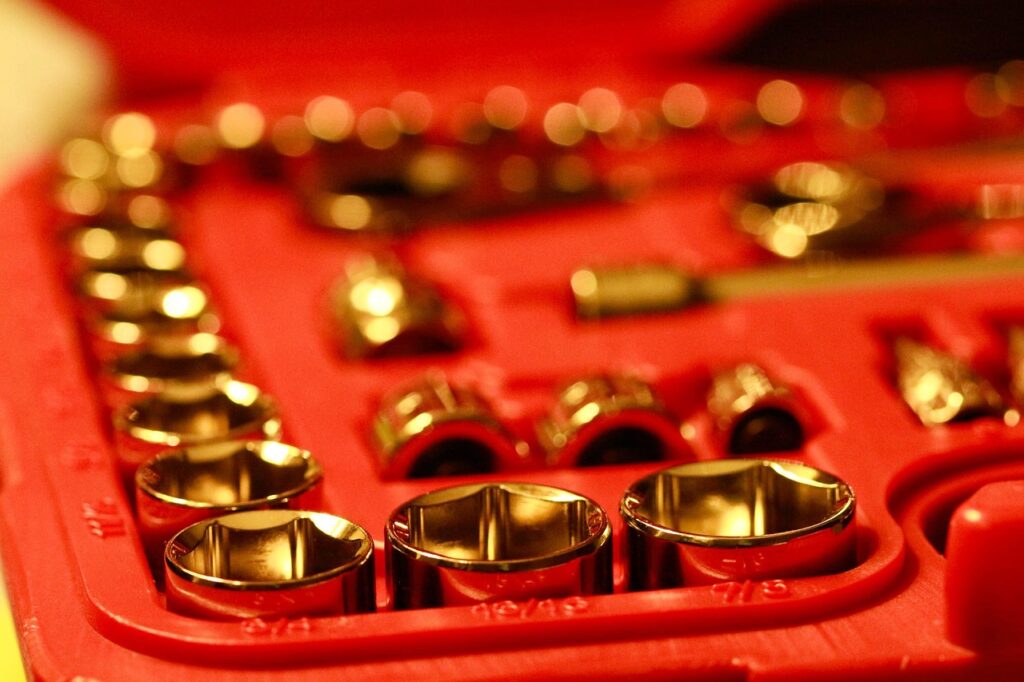
Molded trays usually have labeled posts or pockets for specific sizes. They are strong for visual control because empty locations stand out immediately. This is useful in shared tool rooms, school labs, repair shops, and any drawer where more than one person returns tools.
The limitation is flexibility. A tray designed for a fixed size sequence may not fit duplicate sockets, specialty bit sockets, universal joints, crowfoot adapters, or mixed brands with different outside diameters. Molded trays also need enough drawer height for deep sockets stored upright.
Magnetic holders
Magnetic socket holders are useful on steel tool carts, vertical cabinet sides, and mobile setups where sockets must stay in place during movement. They can reduce spill risk when the box is rolled across uneven floors. They also allow a compact layout because sockets do not always need tall posts.
The caution is contamination. Magnets can attract metal chips, grinding dust, and small ferrous debris. In machining or fabrication areas, magnetic organizers should be cleaned regularly and kept away from places where swarf accumulates. For clean mechanical assembly, they are often more practical.
Foam inserts and modular drawer grids
Foam inserts and modular grids support a 5S-style layout: every tool has a defined place, and missing items are visible. Foam works especially well when a socket set is stable and rarely changes. It can also protect polished or precision tools from rubbing against each other.
The drawback is update cost. When the socket set changes, foam may need to be recut. Oil, solvent, or metal chips can also shorten the life of low-grade foam. For tool collections that change often, a modular grid or adjustable rail system may be more economical than a fully cut insert.
Selection criteria that matter before brand or price
Many product comparisons start with price, magnet strength, or material. Those points matter, but fit should come first. A socket organizer that does not match the drawer, socket set, and work pattern will turn into clutter even if it is well made.
| Selection factor | What to check | Why it matters |
|---|---|---|
| Drawer height | Measure inside height with the drawer closed | Deep sockets on tall posts may hit the drawer above |
| Drive size | Separate 1/4-inch, 3/8-inch, and 1/2-inch drive sockets | Reduces search time and prevents mixed rows |
| Socket depth | Group shallow, semi-deep, and deep sockets separately | Makes size reading easier and avoids unstable rows |
| Measurement system | Keep metric and SAE rows distinct | Prevents wrong-size selection on similar fasteners |
| Mobility | Test retention when the box is carried or rolled | Loose sockets defeat the purpose of the organizer |
| Expansion | Leave space for impact, Torx, hex, and duplicate sizes | Prevents the drawer from becoming disorganized later |
Drawer depth deserves special attention. A shallow top drawer may look ideal for sockets, but deep sockets, universal sockets, and impact sockets can exceed the clearance. Before committing to a vertical tray, place the tallest socket on a temporary spacer and close the drawer slowly. This simple check prevents a common layout mistake.
Label readability is another practical detail. Some sockets have stamped markings that are difficult to read in low light. A tray with clear size markings can help, but only if the socket orientation leaves the label visible. If labels are hidden, users will still remove multiple sockets to find the right one.
How to lay out sockets for speed and accountability
A good layout should follow the way the work is done. For automotive and maintenance work, drive size is often the first divider because ratchets, extensions, and torque tools are selected by drive. Within each drive size, organize sockets by metric and SAE, then by shallow and deep. Specialty sockets should be grouped nearby but not forced into the main size sequence.
A simple drawer map can follow this order:
- Place 1/4-inch drive sockets closest to small fastener tools and precision work.
- Place 3/8-inch drive sockets in the most accessible central area because they are commonly used for general mechanical work.
- Place 1/2-inch drive sockets, impact sockets, and larger accessories in deeper or stronger drawers.
- Keep extensions, adapters, universal joints, and spark plug sockets adjacent to the drive size they support.
- Reserve one clearly marked area for duplicate sizes and specialty sockets that do not belong in the main run.
This arrangement improves accountability because a missing socket is easier to identify by location. It also helps new users understand the drawer without asking for instructions. In a shared environment, consistent return behavior matters more than a layout that only looks neat when the drawer is first organized. See also: Machines.
Color coding can help, but it should not be the only identification method. Printed labels, engraved markings, or molded size numbers are still important because oil, dirt, and poor lighting can make color differences less obvious. For bilingual or multinational teams, numeric labeling is usually clearer than text-heavy labels.
Material and retention choices for different environments
The best material depends on the environment. Plastic trays are lightweight and cost-effective, but low-grade plastic can crack under heavy impact sockets. Aluminum rails resist corrosion and feel rigid, although clips remain the wear component. Steel organizers are strong but can add weight to a portable box. Foam provides protection and visual control, but it should be compatible with the shop’s oils, solvents, and cleaning practices.
Retention strength should match movement. A fixed cabinet in a clean assembly area does not need the same grip as a service truck box. If a tool box is carried up stairs, loaded into a vehicle, or rolled across rough shop floors, test whether sockets remain seated when the organizer is tilted. A drawer that looks organized at rest can become a loose pile after transport.
For mobile kits, rails with positive clips or magnetic trays often outperform open post trays. For stationary cabinets, molded trays or foam inserts often provide faster visual checks. In machining areas, avoid placing magnetic holders where chips can collect. In welding or fabrication areas, choose materials that are easy to wipe down and inspect.
Impact sockets need extra planning. They are typically bulkier than chrome hand sockets and may require wider spacing. Mixing chrome and impact sockets on the same tight tray can lead to poor fit, hidden labels, or unstable rows. If impact work is frequent, give impact sockets their own organizer rather than treating them as overflow.
Common mistakes when buying a socket organizer for tool box use
The first mistake is buying by socket count alone. A package may claim to hold many sockets, but the useful question is whether it holds the sockets you actually own. Outside diameter, height, drive size, and specialty shape all affect fit.
The second mistake is ignoring future additions. Tool sets grow over time. A technician may add low-profile sockets, long hex bit sockets, E-Torx sockets, pass-through sockets, or duplicate 10 mm and 13 mm sizes. If the organizer has no spare capacity, the drawer will quickly return to mixed storage.
The third mistake is using one organizer style for every drawer. A compact rail may be ideal for 1/4-inch sockets, while a heavier tray may be better for 1/2-inch impact sockets. A foam insert may make sense for a controlled tool kit but not for a drawer that changes every month.
The fourth mistake is treating the organizer as a substitute for cleanup. Oil, dust, metal chips, and broken clips will eventually reduce performance. A monthly inspection is enough for many small shops: remove debris, check labels, verify missing sizes, and replace damaged clips or cracked tray sections.
Practical buying checklist
Before choosing a socket organizer, document the socket set and the box. This turns a subjective purchase into a controlled layout decision.
- Count sockets by drive size, socket depth, and measurement system.
- Measure the tallest socket and compare it with closed drawer clearance.
- Decide whether the organizer will stay in a drawer or travel to the job.
- Check whether impact sockets need a separate row or separate organizer.
- Leave open space for future specialty sockets and duplicate high-use sizes.
- Choose labels that remain readable under oil, dust, and low light.
- For shared shops, choose a layout where missing sockets are visible immediately.
- For mobile kits, prioritize retention over maximum socket density.
If two designs both fit, choose the one that makes returning tools easier. Organization systems fail when they are slow to use. A drawer that encourages quick return after each task will stay cleaner than a dense layout that requires careful rearranging.
Frequently asked questions
Is a rail or tray better for a socket organizer for tool box drawers?
A tray is usually better for a stationary drawer because it shows missing sizes clearly and keeps rows stable. A rail is usually better when sockets need to move from the tool box to a vehicle, bench, or machine. Many shops use both: trays for the main cabinet and rails for portable job kits.
Should metric and SAE sockets be stored together?
They can share a drawer, but they should not be mixed in the same row. Keeping metric and SAE sockets separate reduces wrong-size selection, especially where similar sizes sit close together. Clear labels are more important than color alone.
Are magnetic socket holders safe for all shop areas?
Magnetic holders are useful in clean mechanical work and on steel carts, but they can collect metal chips in machining and fabrication areas. If magnets are used near swarf, they should be cleaned often and inspected before sockets are returned.
How much empty space should be left in a socket drawer?
Leave enough space for the socket set to grow by at least a few specialty pieces in each main drive size. Empty space is not wasted if it prevents future clutter. A completely full organizer often becomes disorganized as soon as new sockets are added.
What is the most important measurement before buying?
Closed drawer height is the measurement most often overlooked. Tall deep sockets on posts may look fine when the drawer is open but strike the drawer above when closed. Measure the internal clearance before choosing any vertical organizer.